COLUMN | Organized State versus Disorganized Crime
This article was translated automatically and may contain differences from the original. For reference, read the original.

El Mercurio, July 11, 2019
JUAN PABLO TORO V.
Executive Director, AthenaLab
There is a significant debate regarding the effectiveness of the so-called war on drugs, with some considering it a failure and others viewing it as an urgent necessity. However, this debate cannot lead to inaction, as transnational criminal organizations only grow stronger while it remains unresolved.
The study by the United Nations Office on Drugs and Crime, published by this same newspaper, reports that 173,471 homicides were recorded in the Americas in 2017, accounting for 37.4% of the global total, despite the continent housing only 13% of the world’s population. Although there are many explanatory factors, it is noted that criminal groups, including drug cartels, killed one million people between 2000 and 2017.
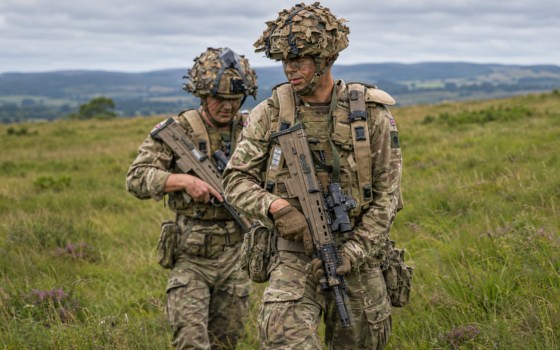
Given this context, the decree signed by President Sebastián Piñera makes sense, allowing the Armed Forces to collaborate in the fight against drug trafficking alongside the police, in tasks of surveillance, logistical support, transportation, and technology.
The decision specifically targets border areas, which deserve special attention, particularly those shared with Peru and Bolivia, the second and third largest producers of cocaine in the world, respectively. Improving control over the rugged and difficult-to-monitor borders is crucial. These are the “gray areas” where threats to public safety can become threats to national security if not addressed.
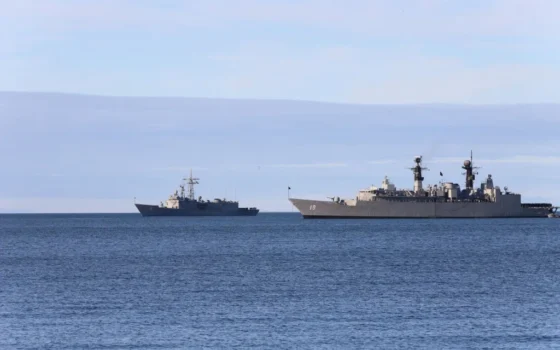
Due to the capabilities of their teams, intelligence tasks, and effective territorial presence, military, naval, and air forces already have a fairly clear picture of the borders. There is even the case of the Chilean Navy, which, through the General Directorate of Maritime Territory and Merchant Marine, performs police functions at sea by law. While the tasks of the involved agencies are defined within the framework of the Constitution and laws, it would also be beneficial to establish their responsibilities in potential scenarios. Can an Army helicopter transport a patrol of Carabineros or the PDI after receiving information from an Air Force drone about trucks loaded with drugs?
Coordination is a crucial aspect. The regulation assigns to the Minister of Defense “the responsibility to direct and control the operations that the Armed Forces of Chile will carry out at our borders” and to appoint the military commanders who will assume operational control of the units. From this perspective, it should be a first step toward the establishment of a permanent interagency task force, an experience that has already been utilized in response to natural disasters here and exists in countries like the United States.
So far, border areas have made it easier for traffickers to evade their pursuers, as they often cannot catch up due to procedures that are difficult to configure, bureaucratically tedious, and subject to all kinds of distrust and lack of coordination. Nothing is better for organized crime than a disorganized state. This has been observed on the ground in Colombia, Mexico, and El Salvador.
The measure taken should be understood as a first step toward building a common border and surveillance landscape based on cooperation among forces. The success of its outcome will be measured by this: whether it effectively increases security, halts the drug traffickers, and restores peace to the people living in the border areas.