COLUMN | Real and Present Threats: The Defense of Chile in the 21st Century
This article was translated automatically and may contain differences from the original. For reference, read the original.
El Mostrador, Saturday, August 3, 2019
Richard Kouyoumdjian
Vice President of AthenaLab
The threats posed by the modern world are not the same as those for which we prepared in the past. While they may still require tanks, F16s, and submarines, they are clearly becoming more diffuse, complex, and difficult to identify. Consequently, solutions require innovative, joint, and comprehensive approaches. The upcoming public discussion on defense policy will be intense and engaging, as it must address this complexity in both understanding the problems and interests to be safeguarded and in defining the possible solutions to be implemented.
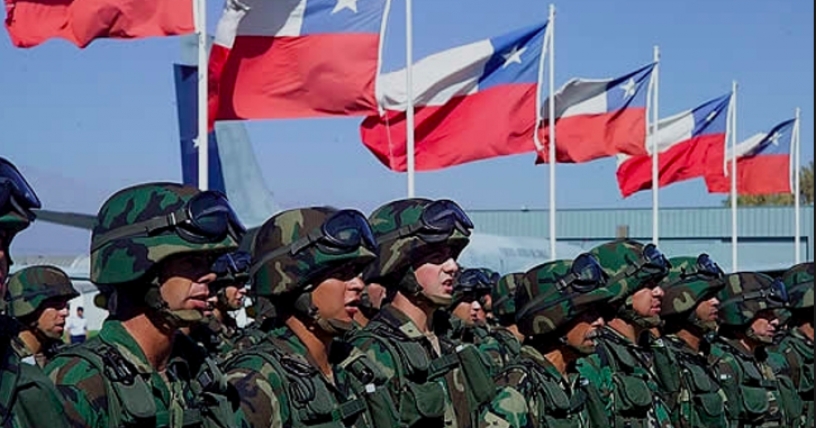
The good news is that the threat posed by drug trafficking to Chileans is self-explanatory, and this is recognized by the Cadem survey from July 29, which shows a high level of approval for the solution proposed by the Government. Furthermore, for a large majority, it is common sense that the Armed Forces support the police in combating drug traffickers and in ensuring the security required by the residents of the highlands. Our borders with Peru and Bolivia are extremely extensive and are exploited by drug traffickers and other criminal elements to enter Chile clandestinely. Therefore, it is a logical and efficient solution to utilize the versatile capabilities of the armed forces to enhance the effectiveness of Carabineros and the PDI.
Despite the logic of the solution proposed by the executive to address a problem where there is broad political and social consensus regarding the harmful impact of drug trafficking on Chileans, the public discussion that has taken place through the media and public opinion has been controversial, intense, and not without cross-accusations. Thus, it can be anticipated that the same will occur with the final outcome of the update to the defense policy, which the ministry is currently working on and which should be available for analysis and understanding in the coming months.
I say intense because it is expected that this update, unlike the one published on Friday, March 9, 2018, by President Bachelet, will cease to be a merely descriptive document of what National Defense is today and will effectively address the definition of the national interests we seek to safeguard and the modern threats that a country like Chile should face. This should clearly include drug trafficking and cybersecurity, as well as how we expect to organize and equip ourselves to manage and confront them. On the other hand, it also addresses a significant change: the definitions of the strategic capabilities needed for the future will now be made centrally rather than at the institutional level, as has been the tradition for the past 200 years. Defense decisions will become the responsibility of the executive, with oversight from the rest of the political establishment.
Accompanying the complexity of the above is the fact that the mechanisms for financing strategic capabilities are also changing, as well as the mechanics and control of reserved expenditures. Additionally, changes to the military career are being proposed that are not innocuous due to their impact on the professional careers of those currently in service. Therefore, this must be handled with caution and the necessary safeguards to avoid jeopardizing other important aspects of this modernization effort in defense. The changes in defense policy, combined with all of the above, ensure at least a discussion that will keep us engaged for the remainder of the year because, for the first time and perhaps in all our history since the wars of the 19th century, we will think about the National Defense policy we need, obviously within the constraints imposed by the recently approved budget framework by Congress, and not merely as a sum of the policies that each institution requires from an individual perspective.
Part of the controversy and entertainment arises from the fact that many of those who express opinions on defense, whether they are politicians, academics, or members of civil society, have not had the opportunity to receive adequate training in a subject that has historically been the domain of the military. The military, of course, have the necessary training but have been more accustomed to viewing the issue from the perspective of their originating institutions rather than from the perspective of the collective and National Defense as a whole. This does not mean that all participants in this process think solely from a mono-institutional perspective or that they do not understand perfectly well that past solutions are ineffective or only partially effective in the face of modern threats. However, experience and evidence in this matter indicate that they are unfortunately a minority when looking at the complete universe of all those who express opinions on defense matters.
Alongside the above, it is not surprising that there are intense corporate defenses in cases where they believe they have not been favored in the allocation of resources, which should evidently occur when looking centrally at the protection of Chile’s interests or when incorporating the threats that the modern world brings. It does not help much either that, in Chile, unlike other countries, the number of civilians prepared to engage in a discussion on this matter is few, and they sometimes view military issues from a perspective marked by the performance of the armed forces during the military government, which detracts from their objectivity when addressing issues involving defense institutions, as they are unable to move past events that occurred more than 45 years ago. This is not a deficiency of the left or the right; it is simply a fact that is daily evident in the press.
The title of the Harrison Ford movie, “Clear and Present Danger,” while related to a problem of drug traffickers threatening the national security of the United States, clearly does not represent the exact same situation affecting Chile. However, it illustrates very well that new threats are real and already knocking at our door, taking advantage of the fact that we are not fully prepared to use our armed forces to defend against the issues that truly complicate our sovereignty and political independence. God forbid the day when someone employs hybrid strategies against us, similar to those used by Russia with Ukraine, or those previously used against Georgia, where the use of force was mixed with transnational crime, drug and arms trafficking, smuggling, and a long list of threats that would indeed affect us today, and we would not be in a position to manage unless we employed innovative solutions like those the government has proposed to support the police at the northern border.
The threats posed by the modern world are not the same as those for which we prepared in the past. While they may still require tanks, F16s, and submarines, they are clearly becoming more diffuse, complex, and difficult to identify. Consequently, solutions require innovative, joint, and comprehensive approaches. The upcoming public discussion on defense policy will be intense and engaging, as it must address this complexity in both understanding the problems and interests to be safeguarded and in defining the possible solutions to be implemented. It will also be complex because it will require all of us to yield and view the defense issue with a broad perspective, considering what is best for Chile. Finally, we must ensure that rationality prevails over passions, prioritizing national interests wherever they may be located, common sense, efficiency and effectiveness, and the logic of the average Chilean who does not have time for endless philosophical discussions detached from their reality, and who simply wants to live in peace and tranquility, in a prosperous, sovereign, and politically independent country.
Source: El Mostrador