COLUMN | What We Can Learn from Maritime Accidents in the U.S., Norway, and Venezuela
This article was translated automatically and may contain differences from the original. For reference, read the original.

El Mostrador, Saturday, April 11, 2020
Richard Kouyoumdjian
Vice President of AthenaLab
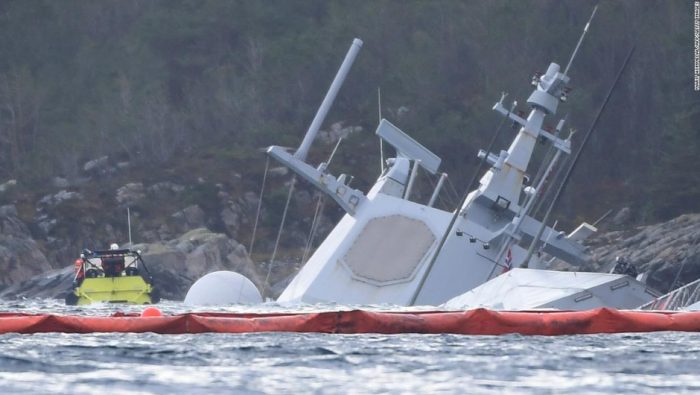
In the last three years, there have been five maritime accidents that should draw our attention. I refer to the three incidents involving U.S. Navy vessels in 2017 in the Western Pacific in high-traffic areas. A similar situation occurred with the Norwegian frigate “Helge Instad” in 2018 in its internal waters. In all four mentioned cases, there were human errors stemming from a lack of training for their crews in the use of systems, procedures, and navigation rules, as well as overconfidence in new technologies. These failures resulted in loss of life and significant damages that required the respective governments to make substantial expenditures to salvage and repair the vessels and to reacquire the lost capabilities, which to date have only been achieved in the case of the U.S. Navy units. The repair of the Norwegian frigate is still pending due to its high cost, to the point that it may be more convenient to build a new one.
However, it is the fifth case that draws my attention the most, referring to the sinking of the Venezuelan patrol vessel “Naiguata” in late March 2020 after colliding with the motor vessel “Resolute” when the patrol attempted to stop the Portuguese ship, believing it was in its territorial waters without permission. In this case, the incompetence of the Venezuelans in the procedure they followed was the main cause of the accident, which tells us something about the current naval and military capabilities of that country at a time when U.S. forces are operating near the coast of Venezuela in anti-narcotics operations. I doubt the true military capabilities of Maduro’s regime to maintain power in the event that foreign forces decided to intervene. To avoid a possible intervention, it will need its army, navy, and air force to be properly equipped and trained, something that, after years of economic crisis, may not be at the appropriate level, especially after we have learned that its Chinese and Russian allies have been losing enthusiasm for the Chavista regime.
In all the previously mentioned maritime accident cases, following the rules, procedures, and having the proper training would have prevented the occurrence of the aforementioned accidents. This is why, in most cases, there were changes in command and alterations in the way those navies operate. It remains to be seen what will be resolved regarding the crew and naval authorities of Venezuela involved in the loss of the “Naiguata,” where so far the Venezuelan Ministry of Defense has tried to shift the blame to the captain of the MV “Resolute” and portray the crew of the sunken vessel as heroes. Maduro continues to surprise me.
In conclusion, it is reassuring to know that naval forces such as the Chilean Navy maintain a strong focus on developing maritime capabilities and navigation skills, which should not be forgotten, as they remain the fundamental basic capabilities of all those who work at sea, and for now, should not rely entirely on technologies that are sometimes not understood or fail in the darkness of night.