COLUMN | Being a Maritime Power
This article was translated automatically and may contain differences from the original. For reference, read the original.
El Mostrador, Thursday, May 21, 2020
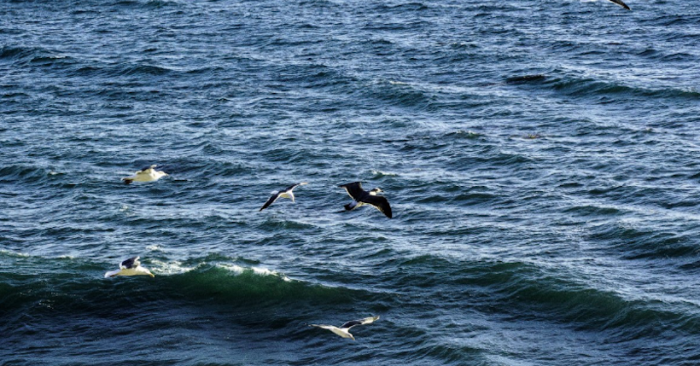
The sea of Chile is what connects us commercially with the world. Our exports leave from our ports and our waters, and the goods we import arrive through them. Our geography and the characteristics of our open economy, especially towards the depths of the Pacific, mean that 95% of our foreign trade flows by sea. This makes us very different from other countries, confirms our status as an island nation, and as such, we must ensure that this system functions and does not cease, as otherwise, we could find ourselves in serious trouble.
We are in May, a month in which, for several years, the Month of the Sea has been celebrated. We commemorate the naval glories of Chile, but above all, we celebrate the heroic deeds of Arturo Prat and the crew of the Esmeralda, the cunning and audacity of Condell, and the crew of the Covadonga.
This year’s celebrations are less visible, but no less important. The navy has been operating 24/7 since the State of Catastrophe was declared. They are not only supporting Chileans during this contingency but also carrying out their own responsibilities in the maritime, riverine, and lacustrine domains; ensuring that foreign trade to and from Chile continues to flow; not neglecting Chileans living in extreme areas and island territories; and being prepared to defend Chile’s sovereignty and interests wherever they may be located. What better tribute to the crew of the Esmeralda than to be dedicated to serving Chile in such a complex moment as the one we are experiencing.
Where we are lacking and do not celebrate adequately is in relation to the sea of Chile. Chileans, despite living in a country that is long and narrow, tend to focus more inland, looking at our beautiful Andes Mountains rather than the vast ocean that lies before us. Chile has an extensive coastline of over 4,300 kilometers and an exclusive economic zone that is nearly five times its territory. We have a vast expanse of sea that makes us neighbors with Australia, New Zealand, French Polynesia, and Antarctica.
The sea of Chile is what connects us commercially with the world. Our exports leave from our ports and our waters, and the goods we import arrive through them. Our geography and the characteristics of our open economy, especially towards the depths of the Pacific, mean that 95% of our foreign trade flows by sea. This makes us very different from other countries, confirms our status as an island nation, and as such, we must ensure that this system functions and does not cease, as otherwise, we could find ourselves in serious trouble.
That sea, which gently washes over us, provides us with abundant fish and marine resources. It is a sea that we must care for, understand, and research, and this sea of Chile may perhaps be our salvation in the future for the droughts that are becoming more frequent each year.
Therefore, it is more than reasonable to have an ocean policy like the one promoted by Heraldo Muñoz when he was foreign minister, which is now being shaped by Teodoro Ribera and his team. We gain nothing by celebrating the Month of the Sea every year if public policies do not give it the due importance. Thus, we must remain vigilant and continue advancing initiatives that will help ensure that the sea of Chile secures a splendid future for Chile.
Equally important is bringing Chileans closer to the sea and ensuring that, in educational terms, everything related to the sea is considered normal and not extraordinary, so that everyone understands that facing the Pacific, we have an oceanic expanse that we can develop and that can aid in our future development.
In the immediate term, we must allocate the budgets needed by those who care for and research our sea, our most precious national asset, which does not always receive the funding it deserves due to its strategic importance.
Also in the immediate term, we should intensify efforts in shipbuilding, tourism based on the potential of Chile’s coasts and seas, and everything that makes our ports more efficient and effective. All these ideas will lead us from being a maritime country, which we already are, to becoming the maritime power of the Eastern South Pacific. I can think of no better tribute to Chile’s naval and maritime heroes than to take these matters seriously and become a maritime power.
Richard Kouyoumndjian
Vice President AthenaLab