What to do in Araucanía?
This article was translated automatically and may contain differences from the original. For reference, read the original.
El Mostrador, Sunday, June 28, 2020
What is happening in Araucanía reminds me of the insurgencies in Kenya in the 1950s and Rhodesia in the 1960s and 1970s. I recall those rebellions not because in both cases there were white minorities in power and rebel groups seeking either independence or to seize power, but because there are organized insurgent groups aiming to gain control and rid themselves of those they consider usurpers or illegitimate owners of the lands that were once their territories, namely, Mapuche territories.
I begin this column in this way because if we want to reach any type of solution in Araucanía, we must start by understanding the nature of the conflict and its reasons. If we do not begin by correctly identifying why Araucanía is ablaze or on the brink of a larger conflict, we will not be able to solve the problem, and what is worse, we will end up with a disaster and much to regret in a Chile that has no room for more problems.
Let us agree that for the Mapuche people, many of their claims must be very just. I have not seen large demonstrations from people of Mapuche descent against the actions of organized insurgent groups, which leads me to assume that they do not oppose or, at worst, support violence as a means of struggle to defeat those they consider their enemies.
Many farmers of non-Mapuche origin also believe they are right and that their cause is extremely just and correct. They have been working in Chile’s granary for years and feel part of that area. They are not millionaires or people taking advantage of others; their only sin is being in a place that others also claim for themselves. They did not cause this problem and are also victims today.
The above leads me to think that any solution involving the use of force by the State of Chile will not achieve good results. A 2.0 pacification of Araucanía is something that is completely out of place, especially in these times. Solutions that involve military means will only cause Araucanía to erupt in flames, and I am not aware of any situation of this type in the world where those in power or representing the state have emerged victorious.
As erroneous as it is to think that a 2.0 pacification could succeed, it is also erroneous to think that the problem can be solved by sending troops from the armed institutions and that this will resolve the issue. I wish it were that simple, but international experience shows otherwise, especially when facing a situation where a people, the Mapuche, believe they have good credentials justifying their demands.
If we look at international experience in this matter, the use of military forces has only been successful in a couple of places, and that has been when there has been political will, very good intelligence, and military forces trained for counterinsurgency operations. A prime example is the British in Malaysia in the 1950s, but even in that case, where they succeeded in controlling the insurgency, independence came a few years later. There are plenty of cases where things went wrong, starting with the examples of the USA’s defeat in
Vietnam, or the problems arising from using inadequate strategies in Iraq or Afghanistan, which led the army of that country to reformulate its strategy to confront rebels in low-intensity conflicts.
The only relatively successful recent case is Colombia, where after a long conflict, a peace was reached that occasionally faces challenges. The significant difference between that case and the Chilean one is that the association of guerrilla groups with drug cartels turned public opinion against them, which is something to observe, as if some violent groups operating in Araucanía decide to finance themselves by associating with drug trafficking, their justification and banner of struggle will be permanently affected, and they will be seen by the public as mere criminals.
That is why I recommend starting by correctly identifying the nature of the conflict and understanding that this particular conflict requires deep political solutions, which may even involve some degree of autonomy for the Mapuche people or solutions like those chosen in New Zealand to give the Māori their rightful place, because otherwise, the problem will resurface time and again, exhausting both sides, and could even generate a larger conflict if one of the parties goes too far.
I know that moving forward with conversations with the Mapuche people may also generate independence initiatives in Rapa Nui or other indigenous peoples, but we should not be afraid to sit down and talk. We should be afraid of any solution that only contemplates the use of force, which will certainly have the fundamental problem of lacking broad political support as well as adequate intelligence and that, moreover, will only temporarily leave the impression of having solved the problem, but will, at a deeper level, only strengthen the desire for independence of those whom Alonso de Ercilla y Zúñiga identified in his work La Araucana as:
“The people who produce, are so brave, So proud, gallant, and warlike, That they have never been ruled by a king, Nor subjected to foreign dominion.”
It is time to confront our past and to do so in a way that benefits everyone, because if we do not do it this way, we will all lose. It is time to put ourselves in the other’s shoes and to understand that solutions do not come from the use of force or simple economic solutions. To non-Mapuche individuals, I ask: What would you do if you were Mapuche? Perhaps the answer lies in the example of New Zealand, a country that has known how to give the rightful place to indigenous peoples. Perhaps the answer lies in deciding who we want to be and how we do it so that all Chileans, regardless of their origin, feel that Chile is theirs and that it identifies them, rather than excluding or discriminating against them. I lean towards a New Zealand-type solution, which is intelligent and logical,
which involves tremendous work and cultural effort, but politically does not carry the risk of granting autonomy to regions of the country without a federal culture or that, years after trying to advance along the path of regionalization, has not been able to demonstrate progress against the centralization of Santiago.
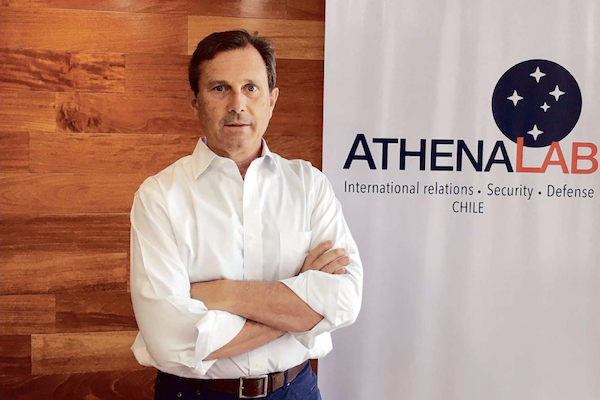
Richard Kouyoumdjian
Vice President of AthenaLab
Source: El Mostrador