The United Nations in a Fragmented World
This article was translated automatically and may contain differences from the original. For reference, read the original.
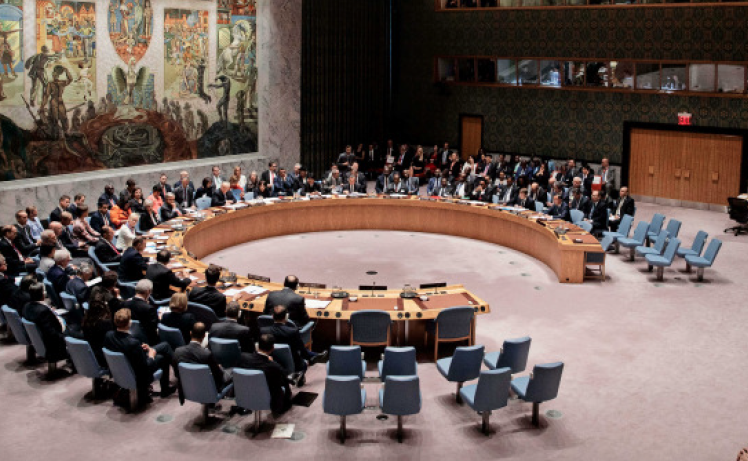
For the first time in years, the diplomatic ritual that takes place at the United Nations every September—when dozens of leaders take the podium in New York to advocate for world peace, present their agendas, and leave anecdotal phrases like “it smells like sulfur here”—carries a maximum sense of urgency, even if it is conducted remotely this time. This urgency is not only due to the pandemic, which has generated an economic crisis and shifted much of our lives online, making the improvement of cyberspace governance a top priority. It is also because, as the organization celebrates its 75th anniversary (the retirement age for bishops), its Secretary-General, António Guterres, has proposed a public debate on “the future we want.”
It is difficult to think of an anniversary that finds this global organization more disoriented. The initial responses to the coronavirus were marked by local scope, including attempts to monopolize medical supplies to favor their own citizens and closing borders without prior notice. A hundred countries even called for an “independent investigation” to assess how the World Health Organization acted during the pandemic, which reflects more doubts about that entity than trust in it.
For some time now, the great powers (the United States, China, and Russia) have essentially been doing as they please. Whether it involves annexing a peninsula, constructing artificial islands as bases to reinforce territorial claims, or simply abandoning international organizations for being perceived as nests of bureaucrats.
Those of us who have witnessed firsthand the real contributions of the United Nations to stabilize countries like Haiti or help seal peace in Colombia have also seen its limited impact in paving the way for solutions in the Israel/Palestine case.
The effectiveness of this organization, which primarily depends on the adherence to norms by its own members, has been tested repeatedly from both above and below. More than the bad faith of the parties or a problem with the actual reach of its diplomats, what becomes evident is that the post-Cold War world is simply following different dynamics.
The inability of the Security Council to reform itself to become more representative is evident. It remains a club limited to the victors of 1945, which has little to do with the diversity of the current world. Brazil, India, and Japan, for example, now emerge as regional powers with significant weight.
Original approaches, such as the “Responsibility to Protect,” have also become hollow in the face of conflicts like Syria and Yemen, where countries with real intervention capabilities have prioritized geopolitical calculations over other humanitarian considerations.
On the other hand, every time one learns that regimes like Venezuela—accused of crimes against humanity—are present in the UN Human Rights Council, it is hard not to hear the slap in the face to hundreds of political prisoners and millions of refugees from that country. Now Cuba intends to join.
Given this background, it is not surprising that this organization is the preferred target of those who detest multilateralism. However, that criticism misses the point, because multilateralism is merely a tool for addressing challenges that require coordination by their nature (such as climate change). It is useful to the extent that the international institutions formed respond to the interests of their member states, and that becomes more difficult as the number of states increases.
If the UN wants to regain relevance, it will have to reinvent itself. Institutions are what their parts decide they will be. Otherwise, a la carte multilateralism or mini-multilateralism will gain strength. Entities like the D-10, a club of democracies proposed by the United Kingdom for G-7 countries, plus Australia, India, and South Korea, to address key issues such as 5G networks and critical supply chains, are the type of initiatives we will likely see moving forward. Neither too large nor too small. Focused on specific and timely objectives.
Juan Pablo Toro
Source: El Mercurio