Lessons for Chile from the New British Diplomatic Perspective
This article was translated automatically and may contain differences from the original. For reference, read the original.
El Mercurio, Friday, March 19, 2021
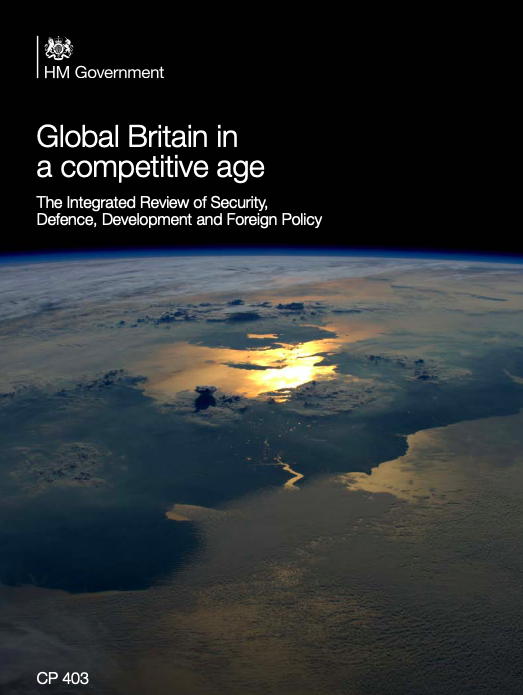
The United Kingdom has just launched the Integrated Review of Defense, Development, and Foreign Policy, “a guide for global action” for the country in the post-Brexit era.
This document, titled “Global Britain in a Competitive Age” outlines four main objectives: to help shape an open international order; to maintain leadership in science and technology; to strengthen external and internal security, with both national and allied capabilities; and to create a resilient society.
The document is valuable for the lessons it provides on how to develop an integrated international positioning strategy, something Chile could consider in the following aspects:
- Integration Doctrine: In an increasingly competitive world where national resources are finite, integrating the instruments of state power (diplomatic, informational, military, and economic) enhances adaptability and maximizes advantages.
Chile has the most extensive network of free trade agreements in the world, providing access to over 60% of global GDP, while the Ministry of Defense has more than 90 international agreements. How do these realities interact today?
Any future international positioning for Chile should consider the articulation of all state power instruments, something the “Integrated Review” does by emphasizing the British intention to work with like-minded countries while announcing an increase in its nuclear arsenal. There is no contradiction here, but rather a complementarity. - Defining National Interests: In a changing international context, the United Kingdom uses the interests and values of the British as its compass. Regarding national interests, it focuses on the basics: sovereignty (understood as independence); security (protection against threats); and prosperity (high economic level and well-being). On values, it also addresses the essentials: respect for human rights, the rule of law, freedom of expression, and fair treatment.
- Naming Things Clearly: For the United Kingdom, Russia is the primary threat. With China, it seeks a cooperative relationship in some areas and a competitive one in others. It warns that there are authoritarian regimes attempting to undermine democracies and that Britain could suffer a serious terrorist attack. The “Integrated Review” does not allow for ambiguities; it makes clear that there are red lines.
In the document, the United Kingdom also commits to multilateralism, but asserts that global institutions “must prove their ability” to deliver results. It is a bet on effective multilateralism. - Establishing Priorities: The United Kingdom identifies geographic and thematic priorities, creating a direction for all institutions: a focus on the Indo-Pacific; the defense of democracy; a commitment to science and technology; the United States as the main ally; and NATO as the framework for collective security.
Perhaps one of the greatest innovations is the intention to shape the “open international order of the future,” rather than continuing to defend the so-called rules-based international order. It is a recognition that today there are multiple systems of institutions and international norms. Therefore, it is reasonable for the United Kingdom to “adapt” its responses to capitalize on national opportunities while addressing global responsibilities simultaneously. An example of this is seen in clean energy, climate change, or cyberspace governance.
Bonus: The direct mention of Chile is on page 64. In Latin America, the United Kingdom expresses its intention to strengthen ties with Brazil and Mexico in trade, innovation, climate, security, and development, as well as with “Argentina, Chile, and Colombia.” It is noted that it will continue to defend sovereignty in the South Atlantic islands.
To view the extended version of this article, CLICK HERE
Juan Pablo Toro
Director AthenaLab