The sovereignty of Chile in the southern world
This article was translated automatically and may contain differences from the original. For reference, read the original.
El Mostrador, Sunday, May 9, 2021
It is timely that we are placing the national focus on southern Chile, understanding that it is not enough to claim sovereignty in that part of the planet; we must also take effective sovereignty actions and support those who carry them out, such as the inhabitants of Magallanes and the Armed Forces assigned to safeguard and protect that part of our country.
On Monday, May 3, the inauguration of Maritime Month took place. The chosen location was Punta Arenas, the capital of the Region of Magallanes and Chilean Antarctica, as the focus is on Chile’s sovereignty in the southern national territories and maritime spaces. The selection of topics and distinguished speakers, such as Mateo Martinic, José Retamales, Teodoro Ribera, Admiral Julio Leiva, and Minister Prokurica, aimed to reinforce the concept being developed this year, which is to draw the attention of the rest of Chile to what belongs to us in the southern world, its value, its potential, and therefore the need to care for, protect, and develop it, as well as to highlight the organizations and individuals who are working in that part of Chile.
I write this column in my capacity as a board member of the Maritime League of Chile, an organization that—through its president, Admiral Miguel Ángel Vergara, or its members—has been seeking, among other things, for this part of Chile to receive the attention it deserves and that we do not cede to other nations what is rightfully ours and which, sometimes due to being too far south, does not fall under the concerns of those who lead Chilean policy in Santiago.
This initiative by the navy to emphasize Maritime Month 2021 in southern Chile and the need to exercise sovereignty in that part of our geography deserves congratulations and the attention of both Chileans and foreigners who closely observe what we do.
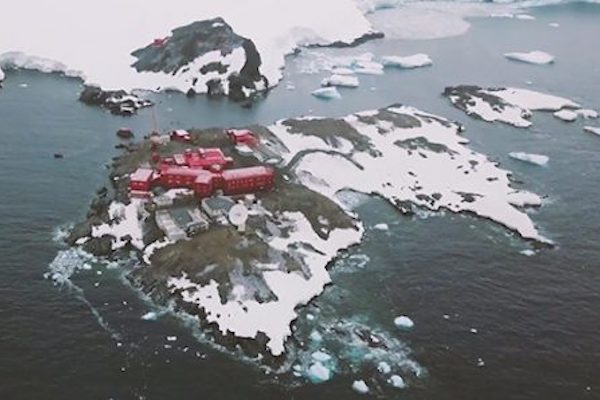
In particular, the presentation by former Foreign Minister Teodoro Ribera stands out, who spoke about the recently published Chilean Antarctic Statute and the need for it not to be a dead letter, but rather a state policy that transforms into something more than a legal framework, allowing us to strategically care for, develop, and protect what is ours in that part of Chile, a region that has increasingly attracted not only the attention of neighbors but also a significant number of nations around the globe.
The significant difference now is that we truly acknowledge that Chilean Antarctica is part of the country and not merely a territory of humanity over which we claim ownership. This is recognized both legally and, more importantly, in the words that emphasize the necessity of exercising effective and real sovereignty, just as is done in the rest of the country. Teodoro Ribera also highlights that we must view as a whole the space comprising Magallanes, the Magellanic continental shelf, the southern seas, and Antarctica. We cannot neglect any of the four, particularly the first three.
If we do so, we are affecting our territorial continuity, and in this regard, the importance of the actions taken by the Foreign Ministry in 2020 stands out, claiming the Argentine definitions of what they understand to be their extended continental shelf and how this infringes upon our sovereign rights in the southern seas, the letter and spirit of the Treaty of Peace and Friendship of 1984, and our rights in Chilean Antarctica.
In summary, it is timely that we are placing the national focus on southern Chile, understanding that it is not enough to claim sovereignty in that part of the planet; we must also take effective sovereignty actions and support those who carry them out, such as the inhabitants of Magallanes and the Armed Forces assigned to safeguard and protect that part of our country.
Richard Kouyoumdjian
Vice President AthenaLab