Geostrategic Importance of Rapa Nui
This article was translated automatically and may contain differences from the original. For reference, read the original.
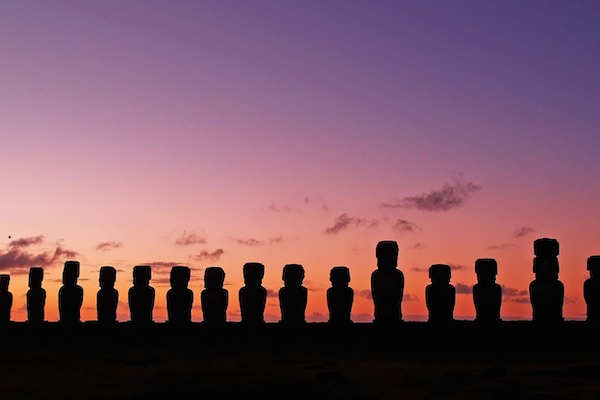
Three continents make up present-day Chile: America, Antarctica, and Oceania, making us a uniquely tri-continental country. On this day, September 9, in 1888, Chileans proudly became Polynesian as Easter Island, or Rapa Nui, was incorporated into national sovereignty, thanks to Commander Policarpo Toro and our Navy. This acquisition provided our country with a fundamental enclave for the development and implementation of a Pacific geopolitics as a center for Chilean projection in this vast oceanic basin, thus preempting the interest of foreign powers in this important territory.
The geographical reality of Rapa Nui has determined its strategic destiny—one that remains fully relevant today—despite being the most isolated place in the world. Thanks to this initiative by President Balmaceda, our country occupies a very important and advantageous position in the Pacific Ocean and is called to exercise a policy of regional leadership. Thus, the privileged position of Easter Island allows Chile to assert its sovereignty over this vast maritime territory, with the active participation and support of the Chilean Navy, which not only was a pioneer in its acquisition but has also been vital for the progress and development of its inhabitants.
The strategic and geopolitical importance of Easter Island is embedded in the DNA of the Navy. Indeed, in addition to the Navy’s role in controlling and supporting oceanic activities and maritime traffic, it also includes rescue and salvage operations, as well as combating and controlling the marine environment, including illegal fishing. Special recognition is due to the surveillance and control of the Exclusive Economic Zone around the island and the role played by the Hydrographic and Oceanographic Service (SHOA) in efforts to extend Rapa Nui’s continental shelf beyond 200 nautical miles, as reported in this year’s presentation by the State of Chile within the framework of UNCLOS.
However, this regional leadership assumed by our country in terms of trans-Pacific cooperation, both politically and academically as well as in business, where a virtuous public-private partnership has been generated, sometimes contrasts with the lack of a comprehensive or strategic vision from our political authorities, leaving the impression that this regional leadership has stalled. A good example of this, in terms of economic integration, is the lack of political will to approve TPP11 in the National Congress, of which Chile was one of the main proponents. Motivated by small political or electoral advantages, some political sectors have preferred a shortsighted approach over a strategic vision.
As a country, we face significant challenges regarding Easter Island. Along with recognizing, respecting, and strongly developing the island’s cultural identity, especially its language, education, and archaeological and cultural heritage, we must make a greater effort as a State to enable Rapa Nui as a strategic hub that allows Chile to increase its geopolitical role and influence in the most dynamic region of the 21st century, namely the Asia-Pacific.
Francisco Orrego B.
Column originally published in El Mercurio de Valparaíso. Reproduced with the author’s permission.