Who speaks for Chile?
This article was translated automatically and may contain differences from the original. For reference, read the original.
El Mostrador, September 30, 2021
“I speak for Chile” (“Pro Chile loquor”) is the motto of the Andrés Bello Diplomatic Academy, the alma mater of the country’s professional diplomats, that is, those public officials to whom citizens have entrusted the responsibility to “speak for the superior interest of Chile.”
Traditionally, “Chilean diplomacy” has practiced a “silent style” that, in the past, aligned with the “specialized character” attributed to the “relationship between states.” As the 21st century progresses, this “relationship” is no longer limited to strictly “state” (or technical-commercial) matters, nor is it confined to the “work of embassies,” incorporating issues of material and immediate importance for society as a whole. Thus, the “silent diplomatic practice” does not align with “modern times.”
In May, AthenaLab published a survey that identified drug trafficking (87%) and border protection (78%) as underrepresented issues in our foreign policy agenda. Furthermore—months before the update of the legal framework for the 200-mile limit of some of our southern islands formalized the territorial dispute with Argentina in the Southern Ocean—this exercise identified the “defense of maritime interests” as another underrepresented topic in the agenda of those who have the responsibility (and privilege) to “speak for Chile” (60%).
The multiple implications associated with this new territorial dispute have prompted not only the media but also, through social networks, citizens to take an interest in a matter composed of diverse aspects that, even for the “specialized Chilean diplomacy,” are considered “novel.”
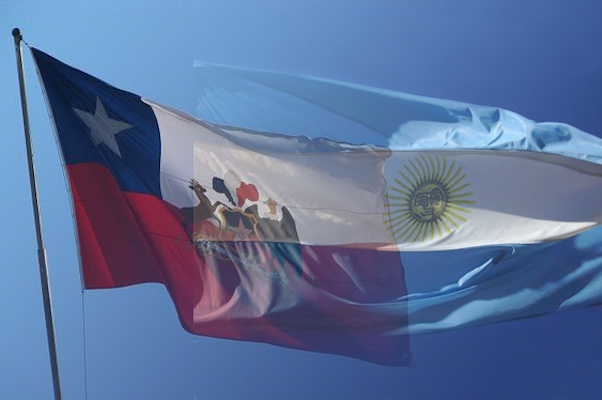
At this point, it is clear that—for the country as a whole—this is a delicate “problem” whose solution will require years of work. Therefore, with the sole exception of the Frente Amplio (whose candidate is—curiously—of Magellanic origin), all major political sectors have formally supported the update of our underwater boundaries south of Cape Horn and the Diego Ramírez Islands.
However, aside from very general statements from the President of the Republic and a certain “questionnaire” from the Director of DIFROL published in a Santiago media outlet, citizens do not know what the basis of Chile’s position will be in this new territorial dispute with Argentina (which until recently even refused to acknowledge).
Everything indicates that in this matter the communication strategy (if it exists) consists of continuing to “engage with society” through a single media outlet (whose editorial line remains sheltered in the premise that this is a “topic only for the initiated”), thus avoiding explaining what, ultimately, is the “position of Chile.”
For that “position” to effectively be “the national position” in the long term, it must be known by all Chileans. This is especially relevant for citizens in the southern region, hence, for those “territorially affected” by the effectiveness or ineffectiveness of “Chile’s position” on the continental shelf issue of our Antarctic Province.
As they previously erred in the matters of Laguna del Desierto and the maritime boundary with Peru, “kilometers more, kilometers less” is not an acceptable result and/or “fait accompli” for the citizens as a whole, especially in Magallanes (where the erratic “policy” for resolving the Southern Ice Field issue still weighs heavily). To pretend that “silent diplomacy,” adhering to a certain “tradition” (now unintelligible) and reserved only for a “chosen group” of “experts,” constitutes an acceptable formula for society today is to attempt to “cover the sun with a finger.” Foreign policy cannot be different from other public policies: it must be subject to what is called accountability, and with its results, the responsible officials must consider themselves accountable to the entire country.
The “policy of silence,” “without accountability,” based on the assumption that only a very small group of “experts” dominates “a language incomprehensible to the average citizen” is neither possible nor acceptable in a country focused on establishing a new Political Constitution.
“Silent diplomacy” should not ignore that, in day-to-day life, the integrity of national territory is a matter of primary importance for Chileans. For this reason, no “tweet,” nor “selfie,” nor “photo opportunity” with any foreign dignitary will prevent the issue of the Magellanic-Antarctic continental shelf from continuing to capture the interest and concern of “the people.”
Viewed from another angle, the noted citizen concern should serve as an invitation for those responsible for this delicate matter to “speak for Chile,” starting by “speaking to Chileans.”
This, even before Chancellor Andrés Allamand speaks (if he has not already) with the new Argentine Chancellor. This will not only prevent speculation and distortions of the national argument (which abound on social media) but will also contribute to ensuring that a well-informed country supports—today and tomorrow—the actions of the current and future officials who will have the responsibility and privilege of “speaking for Chile.”
It is to be hoped that, as in “the old days,” the Government and the Foreign Ministry will take the risk of issuing an “official statement” that explains and establishes the position of Chile and its people.
Jorge Guzmán
Associate Researcher, AthenaLab