We need to talk about China
This article was translated automatically and may contain differences from the original. For reference, read the original.
El Líbero, November 20, 2021
Due to China’s opposition—marking the eighth consecutive time—at the end of October, the countries of the Antarctic Treaty System failed to reach a consensus on a system of marine protected areas to enhance the conservation of the essentially fragile ecosystems of the Southern Ocean, which are exposed to the overexploitation of industrial fishing.
It was striking that this political event, attributable to a decision by the Beijing government, went uncommented (let alone criticized) by any political leader or environmentalist in Chile. At least in part, the reason seems to lie in the nature of a bilateral relationship that, while dating back to 1915, is now characterized by the preeminence acquired by the Chinese market and investments, which are progressively positioning that country (an authoritarian single-party regime) as a “factor” in our economy and, by extension, in national politics.
Regarding the nature of our relationship with China, nearly 50 years later, few remember that—despite ideological differences—starting in 1973, the regimes of Mao Zedong (and later Deng Xiaoping) and the Chilean military government decided to continue a diplomatic relationship that had experienced ups and downs (especially due to “the Taiwan issue”). While from a strictly formal perspective, the principles of universality in diplomatic relations and non-intervention in the internal affairs of other states could explain this continuity, politically, by 1974 many considered it simply incomprehensible (e.g., former Foreign Minister Clodomiro Almeyda, who had officially visited Beijing just months before the military coup).
Practically speaking, for China, Chile at that time was a reliable supplier of nitrate, copper, and other essential raw materials for its agriculture and industry. For Chile, China came to represent a sort of “shadow ally” that, among other things, never condemned the military regime for its human rights record. The military government also did not question China’s record, not even the Tiananmen massacre (1989).
The “respect” that Mao and Deng’s China had for the Chilean military regime could also—at least in part—be explained by a common aversion to the Soviet Union, as well as China’s concern about the effect that a rupture with Chile could have on its presence in Latin America (the Beijing government was also worried about Soviet assistance in Cuba and Peru). Additionally, Chile had supported China’s admission to the United Nations, including a permanent seat on the Security Council.
From 1974 onward, both countries regularly exchanged ambassadors, and during the 1980s, they diversified their relationship, for example, with Chinese students at the Andrés Bello Diplomatic Academy.
Deepening commercial relations
However, when Patricio Aylwin assumed the presidency in March 1990, the deepening of commercial and economic relations was still an unfinished task. According to World Bank figures, at that time, Chilean exports to China did not exceed 10 million dollars.
Throughout the 1990s, while Chile practiced “open regionalism,” prioritizing free trade agreements and economic cooperation with countries and groups of countries in all regions of the world, China deepened the path of economic reforms initiated by Deng Xiaoping, which, with the contribution of Western multinationals, transformed it into a giant exporter and importer.
Although initially China was not a priority for Chile’s economic diplomacy, Chile’s foreign trade nonetheless accompanied China’s economic transformation. In 2004, both countries signed a free trade agreement that facilitated the gradual transformation of the Chinese market into the main destination for national exports. In 2004, our exports to China approached US$3.44 billion, and imports exceeded US$2.33 billion; subsequently, bilateral trade continued to multiply, reaching US$28.5 billion in exports and US$15.44 billion in Chinese imports by 2020. A collateral effect of this is, for example, the presence of the now-typical “Chinese mall” (with its respective Chinese immigrants) located in practically all our cities and towns. Another collateral effect is the increase in household waste from low-cost or short-lived “Made in China” products.
Over the past two decades, while the entire Chinese economy continued to grow, as in the rest of Latin America, Beijing’s strategy in Chile did not stop at trade or the historic “cultural diplomacy”: for at least a decade, China’s presence in our country has included an aggressive investment policy in strategic sectors (mining, energy, telecommunications). Although still comparatively smaller than Chinese investments in Brazil (oil, other mining resources, banking), Venezuela (oil), and Argentina (energy, transportation, banking, and even a secret military base in Neuquén), Chinese investments in Chile increased from approximately US$85 million in 2015 to over US$540 million in 2019.
In less than a decade, China positioned itself as a major investor, surpassing traditionally investing countries like Japan and Spain. By 2020, China was already the third-largest foreign investor in Chile, with a direct investment of US$3.891 billion. As mentioned, this presence is complemented by the status of the main trading partner, which, by sectors, in 2020 accounted for nearly one-third of our agricultural and fishery exports worth US$6.363 billion, and almost 55% of our mining exports.
Since both sectors account for a significant percentage of the country’s workforce (in addition to the political influence of their entrepreneurs and parliamentarians from the producing regions), in practice, China has a lobby that, through accumulation, exhibits a significant capacity to make its voice heard by any government. In the case of the political component of this lobby, many leaders and members of practically all parties have already benefited from some invitation to visit China as part of traditional cultural diplomacy.
The growth of trade and Chinese investment has been accompanied by an increase in that immigrant community. In 2002, out of a total of 8,318 people of Asian origin, the number of Chinese citizens reached only 1,728. Available information from the 2017 census indicates that the number of people of Asian origin grew to 21,654, of which it can be inferred that the main nationality is Chinese.
Chinese Lobby
The open capacity for influence (and sometimes intervention) that Chinese diplomacy has exhibited in Chile is precisely based on the knowledge that any alteration in its demand for Chilean products (or the behavior of the companies it controls) can have serious implications not only economically but also socially and politically. In this regard, it suffices to cite the statements of the Chilean ambassador in Beijing, who this week described the government’s decision to review the tender awarded to a Chinese company for the production of new identity cards and passports as “dangerous.” This is due to the potential impact of Chinese management of a database of Chilean citizens, who currently have visa facilitation in North America and Europe. As is known, the Chilean ambassador in China is a well-known businessman and former President of the National Society of Agriculture.
The frankness of the Chilean ambassador in Beijing exemplifies the level of the Chinese lobby in our country, which seems to be directly linked to the interests of those who conduct and maintain business, cultural relations, or simply political sympathies (genuine or self-interested) with the Chinese Communist Party.
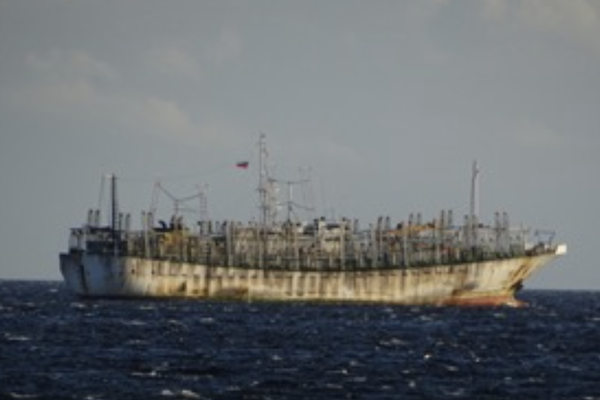
This seems to be at least one explanation for why—despite the evidence—there are no groups in Chile that have protested against the immeasurable environmental damage that thousands of Chinese fishing vessels inflict annually on marine resource stocks in the Southeast Pacific, including highly migratory species such as tuna and jack mackerel, which are of great importance to Chilean fisheries. So far, we are not aware of any business or environmental group that has protested against the harm caused by Chinese industrial fishing, despite the fact that in our part of the world it extends from the iconic Galápagos Islands and Rapa Nui to the waters facing the Strait of Magellan.
Nor has there been any critical voice regarding China’s intrusion into the consensus system of the Antarctic Treaty System, which not only raises questions about the continuity of Antarctic cooperation but is also ultimately including the entire Southern Polar Region in the global geopolitical chessboard, where trade, fishing, and Chinese military deployment must also be situated. Even in the context of the respectful relationship we have outlined, and competing with the Argentine port of Ushuaia, Chilean diplomacy continues to propose Punta Arenas as “the best gateway” to Antarctica to facilitate the success of this chapter of the Chinese imperial project. Incredible.
Chile in its comfort zone
The reflections of the Biden administration regarding the consequences for U.S. security that could arise from Chinese control of the database containing Chilean identities illustrate how the inertia with which the bilateral relationship with China is managed is far from being without consequences. In this area, Chile remains sheltered in its comfort zone, convinced that the strategic and global dispute between China and the United States (and their allies in the Pacific and the rest of the world), which has been fully illustrated in the recent conversation between Joe Biden and Xi Jinping, does not affect us. This is despite the fact that the main theater of this strategic confrontation is the Pacific Ocean and, more specifically, the South China Sea, through which a significant percentage of our trade transits, and where some of our main partners in Asia (Japan and South Korea, adversaries of China) are located.
In practice, China maintains territorial disputes with practically all its neighbors, including several disputes with India (another nuclear power). In the Pacific, in addition to the issue of reunification (Taiwan and its military dimension), China is in conflict with Japan (Senkaku Islands), Vietnam (Paracel Islands), and the other coastal states of the South China Sea. In this latter region, China claims certain “historical rights” that justify its high-seas fishing and also the construction of artificial islands from which it projects not only 200 nautical miles of Exclusive Economic Zone but also continental shelf much further than that distance (map of the “nine-dash line”).
In this latter context, in 2013, at the request of the Philippines (which invoked clauses of the United Nations Convention on the Law of the Sea), the Secretary-General of the United Nations referred China to the Permanent Court of Arbitration. In 2016, once the ruling of that international tribunal was known (which denied the validity of its alleged historical rights in the South Pacific), China simply ignored it. Despite the legal and political precedent set by China’s attitude, neither then nor now has any of the Chilean purists of the pacta sunt servanda (“agreements must be kept,” on which our foreign policy theoretically rests) questioned Beijing’s attitude.
In Chile, the network of fishing agreements signed by China with various archipelagic states in the South Pacific has also not attracted attention, which, in the worst-case scenario, in the medium term (and as has already happened with several African countries), will end up becoming clients of China. These agreements grant China fishing quotas of which Chilean authorities have no knowledge, despite their impact on an ecosystem that, as demonstrated by the El Niño-La Niña phenomena, is not only under stress from environmental change but is also interconnected.
Additionally, Chile seems not to have taken note of the profound political, geopolitical, and geostrategic significance of the recent affair between Australia, France, and the United States regarding the cancellation of a US$50 billion deal for twelve conventional French submarines, which will now be replaced by nuclear-powered submarines to be built in Australia with American licenses and technologies. With all its negative effects on trust within NATO, Washington’s decision to interfere in a deal between two of its allies is part of a policy of containing China’s advance in the Pacific, an area where Japan’s recent interest in also acquiring nuclear-powered submarines must also be situated (a complex issue given the restrictions arising from that country’s commitments at the end of World War II). For Japan, containing China in the Pacific is a priority.
So far, Chile seems absorbed in the success of its foreign trade, believing (or wanting to believe) that a potential escalation of the confrontation between China and the United States and their allies in the Pacific will not affect it. This is particularly serious, as despite the fact that trade with North America and Europe seems stagnant, the relationship with the West as a whole involves not only prices, volumes, or containers but also value. It is already known that Chile’s progressive rapprochement (and potential dependence) on China is beginning to worry many of our historical allies. From their perspective, Chile seems content to reduce its priorities to, first, commercial issues and, second, value issues that only require a declarative effort (environment, gender issues, and other various universalisms).
From this angle, it is concerning that a potential clientelism from China —backed by merely economic interests—could affect other areas of our international positioning, especially in such important areas as scientific and technological cooperation, and Western investments in sectors of our economy and society that require quality innovations that China is not in a position to guarantee. China’s intrusion into the field of fiber optics, data transmission and security, and the operation of 5G raises concerns in many Western capitals.
Challenge for the next government
It seems advisable for the next government to undertake a review and reflection on the type of bilateral relationship with China that is beneficial for the country. If for Chile the Chinese demand for mining, agricultural, and fishery products is significant, those same products are also important for the Chinese economy (especially for its food security). It seems that the time has come to ask ourselves: Is it advisable for Chinese companies (after all, the government and the Chinese Communist Party) to secure control over critical sectors of our economy? What are the possible effects of a mining sector or a telecommunications sector controlled by Chinese capital? Does it have consequences for Chile’s international positioning to be “understood” as part of the “Chinese camp”?
Likewise, it is entirely necessary to reflect on whether it is advisable—or not—to continue remaining silent in the face of the evident Chinese depredation of the High Seas that confronts Chile and other South American countries. It seems essential to coordinate with other Southeast Pacific countries and also with Argentina a common stance regarding the problem of Chinese fishing. It is unacceptable for this phenomenon to reproduce year after year, despite the fact that all affected countries claim to pursue an international agenda centered on marine environmental conservation and transparency in High Seas fishing.
Equally important and advisable is to clarify Chinese intentions in the realm of scientific and political cooperation in Antarctica. Chile should not be an instrument of Chinese geopolitics for the dismantling of the Antarctic consensus. This is contrary to our national interest.
There are many issues and questions that our bilateral relationship with China (and, by extension, with its global geopolitical project) raises for us. Our relationship with this giant of 1.4 billion inhabitants cannot be limited to the commercial-economic dimension. Beyond respect for treaties and the principle of economic freedom, for structural and long-term reasons, it also does not seem advisable to continue allowing the strengthening of China’s role in our economy. We must prevent Chinese power from ultimately instrumentalizing us as pawns in its global chess game with the West. After all, Chile is part of the new American world, and, with other diverse components, its roots are in the West. It is necessary to reflect on the type of relationship that truly benefits Chile. We need to talk about China.
Jorge Guzmán