War in Ukraine and the Reconfiguration of European Security
This article was translated automatically and may contain differences from the original. For reference, read the original.
El Mostrador, February 25, 2022
Since its onset in 2021, the Russian strategic deployment has posed a threat to Ukraine from the North, South, and West. Thus, it has been observed that the strategic objectives are not limited to the rebel regions of Donetsk and Luhansk, as explosions have been witnessed in various cities, including Kyiv. Ukraine, Russia, Europe, and the U.S. observe, react, and defend their actions from different perspectives, all rational and justified according to each party, but interpreted differently by their counterparts.
The origin of the current conflict dates back to Russia’s invasion of Crimea in 2014 and its ongoing support for pro-Russian separatist forces in the rebel regions of Donetsk and Luhansk. However, an important element to consider before beginning the analysis is the perspective of international law and, in this sense, the content of the United Nations Charter of 1945. There, the use and threat of the use of force in international relations is sanctioned whenever it is directed against the territorial integrity or political independence of any State, or in any other manner incompatible with the purposes of the UN. The exception to this is enshrined in Article 51 of the UN Charter, which authorizes the legitimate use of force to respond to an armed attack, affirming the right to individual or collective self-defense of any State.
In this way, Moscow violates international law, while Ukraine will materialize its “legitimate right to individual defense,” estimating that, within the Security Council, for obvious reasons, there will be no unanimity due to the veto power of at least one of the five permanent members (China, the United States, France, the Russian Federation, and the United Kingdom and Northern Ireland).
The unfolding events will reconfigure the security situation in Europe in the most profound way since World War II. Ukraine will continue to be a focal point of tension between Russia and its Euro-Asian geopolitical vision versus the European focus centered around Central Europe. What is at stake in this conflict for Russia is to limit NATO’s eastward expansion, as well as the removal of U.S. nuclear weapons from Europe, expanding Russian influence to the West to continue enjoying its historical strategic depth.
The Interests at Stake
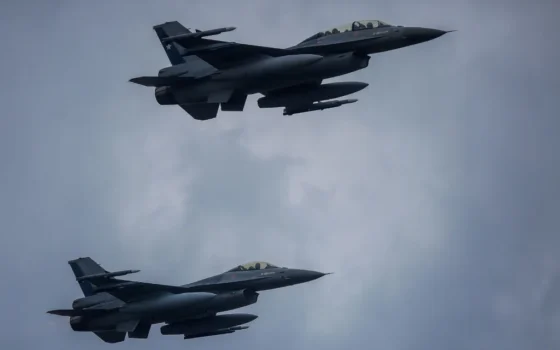
In the early hours of Thursday, February 24, eastern Ukraine suffered an armed attack from Russia, which has termed it a “special military operation” involving an estimated ground presence of 105 battalion tactical groups (BTGs), in addition to over 40 naval units deployed and nearly 500 combat aircraft. This operation has included the general use of means in the spatial and informational dimensions, as well as non-military resources to achieve political and strategic ends.
Since its onset in 2021, the Russian strategic deployment has posed a threat to Ukraine from the North, South, and West. Thus, it has been observed that the strategic objectives are not limited to the rebel regions of Donetsk and Luhansk, as explosions have been witnessed in various cities, including Kyiv. Ukraine, Russia, Europe, and the U.S. observe, react, and defend their actions from different perspectives, all rational and justified according to each party, but interpreted differently by their counterparts.
For Ukraine, which, while having shared historical roots with Russia, has consolidated as an independent state since 1991, it has the option to pursue various alternatives to ensure its survival, including becoming part of NATO. It is worth recalling that in 1994, Kyiv agreed to cede all nuclear arsenals within its borders to Russia, with the commitment that its independence, sovereignty, and existing borders would be respected in the future, in what is known as the Budapest Memorandum. The other signatories were Russia, the U.S., and the United Kingdom.
Despite the supposed guarantees and commitment of non-intervention from Russia, in 2014, Ukraine lost control of Crimea to Russia. During the same period, this country saw how groups of separatist insurgents from the Donbas region, with Moscow’s support, have used force to demand their separation from Ukraine. Thus, from the Ukrainian perspective, its incorporation into NATO is fundamental in order to integrate into a larger system that provides security assurances, which did not occur.
On the other hand, for Russia, the issue presents itself as a matter of state security and survival. Since the fall of the USSR, 14 former Soviet republics have gained independence. Among them, the current Baltic States joined NATO, along with other countries from the former Warsaw Pact, which meant the appropriation of strategic spaces by the West at the expense of Russia’s security space and strategic depth.
Thus, the potential incorporation of Ukraine into the Western security pact, either now or in the future, would mean the possibility of having American weapons on its own borders, which is considered unacceptable for Putin. Furthermore, Russia seeks for NATO to return to its position prior to the fall of the USSR, that is, to undo the inclusion of countries that were under its sphere of influence and that are now close to the U.S.
Additionally, Putin seeks to regain the role of a global power. In this sense, over the past two decades, he has endeavored to restore the capabilities of the Russian Armed Forces, both in terms of technology, training, and operational availability. He has also made extensive use of non-military means to achieve political and strategic ends, sometimes with greater effectiveness than the use of force itself.
The United States is another interested party. It is perhaps Putin’s main objective. Washington must strengthen its position while simultaneously confirming to its European partners its effective involvement in the security of the old continent. This is because the prevailing sentiment in the U.S. is that if Russia achieves its goals, there will be no real reasons not to continue with similar demands that could threaten the stability and security of European countries.
For Europeans, the situation is also highly complex. On one hand, they face the aggressive attitude of the Kremlin while depending on Russian gas. Additionally, not all of its members have reacted in the same way. The United Kingdom, for example, has aligned with the U.S. position by sending arms to Ukraine. France is attempting to act as a mediator. Germany has been more cautious, perhaps due to its greater dependence on gas. What prevails in the European political atmosphere is that if they yield to Putin’s pressures, there would be nothing to stop him from continuing to advance his demands later, which could include the Baltic States, all active members of NATO.
Understanding the Logic Behind the Russian Operation
The initiation of military operations in Ukraine, far from being a surprising action, is the result of a long rational process whose origins go much further back than the last concentration of Russian forces at the border in 2021 and even beyond the annexation of Crimea in 2014. This process is framed within the Russian strategic doctrine, recognized as the “Gerasimov Doctrine,” and understanding it allows for a better comprehension of what is happening today and the developments that led to the war.
General Valery Vasilyevich Gerasimov has been the Chief of the General Staff of the Armed Forces of the Russian Federation since 2012 and is credited as the originator of the strategic conception that currently predominates in Moscow. In 2013, during an intervention he made before the Russian Military Academy of Sciences, Gerasimov proposed what he considered the evolution of warfare or, at least, how Western countries, particularly the U.S., had carried out actions to extend their sphere of influence in countries traditionally close to the Soviet Union.
In this way, a campaign under this doctrine considers, first, an informational and psychological phase aimed at neutralizing adversary leaders (those who make decisions); second, indirect and asymmetric actions through economic, informational, and technological means to neutralize the enemy’s military apparatus; third, non-military actions degrade the adversary’s capacity to compel or use force, and produce a negative image in global public opinion that eventually deters the rival from initiating aggression; fourth, the initiator of the Gerasimov strategy employs a massive campaign of deception and disinformation to obscure the timing, scope, scale, and nature of the attack; fifth, subversive and reconnaissance activities carried out by special operations and covered by informational operations precede the kinetic phase of the campaign; sixth, the kinetic phase begins with air and space dominance aimed at destroying critical assets of civil technological-industrial infrastructure and state and military management centers that will compel the state to capitulate. Operating under no-fly zones, private military companies and armed opposition prepare an operational configuration for the invasion; finally, seventh, in the territorial occupation phase, most of the campaign objectives have been achieved, as the adversary’s capacity and will to resist have been broken and evaporated.
Minsk and the Arguments of War
To add another ingredient to the situation, following Russia’s invasion of Ukraine, Western leaders accuse Vladimir Putin of failing to comply with the Minsk agreements. Meanwhile, the Russian president claims that it is Ukraine that is not fulfilling the deal. So, what are we talking about when we refer to the Minsk agreements? In reality, we should be interested in Minsk II.
In 2015, the leaders of Russia, Ukraine, France, and Germany met to bring peace to the Ukrainian territories taken by pro-Russian separatists. The same territories that today declared unilateral independence. The result of the meeting was Minsk II, an agreement signed between Russia, Ukraine, separatist leaders, the OSCE, and backed by the Security Council.
The text committed to a ceasefire, the withdrawal of weapons from the front line, dialogue on elections in the areas occupied by the rebels, the restoration of full economic and social ties between the two parties, restoring Ukrainian government control over the border with Russia, the withdrawal of all foreign forces and mercenaries, and a constitutional reform that would grant some autonomy to the regions of eastern Donbas in Ukraine. This last point has been the most difficult for Kyiv to fulfill and has been used by Russia to argue that the agreement has not been complied with.
Moscow has repeatedly stated that Ukraine has no interest in implementing the terms of the agreement. Meanwhile, the United States and some European countries have supported the pact, calling for both parties to comply with what was agreed. Today, with an invasion by Russia and prior support for the unilateral declaration of independence, it is argued that Russia is also not fulfilling the deal.
Ultimately, whether the Minsk agreements would have had a positive outcome is difficult to say. Both countries had very different interpretations. While Ukraine viewed them as a way to reunite the country, Russia believed it would lead to establishing a government aligned with Moscow in the rebel provinces.
In summary, Russian actions are justified based on its particular national interests, as well as the desire to strengthen its own political regime. In this new conflict, each side has its own allies. On one hand, Ukraine has the limited support of NATO and most European countries. On the other, Russia enjoys political backing—still not explicit—from the Collective Security Treaty Organization (CSTO), a military alliance composed of Armenia, Belarus, Kazakhstan, Kyrgyzstan, and Tajikistan, as well as the triple alliance among China, Russia, and Iran. In our region, it has the sympathies of Cuba and Venezuela. Much remains to be seen.
John Griffiths
Head of Studies, AthenaLab
Pilar Lizana
Researcher, AthenaLab
Marcelo Masalleras
Researcher, AthenaLab