Northern Macrozone: Fewer Questions, More Answers
This article was translated automatically and may contain differences from the original. For reference, read the original.
El Líbero, Saturday, April 9, 2022
It is not the previous government, nor the current one, nor the next; it is all those who, with a state vision, must respond to a situation for which we were unprepared.
“Where are those people?” asked Interior Minister Izkia Siches during her speech at the Security Commission session of the Chamber of Deputies. Where are the minister’s advisors, I wonder. Expulsion flights are a matter of great relevance to be turned into a criticism of the previous government. The migration crisis that Chile is facing is one of the major challenges, and providing security, development, and well-being to a community that is changing its demographics at an unprecedented speed will not be easy. The north is the other major test that the government is failing.
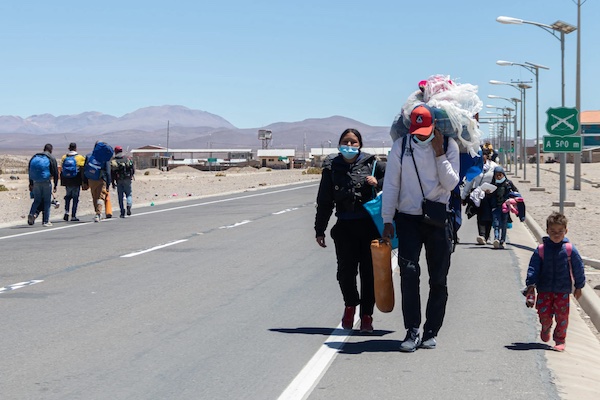
A few months ago, the mayor of Colchane said that “they enter as if it were their own home,” counting between 400 and 500 illegal entries daily. A week ago, the same mayor asked the government to open the integrated border complex and present proposals on migration following the death of two migrants who entered through an unauthorized crossing. The porosity of our northern border appears as an oasis in the desert that, for many, is the opportunity to improve their quality of life and escape a political crisis, while for others, it is the gateway to bring illegal activities to Chile.
From the urban poles of the Northern Macrozone, there are calls to improve security. The events experienced in the summer were a demonstration of the urgent need for a migration policy that addresses the transnational threats that exploit those who move. The beating of the police officer, the extortion of the businessman in Iquique, and the death of the truck driver in Antofagasta triggered a social process that cannot be reversed and must be addressed by the state with long-term cross-cutting actions. It is not the previous government, nor the current one, nor the next; it is all those who, with a state vision, must respond to a situation for which we were unprepared.
So, Minister, do not look back, and instead of ironically asking where they are, ask yourself what to do to move forward with concrete solutions. The desert and the mountain range are no longer natural borders that kept the country away from transnational challenges; the southern border of the United States is no longer the only place where the needs of many mix with the illegal activities of a few, threatening those who move and the countries they pass through. The northern border of Chile is the other major area where the desperation to reach a better place coexists with the crime that feeds on that need.
The Northern Macrozone is under a State of Exception; the measure seeks to respond to the migration crisis at the border. However, people continue to arrive. The mayor of Colchane reports that the shelter is overwhelmed and people are entering through more isolated areas, allowing organized crime groups dedicated to human trafficking to proliferate. The infamous coyotes transport migrants from Bolivia to Santiago.
It is urgent that authorities present concrete proposals that consider all dimensions of the problem. Now more than ever, we need integrated responses that address not only the social aspect associated with the needs and vulnerabilities of migrants but also the security aspect to curb the advance of crime.
Pilar Lizana
Researcher, AthenaLab
Source: El Líbero