A Strong Rooster in La Araucanía
This article was translated automatically and may contain differences from the original. For reference, read the original.
The issue in the Southern Macrozone is one of security, yes, but it is also political. Political in that the involved actors seek power.
El Líbero
A barking dog does not bite, says the popular saying. But in this case, it barks and bites. The threats made by radical organizations in Araucanía since last December against those currently in government come with a fundamental ingredient: the willingness of these groups to make them a reality.
For more than six months, they warned that it did not matter who governed, “it will not stop with Piñera or Boric” They were going to raise the flag of struggle and advance in what they called the “liberation of Wallmapu” This week, Congress voted on an extension of the limited State of Emergency in effect in the Southern Macrozone , and in light of the possibility of its extension, radical groups launched a coordinated attack that demonstrated their level of organization and a new willingness to carry out their threats. They do not fear the State, and violence has become a tool of pressure.
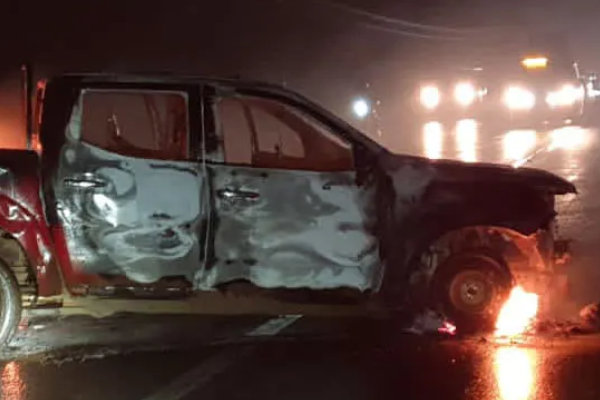
Nine interruptions in total. They blocked sections of Route 5 South and intercommunal roads. They obstructed passage with trees and also set various vehicles on fire in Curacautín and Malleco. This was not just any attack; the fact that it focused on blocking roads represents a defiant attitude that seeks to know how far they can go before the government abandons dialogue approaches and decides to use force to address a security problem that has intensified in recent years.
Ensuring free transit and routes was the reason given for the application of the State of Emergency. Precisely the objective of this week’s attacks. Demonstrating that “it can be done,” challenging the State, and seeing how far they can go would be some of the explanations behind what occurred.
The issue in the Southern Macrozone is one of security, yes, but it is also political. Political in that the involved actors seek power. On one hand, those engaged in illegal activities in the area are trying to secure it, while the State loses a little with each attack.
In the late 90s and early 2000s, the CAM spoke of the Mapuche Nation-State; today they refer to Wallmapu. In other words, defining a territory where to exercise that power. The State is on the other side, the violent actors declare themselves against it, and the fact that President Boric refers to the “conflict between the State and the Mapuche people” only deepens the problem.
We must start by stopping the narrative of a “conflict between the State and the Mapuche people.” The State is not in conflict! And we must continue by recognizing that a region of the country is suffering the consequences of terrorist acts. Limited or not, the State of Emergency must be accompanied by reality, and our authorities must be capable of understanding what it means for military forces to be deployed in national territory. We are caught in a power struggle between radical organizations and the government. The success of the latter will depend on whether they want to assume the consequences of a response that requires moving away from ideological overtones, using force, and designing a long-term strategy for a region severely affected by violence.
Pilar Lizana
AthenaLab Researcher