A race against time
This article was translated automatically and may contain differences from the original. For reference, read the original.
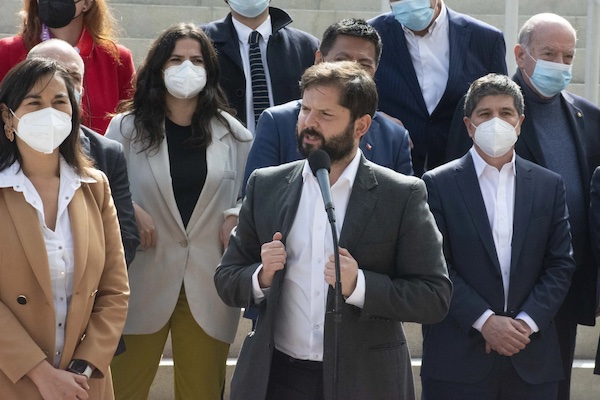
Why didn’t they conduct the diagnosis between December and March to arrive at the government with concrete proposals?
This week, the President was visiting the other macrozone, the north. On his last day in Arica, he held the first National Public Security Council of this year, where he presented a series of measures aimed at controlling the crime and the criminal activity. Beyond the announcements, the location is noteworthy. In that city, homicides have significantly increased; last week, there were 26, 10 more than recorded for all of 2021. The region of Arica and Parinacota is only surpassed by Tarapacá, which leads in the number of murders per 100,000 inhabitants.
Why even discuss the cartels of the organized crime that have already arrived in Chile; much has been said about this, but what remains to be discussed is how this context of insecurity in the north could be an entry point for other criminal groups. For example, the Brazilians from the Primeiro Comando da Capital (PCC) and Comando Vermelho are already operating in Argentina, Bolivia, and Peru, meaning in all our neighboring countries. Who says they aren’t looking at Chile as their next step? They originated from the prison system, their business is drugs, and they do not limit themselves to the national environment.
The situation is concerning, indeed. Our institutional vulnerabilities are attractive enough for others to want to follow in the footsteps of the Mexicans and Venezuelans who have come to Chile. Therefore, it is time to take action, and we are behind on this.
33 measures for the “institutional strengthening and governance in public security, crime prevention, (…) prosecution of organized crime, control of firearms, and recovery of public spaces,” the government reported on its website regarding the council meeting. The Minister of the Interior spoke about constructing a diagnosis alongside local authorities. Why didn’t they conduct the diagnosis between December and March to arrive at the government with concrete proposals? That is what I wonder. They would have saved time, and once established, they could have presented the update of the National Crime Prevention Plan instead of just announcing it more than three months after taking office.
Time. That precious and scarce resource is precisely what is needed to develop a robust response to crime. We no longer have it; criminal organizations have arrived, established themselves, and Chilean criminals are quickly learning from them.
One aspect announced by the President in Arica, which is worth highlighting, is the recovery of public spaces. When looking at crime, it is often thought that force is a way to respond to it, but there are measures unrelated to force that are fundamental for maintaining results, and those are related to public spaces. Keeping them clean, orderly, and equipped with the services the community needs in good condition is an important step to prevent crime from taking over our territory.
Thus, the diagnosis is made, the proposed measures are in place, now it is just a matter of putting them into action and recovering lost time.
Pilar Lizana
Researcher, AthenaLab
Source: El Líbero