Who holds power in La Araucanía?
This article was translated automatically and may contain differences from the original. For reference, read the original.
El Líbero, July 16, 2022
The radicalized organizations in the Southern Macrozone have issued clear and direct statements indicating that it does not matter who the current President is or the new Constitution; the struggle must continue.
In a context where narrative plays a key role in gaining and maintaining power over time, the consistency of the narrative is fundamental to facing political challenges. And what challenges we have in Chile! The issues in the Southern Macrozone are among them.In that part of the country, power has shifted from the State to radical organizations, driven by a vague message that has empowered the wrong groups.
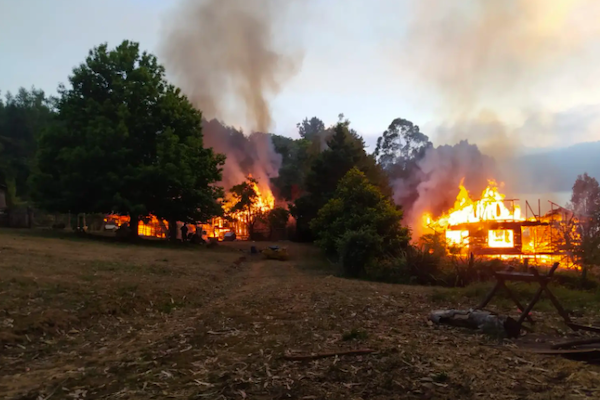
A little over 400 individuals distributed across 7 violent organizations have constructed a narrative around their objectives, maintaining a consistent thread that has not changed over time. Territorial control is one of the desired outcomes they realize in various ways. On the other side, the State, led by a government that promotes a narrative through contradictory actions, has allowed those four hundred to gain power.
As a candidate, Gabriel Boric visited La Araucanía; as President, he has yet to do so. As the representative of the Frente Amplio, last October, from that region, he stated that he could no longer repeat “the same recipes that have caused more violence and more division,” criticizing a measure that was renewed this week: the State of Constitutional Emergency.
During that same trip, he referred to “the legitimate claims of the Mapuche nation.” In light of this, I wonder if those seven groups represent the demands of that indigenous people. It is important to use words carefully; they do not hold the same meaning for everyone.
The narrative is fundamental, but actions must be consistent with it. It is not possible to send those messages when the measures taken deploy military and police forces in a state of exception to contain the security problem. So, what narrative do those 400 who use violence as a method of political action adhere to?
Those seven groups have issued clear and direct statements where they have said that it does not matter who the current President is or the new Constitution; the struggle must continue. One group has been particularly emphatic: the CAM. It has called for violent resistance among its people and others. The narrative has remained consistent. Neither plurinationality nor autonomous territories will divert them from their strategic project “both militarily, politically-culturally, and productively, intensifying territorial recoveries…” as they stated in their latest message.
The issues in the Southern Macrozone have a security aspect that we cannot deny, but that matter requires responses that go beyond military and police action. Solutions must come from the political realm, as they are the ones who must agree on a message and come to a consensus on the nature of the threat. Until that happens, the violent actors will continue to hold power and consolidate their ability to affect others to achieve the desired outcomes.
Controlling the narrative is fundamental when we talk about power, and in this particular case it is that narrative that is failing. A confusing narrative will only result in others filling the voids left by confusion, and the population will continue to suffer the effects of violence.
Pilar Lizana
Researcher, AthenaLab
Source: El Líbero