Quo Vadis, Chile's Foreign Ministry?
This article was translated automatically and may contain differences from the original. For reference, read the original.
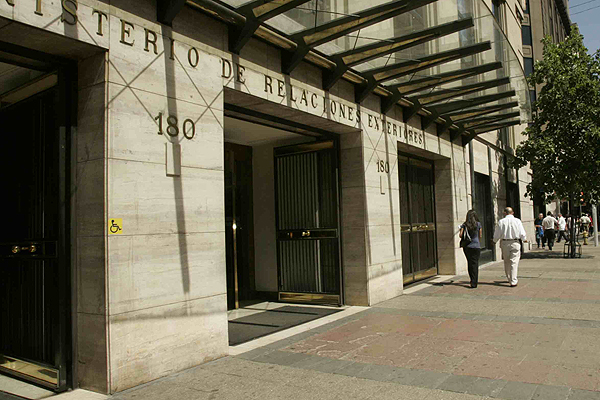
The government of President Gabriel Boric is approaching five months in office, a period not free from controversies and missteps. Some of these missteps stem from the management of the country’s international relations, led by Minister Antonia Urrejola. In this column, the author reviews some of these events, such as the issue with the King of Spain on the day of the change of command, the remarks about “Walmapu” that caused problems with Argentina, and most recently, the proposal from the Constitutional Convention that establishes, at a constitutional level, that Chile’s foreign policy “should prioritize its relations with Latin America. For what reason?”
EL Mostrador, July 26, 2022
As we approach five months since the government was installed, there is no room for further missteps, disorganization, embarrassments, absurdities, or lack of coordination in the management of our international relations. Enough damage has been done to our country’s image abroad.
The government’s debut, marked by serious ceremonial and protocol issues during the change of command ceremony, was capped by the President’s interview with a television channel, where he blamed the King of Spain for delays in the program. Such a blunder earned a very strong and unusual response from the Spanish Royal House, which rightly reacted with anger, and a video that circulated widely in Chile and around the world gave our President an international nickname due to that episode.
The Interior Minister’s comments about “Wallmapu” created problems with Argentina. The appointment of ambassadors is an ongoing issue that no one seems to understand. The problem worsens when the Foreign Minister explains that they have fulfilled the campaign promise regarding the number of non-professional ambassadors, when the criticism is not about the numbers, quotas, or electoral promises, but rather about the suitability, capability, and relevance of the appointments, as well as the slowness of the process.
The appointment of the son of a communist deputy as a cultural attaché in Spain, the impasse with the Chilean consul in Barcelona (the incredible formal reprimand received by the consul, a professional member of Chile’s foreign service, for defending the country’s interest against nepotism), and the corollary of the affair where the son of the communist deputy will have to “renounce his Spanish nationality to represent Chile’s interests”, are episodes of embarrassment in the foreign service.
We are negotiating unique aspects of the update of our free trade agreements with the European Union, and we have the luxury of declaring ourselves “in reflection.” The approval of TPP11 is inexplicably stalled, even though we were among the promoters of the initiative.
We have a Minister of Finance investing his technical, academic, and professional credibility in a Chile Day in New York, convincing investors that the policies promoted by the government are not as harmful or bad as they seem, while at the same time, the Undersecretary of Economic Relations publicly, notably, and prominently receives the pressure group “Chile better without FTAs.”
While for years we have tried to position Chile as a food power, the Ministry of Agriculture speaks of “food sovereignty,” and when countries around the world nominate a Chilean lawyer, Claudio Grossman, to join none other than the International Court of Justice in The Hague, the Foreign Ministry simply does not exist. Now we are going for Bolivia, but without an agenda or strategic planning, naively believing in international goodwill. Someone in the Foreign Ministry is not doing their job well.
Chile has lost its compass and is adrift on the international stage. It lacks a clear direction. Without a clear direction, it is impossible to determine the course. Without determining the course, we drift, pushed by forces we do not control. We are in a state of confusion. We confuse what to do with how to do it. Without knowing where we are going, we cling to multilateralism. It does not matter where, as long as it is with multilateralism. Human rights and the environment serve exactly the same purpose. It does not matter where. But simply respecting human rights will not get us anywhere, and merely respecting the environment will not either.
As the icing on the cake, we have the proposal from the constitutional convention that establishes, at a constitutional level, that Chile’s foreign policy must prioritize its relations with Latin America. For what reason? This is why it seems pertinent to ask: “Quo Vadis, Chile’s Foreign Ministry?”
We are in the 21st century. A century marked by processes of globalization. Technology has made it possible to converge energy, raw materials, knowledge, and capital in countries where there are comparative and competitive advantages to develop industrial transformation processes. Human capacity and excellence move without borders. China is the best example of this process. A highly efficient global maritime transport system, sustaining planetary logistical chains, an internet that transports relevant information in real time everywhere, and a population free to choose how, where, and when to inform themselves make it absolutely impossible for countries to be autarkic, unless one reaches the extremes of authoritarian control of the communist dictatorship of the Kim family in North Korea.
People everywhere in the world compare, for themselves, the reality in which their peers live in other countries with their own reality. The administrative, tariff, and ideological barriers that some countries create are not enough to stop the stampedes. At the end of the day, there are countries with political regimes that people want to reach, even at the risk of their lives, and there are countries with political regimes from which people are willing to give their lives to escape. Thus, migratory flows occur based on common sense. People move because they want to be better off, not worse than they were.
Countries with common interests and objectives develop treaties and alliances to enhance their national power at the negotiating table. Chileans have a passport that is highly valued and took decades to achieve that prestige. Visa waiver with the U.S., visa-free travel in many countries. Treaties to avoid double taxation, free trade agreements, educational and cultural alliances, membership in the OECD. We live in an interconnected world that needs cyber ambassadors, that needs to interact in new and different ways than we currently know, that needs different expressions and to account for very different realities; in short, a universe of valuable international relations that allows us to live the life we live today, projecting ourselves to the world much better than previous generations of Chileans, but that demands from our Foreign Ministry a forward-looking vision of the future very different from what is being offered today.
For all these reasons, we cannot afford to continue without direction and without a captain. We cannot continue to waste efforts and resources on activities that yield very little to the substantive interests of the nation. We need, and we say this as responsible Chileans concerned about our country’s international relations, greater clarity regarding the work of the Foreign Ministry. It is not a communication problem. It is a problem of lack of leadership, content, orientation, goals, and objectives. A lack of facts and a lack of measurement of results. Where are we going?
Chile needs a Foreign Ministry that leads and sets the direction for where we are going on the international stage. What is our identity and what is our aspiration as a tri-continental country: Polynesian, Antarctic, South American, and, moreover, connected – open – dependent on the world?
For a small country like ours, whose well-being and development depend on foreign trade, on our relationships with our peers in the world, on maritime traffic, on our strategic alliances with friends seeking a good order in the international arena based on clear rules, and on our ability to access international markets with the products of our efforts and export capacity, it is essential to have a Foreign Ministry grounded in facts, figures, and common sense, and above all, understanding the national interest.
We need a Foreign Ministry that sets priorities based on strategic analysis and that clearly links cause and effect in foreign policy efforts. What happens in the world affects all Chileans, every day. For that reason alone, we have the right and the obligation to demand from our authorities in charge of international relations greater seriousness, proper planning, and clear orientation. Above all, clear leadership and an understanding that their purpose is to defend and protect the national interest, the interest of Chile.Finally, the National Directorate of Ceremonial and Protocol of our Foreign Ministry should, if possible, be much more proactive in its function. Perhaps it could seek wisdom in a norm that Chilean grandmothers used to teach: “When in Rome, do as the Romans do.” Within the country, authorities owe themselves to their electorate, and their formality, or lack thereof, is a matter of the democratic game left to the discretion of the voters. However, when traveling abroad, representing not only today’s Chileans but all the generations of Chileans who preceded us in creating and positioning an image of what our country is today, and also generating the conditions of prestige and image for those generations that will come in the future, it is necessary to advise our authorities regarding formality in acting, speaking, doing, and appearing. That would be a tremendous contribution to Chile’s image abroad.
Richard Kouyoumdjian Inglis
Vice President, AthenaLab