Where has the social contract gone in La Araucanía?
This article was translated automatically and may contain differences from the original. For reference, read the original.
El Líbero, August 13, 2022
States of emergency are a temporary tool. Their duration will depend on the efforts made by the State to regain power.
This week, a new extension of the State of Emergency for the Southern Macrozone. The Minister of the Interior has stated that this measure is exceptional and that they will continue working. However, understanding that this is an extraordinary action, what are they doing to bring us closer to lifting it?
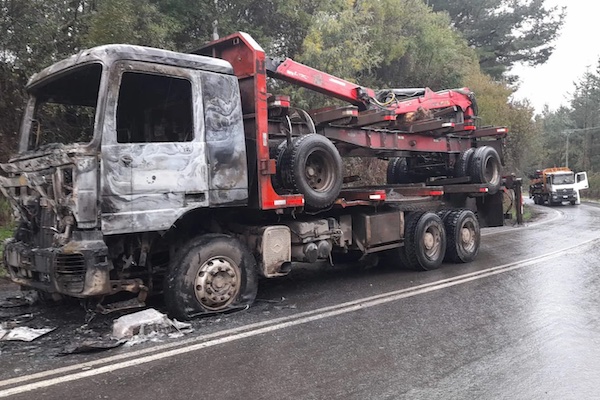
A few days ago, the Arauco Malleco Coordinator (CAM) claimed responsibility for an attack on four vehicles and a container in La Araucanía, and as if that were not enough, banners referring to the Weichan Auka Mapu (WAM) were found on the San Marcos estate in the O’Higgins region, marking the first attack in that area of the country.
The State has retreated, and territorial control is in the hands of those groups that, shielded by the ‘Mapuche cause,’ carry out terrorist actions and profit from illegal economies associated with timber theft and drug trafficking. Power has slowly shifted to radicalized organizations that intimidate the population and threaten to extend into the central region.
The Social Contract exists because citizens have ceded their power to a higher entity, the State, to protect them. This situation has long been absent in the south, and it is not the fault of one side or the other, but of all. Since 1990, cases related to ancestral claims have accumulated; in 1997, the first attack on logging trucks was identified, coincidentally the same year that the CAM. Since then, violence has only increased, and the nature of those initial actions of ‘the cause’ is now very different.
Other organizations have joined the CAM: the Weichan Auka Mapu, the Mapuche Malleco Resistance and the Mapuche Lafkenche Resistance, among others, but none as powerful as the coordinator led by Héctor Llaitul. Their power has grown to the extent that the cinema at Matucana 100 showed the documentary ‘CAM: Liberation of a Nation’ during the first days of the month, where the production team, according to their description, was ‘an eyewitness to the national liberation project.’ If that is not power, I do not know what is. I do not believe there is another terrorist group in the world that can screen a documentary in national cinemas, let alone a State that allows it.
So, what is the purpose of states of emergency without a recovery plan for power by the State? The results of the extraordinary coordination in La Araucanía and Biobío have been successful; there is no doubt that deployments in the area, both under the previous government and this one, have reduced attacks, but what are we doing to maintain those results? Gradually, violent groups must be dismantled, every crime pursued, and those who commit them punished with just penalties, and most importantly, regain control of the territory. The ‘conflict’ fuels illegal economies and vice versa, but ultimately, it all comes down to power, which the State has lost, and the longer it takes to recover it, the deeper the violence will become.
States of emergency are a temporary tool. Their duration will depend on the efforts made by the State to regain power. Only by taking it away from terrorist organizations can balance be achieved. But, to make an omelet, you have to break eggs. There lies the dilemma: are we willing to break the eggs?
Pilar Lizana
Researcher at AthenaLab
Source: El Líbero