The Art of Good Diplomacy
This article was translated automatically and may contain differences from the original. For reference, read the original.

El Mostrador, August 19, 2022
It would greatly benefit our Foreign Ministry to place more value on professional experience, history, and established practices in foreign relations. These are too important to be left to interns or to be learned on the job. Foreign relations are related to our aspirations as a country, the role we want to play in the international arena, how serious and reliable we are as commercial partners and political allies, and the values we uphold on the international stage. A decisive shift towards seriousness and professionalism in our Foreign Ministry is urgently needed.
Lord Henry John Palmerston was one of the most recognized Foreign Secretaries of Great Britain, not only for his long career in public service, especially in international relations, but also because he served during a period in history when Great Britain rose to the pinnacle of global powers. Lord Palmerston left a legacy of his extensive diplomatic and statesman experience in the phrase: “Nations have no permanent allies, only permanent interests.”
With surprise, we noted in the press on August 16 that our Foreign Minister stated: “The Government of Chile’s permanent commitment to China, in light of the dispute with Taiwan.” This declaration is astonishing for several reasons.
First, the lack of clarity from this Government regarding what the national interest is. That elusive national interest that Lord Palmerston suggests should guide decisions in foreign policy. When there is confusion regarding the national interest, it is impossible to set the correct priorities, it is easy to confuse means and procedures with the ends to be achieved, and worse still, it is easy to lose freedom of action by tying the Government of Chile to a “permanent” commitment with another state.
Why are we getting involved in a dispute that benefits us in no way and complicates matters for us? If we understand the signals that the current Government and its coalition have indicated, their foreign policy priority lies in Latin America and the promotion of the “turquoise sea.” It is true that this definition contradicts any logic and all hard data regarding trade exchange, foreign investment, strategic alliances, and the country’s general priorities. But if we are consistent with this political definition to elevate it to constitutional rank, what are we doing by committing to permanent support for the Government of China? Words in diplomacy carry significant weight. They are very powerful signals.
We are negotiating with the EU an update of our free trade agreements. We urgently need to raise levels of investment and foreign trade. This has been expressed by the Minister of Finance and the Minister of Labor in a recent meeting with business leaders, and on the same day, we are offering permanent support to China in its conflict with Taiwan?
The United States is the world’s largest economy and our main strategic ally. We share with them representative democracy and the alternation of power as forms of government and freedom as a supreme value. How will the U.S. perceive the statement from Chile’s Foreign Minister regarding her permanent commitment to China concerning Taiwan? We have interests in our relationship with the United States that will undoubtedly be harmed. We must not let the world’s leading power start to accumulate grievances, especially after our President disregarded the host’s representative at the Summit of the Americas, and now the Foreign Minister makes another blunder.
No less relevant is the statement from the Chinese ambassador in Chile regarding the visit of U.S. House Speaker Nancy Pelosi to Taiwan. In his insert in the national press, the Chinese ambassador made it abundantly clear that the issue of Taiwan is an internal matter for the People’s Republic of China, where it is unwilling to accept any form of foreign interference. What are we doing declaring our “permanent” support for China in its relationship with Taiwan? How does that add value to Chile, Chileans, and the national interest? Are we getting involved in supporting the internal policy of the People’s Republic of China?
It is true that Lord Palmerston is a figure from the 19th century, but his significance derives from his experience and achievements. It would greatly benefit our Foreign Ministry to place more value on professional experience, history, and established practices in foreign relations. These are too important to be left to interns or to be learned on the job. Foreign relations are related to our aspirations as a country, the role we want to play in the international arena, how serious and reliable we are as commercial partners and political allies, and the values we uphold on the international stage. A decisive shift towards seriousness and professionalism in our Foreign Ministry is urgently needed. If these blunders and missteps are not corrected, we risk ending this Government’s term with immense damage to our international credibility, being recognized as true “clowns” of international relations, and continuing to be asked by prominent figures like John Kerry: “Where are the beers?”
Time for a reality check, to avoid getting involved in fights between big dogs where we have not been called, to continue developing our trade with the whole world, which certainly includes the United States, China, and the rest of the Indo-Pacific, to keep seeking a stable and peaceful world that allows Chile to become more developed, and its people, more prosperous.
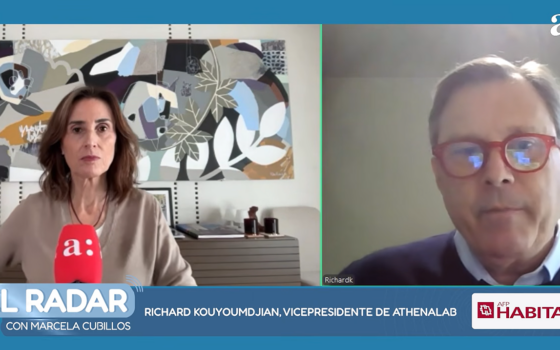
Richard Kouyoumdjian
Vice President at AthenaLab
Source: El Mostrador
*The comments and opinions expressed represent the views of their authors, not necessarily those of the institution.