The fish dies by its mouth
This article was translated automatically and may contain differences from the original. For reference, read the original.
El Líbero, October 29, 2022
Reality hit hard for the idealistic president.
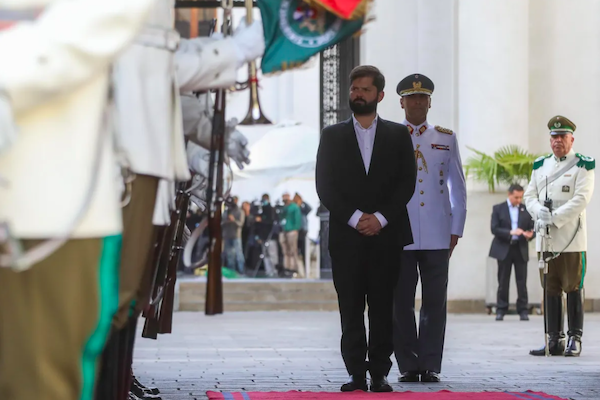
“I hope we do better,” said the newly elected president Boric on December 19, 2021, when he received a call from then-president Piñera. Well, many, rather a large majority, are still hoping for that. The expectations were extremely high; the youngest president in history arrived with promises of structural changes that led many Chileans to believe their lives would be different. The problem is that those same Chileans realized there was a crucial aspect for improvements that was actually worsening: security.
The fish dies by its mouth, says the popular saying. In this case, reality hit hard for the idealistic president. Shortly after taking office, the reformist spirit shifted to a strong support for Carabineros, discussions about criminals during the commemoration of October 18, and defining security as the top priority. And how could it not be, when the figures are clear: fear remains at historically high levels; homicides had increased by almost 30% by mid-year; irregular migration by 135%; and we are practically only talking about organized crime and settling scores. How can we achieve development and well-being in such a scenario?
This week, the survey by the Paz Ciudadana Foundation confirmed what was feared: crimes of greater social significance increase the perception of insecurity among Chileans at a time when conversations and agreements are appreciated, but what is needed are concrete actions and, more importantly, the results of those actions.
The government must be cautious; it should not end up like the fish. Security is a basic requirement for progress, something that seems unlikely to arrive soon. In fact, ECLAC warned that, in an adverse international scenario, Chile will be the country with the worst economic performance in 2023. So, what do we do with all the promises?
After biting the hook, the situation for the fish changes radically. For the president, in less than a year, the national context took an unexpected turn. The ovations in Valparaíso and Santiago on March 11 of this year turned into boos. Less than 30% approve of the president’s management, and the demands for health, pensions, and education have been replaced by crime, public order, and the fight against drug trafficking.
The fish bites a hook set by others, but in the case of the government, they set the hook themselves. It would not be so complex to deal with a change in the script. Contexts transform, and flexibility and adaptability are part of that. Another issue is that the same coalition that may have set the hook has such different visions. They can endure a change in narrative to free themselves. Expectations can eventually be managed, but what do we do when friendly fire fractures from within while credibility is lost?
It is time to start changing the script, but with clarity and conviction. Acknowledge the mistakes, free themselves from the hook, and get their house in order. The time for diagnoses has passed; they must demonstrate through actions that they can do better; otherwise, they will end up like the fish.
Pilar Lizana
Researcher, AthenaLab
Source: El Líbero