The agreements of the Minister of the Interior
This article was translated automatically and may contain differences from the original. For reference, read the original.
The much-promised plan against organized crime is an important starting point, but we have yet to see it.
National policy is seeking agreements, especially regarding security. However, merely reaching a common point is not enough. It is necessary to dimension the problem, understand its multiple facets, and define the minimum requirements needed to advance in that much-discussed cross-cutting agreement.
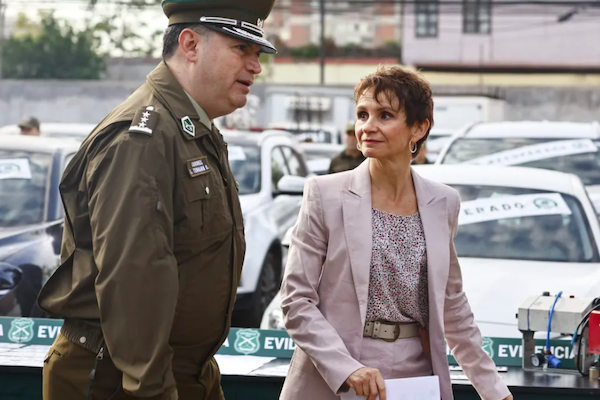
This week, the Minister of the Interior explained that she has met with local and political actors and that discussions will continue next week. She also spoke of an agreement with UN Women. All within the framework of security commitments. There is no magic key, she said. Well, if there were, we would not be having these conversations. However, there is something the minister overlooks that is fundamental for advancing the dialogue: the guidelines set by the government as the leader of public security in the country.
So, what are we going to agree on? On what basis? The much-promised plan against organized crime is an important starting point, but we have yet to see it. The budget increase in security matters indicates something, but it is not sufficient, as what we all want to know is what guidance the government will propose to promote those agreements. The agreements and funding increases will make sense once we know those guidelines. Only then can we visualize the priorities, but not before clearing up any doubts that may arise, such as the one regarding the agreement with UN Women.
The memorandum of understanding signed with that international entity focuses, as Minister Tohá explained, on “supporting the inclusion and mainstreaming of a gender perspective in Chilean police forces at the internal and operational levels,” which is curious considering that Carabineros incorporated women in 1962 and that there is practically parity in applications to the PDI. There is no doubt that the gender perspective must be included in security matters, especially when the perception of insecurity is greater among women than men, but at the operational and internal level, it is another matter.
One must not confuse the multiple facets; clarity on this is essential for designing the planning. Our security scenario is marked by violent crimes that drive homicide rates and the perception of insecurity. The arrival of organized crime has changed our context and made it clear that the responses we were accustomed to applying are of no use when facing such a threat. Ideology is also ineffective. It seems we are trapped in a moment where the trees prevent us from seeing the forest.
We have been discussing for eight months; representatives from the Interior Ministry have met with mayors and have been preparing the diagnosis for some time; it is time for them to clarify their priorities, lead the public security strategy, and define the extent of their political will to confront the challenges. Combating crime has costs, and as long as these are not assumed or they are unwilling to do so, it will be difficult to reach agreements. For we will not know what the government’s baseline is. What is clear is that these definitions are the minimum to start a conversation.
Pilar Lizana
Researcher at AthenaLab
Source: El Líbero