The Trinity of Clausewitz and Its Application to the Southern Macrozone
This article was translated automatically and may contain differences from the original. For reference, read the original.
El Mostrador, November 24, 2022
What we need is for the Armed Forces and the police to be well directed by our civil political leadership. We need a clear definition of the problem and its nature, so that we can determine the most effective contribution of the Armed Forces and the police to create and maintain the conditions of peace and the rule of law that the country demands as the top priority of citizen concerns. What we do not need is to ask the cat to pull the chestnuts out of the fire with its hands, or to pretend that the solution lies in the new 60-day State of Emergency format that exempts the Executive from seeking permission from Congress, as is the current case, and which in practice transforms institutions into fixed-point guards, but which, except for the feeling of security, resolves nothing and certainly does not address the underlying problem.
The Cadem survey—published on November 20—is beginning to show a very interesting trend. Eighty percent of respondents agree with the States of Emergency applied to La Araucanía. Likewise, eighty-two percent agree with the statement that there is terrorism in that area. Fifty-eight percent believe that this problem should be resolved by the Armed Forces (FF.AA.), and forty percent attribute the security problem to the presence of armed groups. It is true that surveys are only one metric, among several options, to measure support, rejection, or opinion; however, there is a clear trend in public opinion towards an increasing perception that conditions in the Southern Macrozone are becoming intolerable, and voices are demanding that drastic actions be taken to change the scenario.
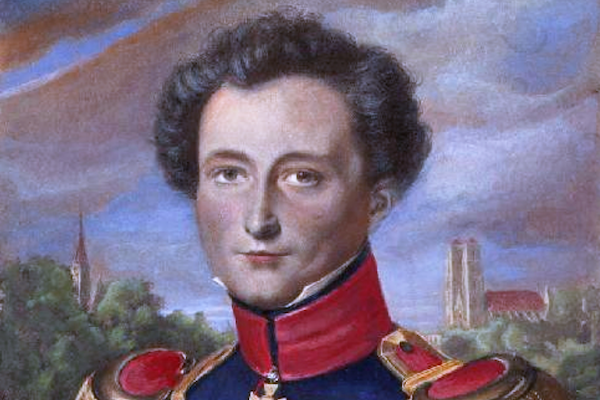
Carl von Clausewitz, the great Prussian strategist of the 19th century, coined the concept that, within the framework of a conflict whose nature transforms it into a problem where there is a military solution, there must be a balance among three elements that form a trinity, namely: the political leader, the people, and the army. The art of political leadership in a conflict rests, first and foremost, on identifying its nature, an unavoidable obligation that falls on the political leader of the State. Once the nature of the conflict is identified and understood that all or part of the problem can be resolved through the use of the military instrument of national power, then there is a need to balance the trinity and legitimize the use of the military instrument by seeking the support and adherence of the people for the effort to be developed.
Let us see how Clausewitz’s trinity applies to the Southern Macrozone. The first exercise, the most important, falls on the President of the Republic, who has the unavoidable obligation to understand the nature of the conflict or dialectic of wills he is facing. In his recent visit to La Araucanía, the President at least acknowledged that “acts of a terrorist nature” had been committed. The truth is that such a statement is insufficient as an analysis of the nature of the conflict. The definition of the problem, the starting point of any attempt at a solution, is poorly or insufficiently articulated. The lack of operational intelligence to assist the political decision-making process is a reality that has our political leadership groping in the dark. Without a clear definition of the problem and its nature, President Boric announced the creation of a new commission, whose focus should be on seeking the expropriation of land and its allocation to the Mapuche.
This center of gravity of the effort of the State of Chile differs completely from the opinion reflected in the aforementioned Cadem survey. Eighty-two percent of the sample understands that there is terrorism in La Araucanía, not just acts of a terrorist nature. Forty percent of the sample attributes the problem to the existence or presence of armed groups. Twenty percent attributes the problem to the lack of political support for Carabineros, and ten percent to the poor management of the courts. Only thirteen percent of respondents believe that the focus of the problem lies in the delivery of land to indigenous peoples. We clearly see that there is no alignment between political leadership and the sentiments of the people, as reflected in the survey. When there is a disbalance in the trinity, it becomes very difficult to find solutions.
When public opinion expresses that the problem of the Southern Macrozone is of a terrorist nature, that eighty percent supports the States of Emergency, and that fifty-eight percent of respondents believe that the Armed Forces are part of the solution, the message must be read correctly. The trend indicates that the top priority must be to eliminate the source of terrorism by dismantling armed groups, restoring the rule of law for the entire population, and, once the first priority is achieved, then sitting down to seek the best solutions for all the issues affecting the Southern Macrozone. It is necessary and urgent to create the conditions of peace and the rule of law so that the State can act.
We are facing a situation of political management, where a clear identification of the problem is required to establish priorities and an order in the actions of the State to apply all political power to the solution of the conflict. This first priority requires clarity, will, and firmness. It requires involving many actors and bringing them together towards a solution. All those involved in the existence of the rule of law, courts, and the Public Ministry must be available to fulfill their part in the search for solutions. Thus, what we lack is will, courage, and executive leadership, not an abundance of advisory commissions, a tool proven in the past that does not produce results.
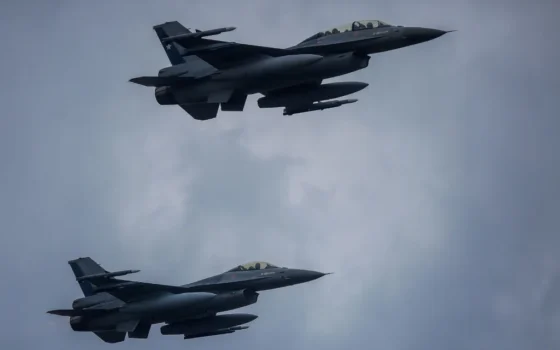
The third element of the trinity is the army, that is, the Armed Forces. The way they have been acting and fulfilling the directives of the political authority is well regarded by the public, and society rewards the Armed Forces with its approval and trust. For them, this is a non-priority mission area that forces them to divert time, resources, and effort from their main roles. We must consider that, since October 2019, that is, for almost three years, the Armed Forces have been involved to varying degrees and in different parts of the country with tasks supporting the police. The exception has slowly transformed into normality, and that effort should not continue over time. These are tasks not sought by the Armed Forces, but they fulfill them with obedience and effectiveness.
What we need is for the Armed Forces and the police to be well directed by our civil political leadership. We need a clear definition of the problem and its nature, so that we can determine the most effective contribution of the Armed Forces and the police to create and maintain the conditions of peace and the rule of law that the country demands as the top priority of citizen concerns. What we do not need is to ask the cat to pull the chestnuts out of the fire with its hands, or to pretend that the solution lies in the new 60-day State of Emergency format that exempts the Executive from seeking permission from Congress, as is the current case, and which in practice transforms institutions into fixed-point guards, but which, except for the feeling of security, resolves nothing and certainly does not address the underlying problem.
The trinity of Clausewitz is inverted. It is not the political leadership that is seeking the people’s adherence to its Armed Forces, but rather the people who are signaling to the political leadership that the nature of the problem is different from what is declared and that for the solution, will, courage, and leadership are needed to utilize all the capacities of the State, including potentially its military instrument in a manner different from the current modality.
In conclusion, it is not advisable to wait for a new Cadem to make decisions, as the trend appears to be clearly on the rise, and unless a miracle occurs, I estimate that we will soon be above 90% in the perception of terrorism, around 70% in believing that the solution is military, and close to 60% regarding the basis of the problem being the armed groups operating in the area.
Richard Kouyoumdjian
Vice President AthenaLab