Public Security: What About Political Will?
This article was translated automatically and may contain differences from the original. For reference, read the original.
El Líbero, Saturday, December 3, 2022
What we truly need is the certainty that those currently leading the country not only understand the dimensions of the problem but are also genuinely making a significant effort to solve it.
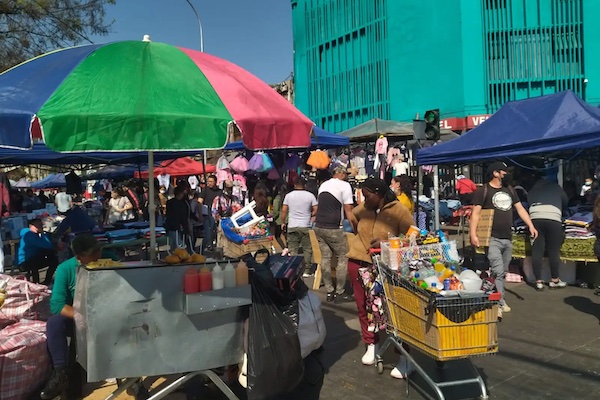
This week, we witnessed two children confronting each other with knives in the street, in the neighborhoods of Puente and Meiggs in Santiago, which have been overtaken by street vendors, and just a few days ago we received the seventh report on drug trafficking from the Prosecutor’s Office.. All of these are different issues under the same theme: public security.
Increasingly, we see and hear technical analyses about what we should do and where we should aim, but the cornerstone that will support all strategies is lacking: political will.
The trends are clear; organized crime is expanding, our neighborhoods have changed their profile, and those that used to welcome thousands of people for Christmas shopping now have to deal with rampant informal commerce and the violence stemming from confrontations between criminal groups.
The mayor of Santiago stated at the beginning of the week that public security is the responsibility of the Executive, which is partly true. It is the President who leads security through the Ministry of the Interior, so it is the Executive that must define the guidelines. However, it cannot do this alone; coordination with all involved actors is essential, especially with those close to their political coalition.
On this point, real doubts arise: Is there political will? This year, we have seen the narrative on security change. The government initially promoted a pardon project for those imprisoned during the unrest and spoke of Wallmapu. Over time, they implemented a crackdown in Meiggs and continue to renew the State of Constitutional Exception in the Southern Macrozone.
It has been an interesting evolution, but their past actions also raise many questions. Do they prioritize the fight against organized crime because they genuinely want to, or because it is a priority reflected in surveys? A legitimate concern for many.
The issue is that, in a year where homicides reported by the PDI increased by 33%, where by May, arms seizures had risen by 11.2%, and where more than half of the murders committed with firearms are due to settling scores, there is no room for questions.
The will to act must be clear and decisive; otherwise, the trend of expanding organized crime in the country, as shown in the recent Prosecutor’s report, will accelerate, and it will be too late.
Now, whose political will? Of those who govern us, of course. Cross-party agreements can be sought; this is important for moving towards long-term responses. However, what we truly need is the certainty that those currently leading the country not only understand the dimensions of the problem but are also genuinely making a significant effort to solve it.
What they say and what they do are two different things. Ensuring a peaceful environment is costly; it requires a significant budgetary effort. Therefore, there is a need to present a plan, work on it with all involved agencies, show short-term results, and consolidate them in the long term. Only then will doubts be cleared, and all of us who wonder whether that political will exists will stop doing so.
Pilar Lizana
Researcher, AthenaLab
Source: El Líbero


