The Silent Contribution of the Armed Forces to Democracy
This article was translated automatically and may contain differences from the original. For reference, read the original.
El Líbero, December 10, 2022
The Armed Forces respond to political power, but always within a democratic order, as this is what guides their actions. This was clearly seen in the case of Peru.
In four hours, our neighbor Peru witnessed how the now former president dissolved Congress, attempted to flee, and ended up imprisoned. The political crisis in Lima allows for many analyses from multiple angles; however, it is worth pausing on one particular issue: The Armed Forces and the National Police did not support the former president and gave their unconditional support to the legally established institutions, urging citizens to remain calm and have confidence in the institutions.
The joint statement from the military and police was brief but impactful, providing the world with a lesson in democracy. By recognizing the powers granted by the Constitution to dissolve Congress, they protected the constitutional order from a decision that was against it. In this way, they safeguarded the institutions that make up the State and, consequently, its democracy.
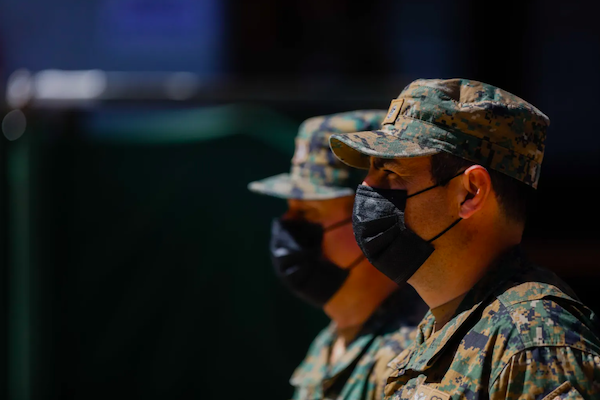
The military are those who protect us from external threats, but they are also the ones who ensure our sovereignty and territorial integrity. They respond to political power, but always within a democratic order, as this is what guides their actions. They are apolitical and do not deliberate, but that does not mean that when they swear with their lives, they do not put the homeland and its democracy first.
The Armed Forces and Law Enforcement hold the legitimate monopoly on force; they are the institutions through which that abstraction known as the State generates the necessary environment of peace for development. They also safeguard institutional order by providing the necessary checks and balances to maintain democracy. What happened in Peru last Wednesday is proof of this—what greater counterbalance than that joint statement and its call for calm and confidence? In the face of the chaos left by the dissolution of Parliament, the military appeared as a source of stability, easing tensions and sending a reassuring message.
In a region where we have seen them involved in corruption, intervening in contingent politics, and deployed in cities to solve public security problems, what happened this week in Peru was a demonstration of institutional value and the importance of those checks and balances. How the crisis is resolved is another matter, but the reaction of those military personnel should serve as a lesson for Latin America.
In Chile, we are witnessing how gradually trust in the Armed Forces and Law Enforcement is increasing.
This increase is understood in the context of a rising perception of insecurity, but we must not forget that their role is much deeper than combating threats, as through this they provide peace, stability, and protect institutional integrity.
Thanks to them, each of us can seize opportunities, develop, and achieve the progress we seek. Without peace, without checks and balances, and without the security they provide, we do not advance toward development; therefore, we must not forget the silent contribution that our military and police make every day.
Pilar Lizana
Researcher, AthenaLab
Source: El Líbero