A border control strategy is needed
This article was translated automatically and may contain differences from the original. For reference, read the original.
El Líbero, March 4, 2023
An immediate measure that is not accompanied by medium- and long-term actions will not have the desired effect. The Armed Forces appear to be a desperate decision that does not address the root issue.
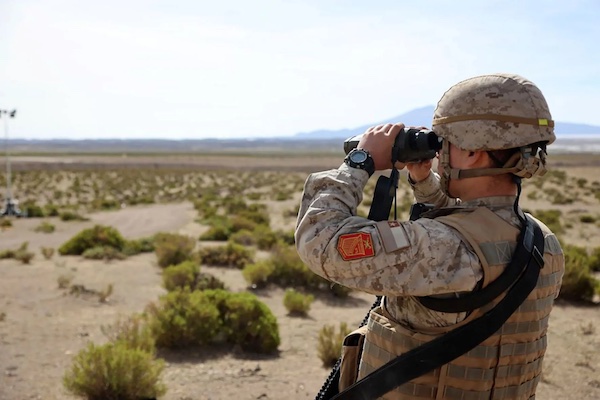
The day has arrived; the military has been deployed at the border to combat irregular migration. Will it solve the problem? Unlikely. When there is no border control strategy with resources, personnel, and means, the Armed Forces seem like a desperate measure that does not address the root issue.
Resorting to them implies recognizing that migration has become a matter of national security, no longer just public safety. However, beyond that, it must be noted that an immediate measure not accompanied by medium- and long-term actions will not have the desired effect. What will happen when that action comes to an end? What comes next?
Uncontrolled migration can certainly be defined as a threat, but it is not the only one present along the nearly 1,000 linear kilometers of border we share with Peru and Bolivia. It is joined by drug trafficking, human trafficking, arms smuggling, and contraband. In this context, the irregular migrant is not the only challenge, and the response must necessarily address all dimensions of the problem. What is lacking is clear: a border control strategy with a force that has professional training and physical and technological means to combat the defined threats and risks in that area.
This is not new; countries like Australia, Canada, Spain, and the United States, to name a few, have such strategies. They have border control offices, prepared forces, and defined tasks. Stopping illegal migration is one of them, but so is combating organized crime that occurs in that area. For this, they patrol air, land, and maritime territory with a force that depends on various security ministries. The military has other functions, different dependencies, and their actions within national territory are limited to exceptional circumstances.
In the Chilean case, where the northern border has only eight authorized crossings and over 100 unauthorized ones, some of which are already controlled by groups from the Tren de Aragua engaged in migrant trafficking, a long-term strategy with professional institutions like those in the mentioned countries is urgent. The military can contribute to combating threats, but rather than assigning them police duties, they should be integrated in a coordinated manner according to their mandate to develop a multidimensional response while, at the political level, a border control strategy is developed that is sustained over time and provides security, development, and well-being to Chileans living in that area.
The cornerstone is political will, as without it, a state policy cannot be designed. A country like Chile, open to the world, where foreign trade plays a key role in development, cannot lack such a strategy. It must provide certainty to those seeking to invest and to those arriving legally. Unprotected borders that organized crime exploits do not help this, nor does the lack of international cooperation.
Pilar Lizana
Researcher, AthenaLab
Source: El Líbero


