Kissinger at 100
This article was translated automatically and may contain differences from the original. For reference, read the original.
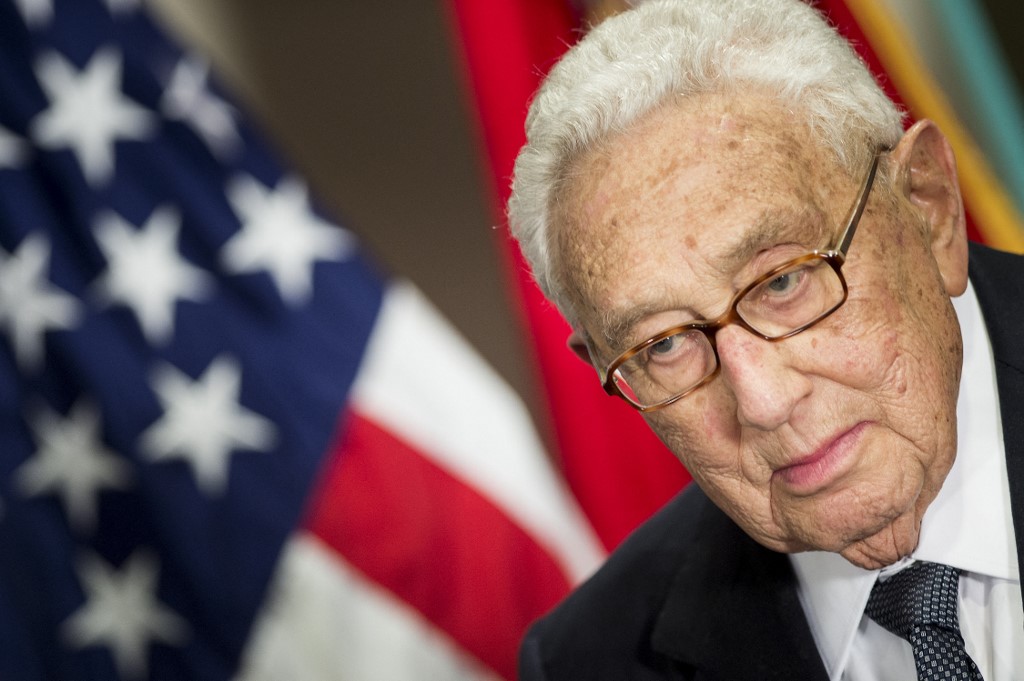
“Leadership is necessary to help people get from where they are to where they have never been, and sometimes to where they can barely imagine reaching. Without leadership, institutions drift and nations head toward increasing irrelevance and ultimately disaster.”
Criticized for actions such as supporting the overthrow of Salvador Allende in Chile or the bombings in Cambodia, and celebrated for opening diplomatic relations with China and paving the way for the first agreements between Arabs and Israelis, Henry Kissinger (Fürth, Germany, 1923) is set to turn 100 next month with a considerable, yet ultimately inevitable, intellectual legacy.
The initial quote comes from his latest book “Leadership” (Debate 2023), which was released this month in national bookstores and indirectly emphasizes one of the issues of our current era: the absence of exemplary great leaders, perhaps with the exception of Ukrainian President Volodymyr Zelensky.
An exceptional witness of the 20th century, former National Security Advisor and former U.S. Secretary of State, he selects leaders he personally knew to illustrate their transformational virtues: Konrad Adenauer, Chancellor of Germany, with the strategy of humility; Charles de Gaulle, President of France, with the strategy of will; Richard Nixon, President of the United States, with the strategy of balance; Anwar Sadat, President of Egypt, with the strategy of transcendence; Lee Kuan Yew, Prime Minister of Singapore, with the strategy of excellence; and Margaret Thatcher, Prime Minister of Great Britain, with the strategy of conviction.
After reviewing all the cases, the author states that there are four characteristics shared by all:
*A sharp sense of reality and a powerful vision.
*The ability to act decisively on matters of national importance under seemingly unfavorable conditions.
*The importance they placed on solitude as personal space for reflection before making major decisions.
*All were divisive. While they sought to have people follow them, they assumed that controversy would be inevitable if they wanted to make transformations.
Aside from this masterful book, his work is spread across more than 20 texts covering topics ranging from the restoration of European order after the end of the Napoleonic Wars to the impact of artificial intelligence.
Some of his texts, such as “Diplomacy” (FCE 1995), are essential reading, or should be, for those engaged in this profession, as it explains that their main task is to promote national interest in an international context that will not always be optimal and, therefore, requires the constant promotion of stability. In times of greater uncertainty, national interests serve as a necessary anchor.
More recent publications, such as “China” (Debate 2012), proposed a peaceful coexistence between the two Pacific giants, which, despite having divergent political systems and values, must be able to work on common interests at both regional and global levels.
His successor, “World Order” (Debate 2015), warned that we were facing the last opportunity to build a legitimate international system for all and thus avoid fractures among great powers and the creation of spheres of influence where sharp conflicts would arise at their edges. Apparently, a forewarning of what would occur with Russia’s invasion of Ukraine.
Those who wish to delve deeper into his thought can refer to “The Inevitability of Tragedy” by Barry Gewen, an intellectual biography of one considered a “philosopher of international relations,” and those who want to reinforce their questioning can turn to “The Trial of Henry Kissinger” by Christopher Hitchens, who holds him responsible for policies that ended in calamities.
In any case, another quote to conclude and ponder: “Wise leaders must anticipate challenges before they lead to crises.” (El Mercurio)
Juan Pablo Toro V.
Executive Director of AthenaLab
El Mercurio, April 15, 2023