General Juan Emilio Cheyre, a unique general in his class
This article was translated automatically and may contain differences from the original. For reference, read the original.
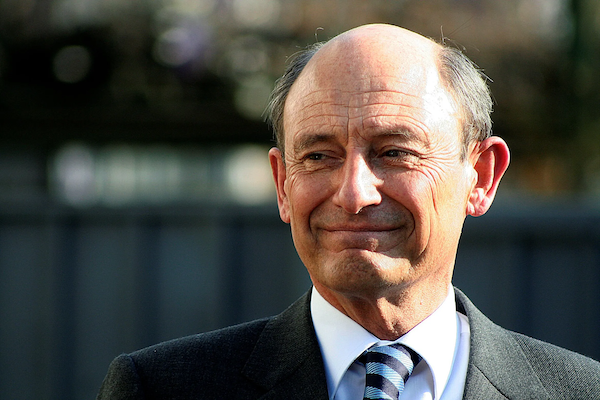
El Líbero, November 29, 2023
In February 2006, at Cheyre’s instigation, the general ordinance of the Chilean Army was modified, replacing, among other things, absolute obedience with the concept of reflective obedience.
I must acknowledge that I have a good opinion of the general Cheyre , and I regret how poorly he has fared in recent times. I have the impression that he has always acted in pursuit of the good of Chile and its Army, and that he did not take advantage of the system as was the case with another general who did not rise to the occasion.
General Cheyre, following the practice of other retired general officers, with the help of Alejandro San Francisco, published his own memoirs titled “So That It Never Happens Again”, a book that will be formally presented to the public on December 6, 2023, and is already available in bookstores for those who wish to read it. Unlike the case of General Martínez, I have no objections to General Cheyre publishing his memoirs since nearly 20 years have passed since he handed over command to Oscar Izurieta, so it should not complicate General Iturriaga’s efforts to do his work in peace and quiet, avoiding the noise generated by his predecessor and his quest for recognition.
General Cheyre is one of those gentlemen who move with dignity, whom the passage of time has treated well, and who still convey authority and command presence today, not seeking to prove anything since everyone knows how deeply they resonate, and above all, they are aware of his intellectual capabilities, which always set him apart from other Army officers, being perhaps the most intelligent and politically astute general of his time, something that even Augusto Pinochet recognized, knew, and respected.
General Cheyre had already been clear when, as Commander in Chief in 2006, he took a risk with his ‘never again,’ misunderstood by many who did not want to see things as they are, and now he risks again by making it clear that there were military leaders in ’73 who did not live up to military honor, failing to acknowledge their responsibilities and assigning them to their subordinates, many of whom are scapegoats for the faults of others.
Recognizing the problem caused by the definition of obedience, characteristic of another era and context, in February 2006 at Cheyre’s instigation, the general ordinance of the Chilean Army was modified, replacing, among other things, absolute obedience with the concept of reflective obedience which is in Article 58 of the ordinance, and which allows subordinates to bring to their superior’s attention the incorrectness, injustice, and illegality of an order, and which requires officers to determine whether the orders they are about to give are legal, moral, and ethical.
Juan Emilio Cheyre is much more than a ‘never again’; he is the general who had to assume responsibility for the “Antuco Tragedy”, but he is also the general who initiated the most significant modernization that the Chilean Army has undergone in recent times, adapting it to the technological and strategic realities of the current era, leaving it by far the most modern in the region, something that still persists today despite the lack of support from the Executive for the maintenance of those capabilities.
Cheyre, the son of a general who made him aware of the drawbacks of pursuing a military career, known for being just yet very demanding, whom the mediocre feared, and who led by example, now in his most complex hour, faces justice for having been a young lieutenant in the ‘Arica’ Regiment in La Serena in October 1973, as he is assigned responsibilities that belong to those who led the ‘Caravan of Death,’ his only sin being that he was in that regiment at the wrong time, in what is one of those absurdities with which Chile pays its best, and which could mean he ends his days in prison.
Obviously I recommend reading the memoirs of Army General Juan Emilio Cheyre written by historian Alejandro San Francisco. It is one of those books that adds value, allowing one to know the person, understand his motivations, and the reasons behind his decisions, and along with that, to review and understand a complex part of recent Chilean history, which needed a ‘Never Again.’
Richard Kouyoumdjian
Vice President AthenaLab
Source: El Líbero


