Piñera and the Farewell to the Republic
This article was translated automatically and may contain differences from the original. For reference, read the original.
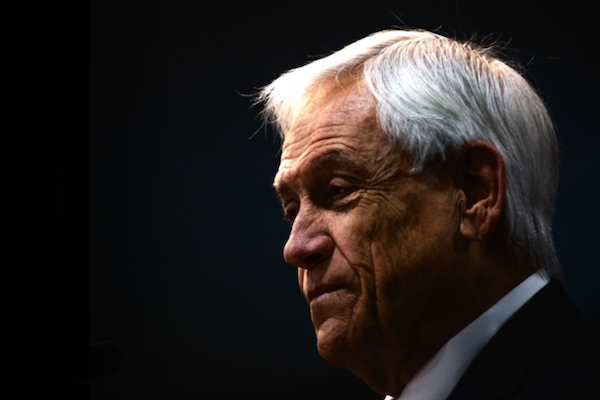
Every government, and every person who has held the highest office, will face the judgment of History. In the meantime, there is an official mourning, where it is appropriate to value what unites us, above what divides us. As Boric said when announcing Piñera’s passing, quoting a phrase of his: “Chile is all of us, and we must dream it, draw it, and build it together.” The differences among Chileans are deep, but not insurmountable. The Republic makes us brothers.
Ex-Ante, February 8, 2024
In the span of just one week, Chileans have been shaken by three news events: the forest fire in the Valparaíso Region, the deadliest in the last 15 years worldwide; the farewell to public life of the widely admired former President Ricardo Lagos; and the tragic and unexpected death of former President Sebastián Piñera. These three events should justly motivate a profound national reflection.
Chileans know that in disasters, the best of us emerges, and these days have been generous in republican gestures that elevate the awareness that beyond polarization and violence, we remain a nation. This last phrase – now we know – is no longer trivial. We are a single nation, capable of standing tall to look at our past and learn from it. A nation capable of embracing our diversity and reconciling.
Often, the trees do not allow us to see the forest. In thirty-four years since the end of the dictatorship, Chileans have built, together, an international reputation that has proven to be resilient. We have shown ourselves to be an intelligent people, overcoming our geographical isolation with a remarkable openness to the world. We have faced threats and disasters, united in overcoming enormous challenges. We have managed to find paths – even in critical moments – to overcome great differences. And we have created consensuses to perfect our democracy and generate greater material and human development. In this historical chain, Sebastián Piñera, twice President, is an undeniable link.
The arc of his life shows an intense, competitive man who lived quickly and to the limit. Extremely talented at spotting business and political opportunities, and at managing large-scale crises, such as the improbable rescue of trapped miners, post-earthquake reconstruction, or an unprecedented global health crisis. Demanding and stubborn, he did not give up in the face of obvious difficulties. Unstoppable, he aspired to understand in detail any topic, from epidemiology to border litigation, controlling and managing everything with a ruler, red pencil, and notes in his student notebook. Although politics is not a spreadsheet but a matter of feelings and charisma, through persistence, family support, and healthy pragmatism, he managed to overcome his lack of fine motor skills, turning the pages of his own and others’ blunders without resentment. He made significant and multiple mistakes, as well as notable successes. The passage of time will help to evaluate his legacy fairly.
Unlike other leaders who quickly and successfully transitioned from the private sector to public affairs, such as Berlusconi, Macron, or Milei, he was unable to create his own party, nor could he fully appropriate an existing one, like Trump or Sarkozy. Piñerismo did not manage to transcend into a political movement, and for this reason, his two governments were dysfunctional: more than in parties, they relied – more than any other administration – on the efforts of loyal relatives and friends, gathered in foundations. His relationship with the political sector that supported him was filled with mutual sabotage, as those parties questioned his motivations and resented his personalism and relentless management style, with an overwhelming emphasis on administration and technique.
This level of disconnect with the sector was due not only to the fact that Piñera was very peculiar and autonomous by character or resources. Evelyn Matthei, who knew him like few others, said a few years ago that Piñera “never was” right-wing. This explains his primary and unsuccessful attempt to join the Christian Democracy party, the party of his family, where his father’s friends did not look kindly on the son’s ambition; and it also explains his gestures against the dictatorship, from his participation in the “Caupolicanazo,” which called to reject the 1980 constitutional plebiscite, to his public option for No to Pinochet in 1988, and his condemnation of the regime’s passive accomplices in 2013, on the occasion of the 40th anniversary of the coup. By calling him a “democrat from the very first hour,” Gabriel Boric – the son of a Christian Democrat like Piñera – was not mistaken.
The great irony of the unclassifiable Piñera, then, is that a man who was not right-wing updated the sector, bringing it closer to certain bases of contemporary social democracy. Working with people with whom he had significant differences, he was an articulator – as a leader, Senator, and Head of State – of cross-cutting agreements that made possible important laws of the transition, and later reforms characteristic of a modern state aimed at development, such as equal marriage, six-month parental leave, guaranteed universal pension, or the establishment of the country’s commitment to carbon neutrality by 2050.
A few months ago, at a lunch in his office, I met former President Piñera for the first time, who wanted to talk about foreign policy and the constitutional plebiscite, which was then imminent. As I arrived before the scheduled time, and the other diners (people from his circle) arrived late, I had a good while of private conversation with him. He was very friendly, and he seemed calm and fulfilled. We talked about his role in the “Commitment to Democracy, always,” an initiative promoted by President Boric and signed by all his predecessors (Bachelet, Frei, Lagos, and Piñera). During the lunch, Piñera revealed that this valuable document had been drafted together with Boric, with the two of them working alone during a meeting at La Moneda, and with the prior vote of confidence from the other former presidents for that drafting task.
I share this revelation post mortem not only because it deserves to be known that this democratic commitment – the high point of the commemoration of the 50th anniversary of the coup – is a final legacy, direct and positive, from a tragically deceased former president. Also because Chileans must be aware that at the continental level, friendship and civic collaboration among political leaders of the same country is very scarce. In general, what begins with suspicion and disdain and continues with insults ends sooner or later putting coexistence at concrete risk, even in wealthy countries. Because the rule of law is not a concept contained in a document called a Constitution, and the fundamental charter is not a paper drafted by a few people, in a few months, to last a few years. The Constitution and democracy are a culture of dialogue and respect that is built with gestures day by day.
Every government, and every person who has held the highest office, will face the judgment of History. In the meantime, there is an official mourning, where it is appropriate to value what unites us, above what divides us. As Boric said when announcing Piñera’s passing, quoting a phrase of his: “Chile is all of us, and we must dream it, draw it, and build it together.” Rites, kind words, honor guards, and hugs are much more than mere displays of protocol: they do us good because they occur among those who think differently. That is what makes us a Nation, and it should generate pride in the Republic that makes us brothers, despite all our differences, deep but not insurmountable.
Because we are brothers, the Chileans. Today – in tragedy – and always.
Paz Zárate
Senior Researcher, AthenaLab