COLUMN | This is much more than drugs!
This article was translated automatically and may contain differences from the original. For reference, read the original.
- by Pilar Lizana
- Opinion
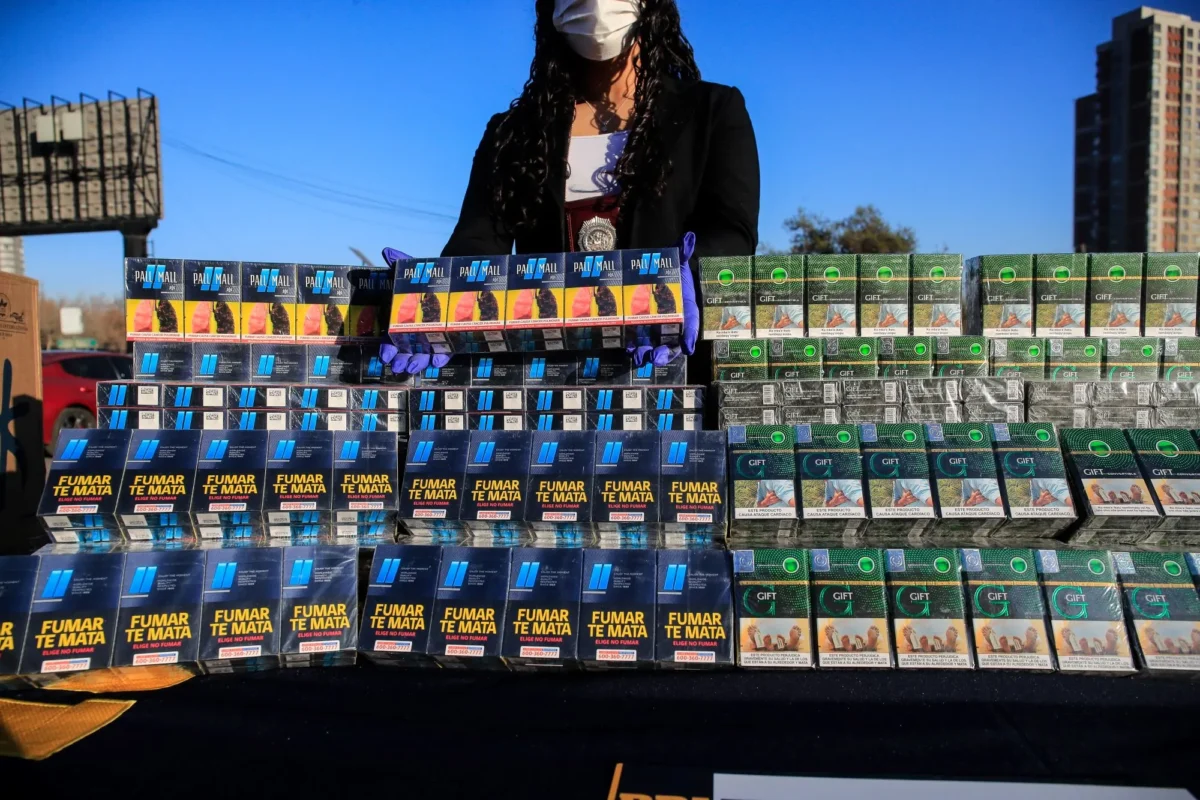
Clothing, cigarettes, fuels, and even agricultural products share the same routes and logistical chains as weapons, drugs, and people, completing a catalog of criminal economic activities.
One in every two cigarettes smoked in Chile comes from smuggling.More than USD $1 billion annually is lost in tax revenue due to this illicit business; Bolivia has become a hub for its expansion, and Paraguay marks the beginning of the illegal cigarette route. How do they reach Chile? Through the same entry point as all illegal products: the northern border.What lies behind this? A transnational criminal organization.
South America has been characterized by criminal activity driven by large drug cartels that, with the violence associated with the trade, put states at risk. However, drugs are not everything, and today the Southern Cone is threatened by the growing illicit economic activity stemming from the smuggling of various goods: clothing, cigarettes, fuels, and even agricultural products crossing the borders of Chile, Bolivia, and Peru. They share the same routes and logistical chains as weapons, drugs, and people and complete a catalog of criminal economic activities that connect South American countries through a criminal network that disregards the state, its laws, and institutions.
Trade associations are quite aware of this situation; therefore, the National Chamber of Commerce launched a campaign against smuggling and illicit trade. However, the government continues to focus its efforts on reducing violence, addressing only the surface and not the root: an illegal business that employs all necessary tools to grow that criminal enterprise which generates significant economic power. This is what needs to be addressed: the illicit business.
For those smuggled cigarettes to be sold on the street, in kiosks, or at open-air markets, there exists a complete chain from production to distribution, as well as a highly competitive market composed of large organizations, medium-sized groups, and smaller entities that provide services and enabling professions that operate legally to support the illegal. This is what security strategies against organized crime must address. A decrease in violence rates will be the result of tackling the root causes.
Pursuing the money trail is something that is often discussed, but we see few actions that make it a reality. If drugs, weapons, people, smuggling, and more circulate through national territory, the question is where all that illegal money ends up. In some way, they use the financial system to take it out of the country; they also launder it through services or trade it through cryptocurrencies.
The state and the government are called to provide answers, but along that path, listening to and working together with the private sector is something that should be encouraged. Their knowledge and information are a significant contribution. They know the market better than anyone and have clarity on the impact of public policies on industry and commerce. Excluding them is as significant an error as not addressing the root causes and only the surface of the problem.


