COLUMN | An Indispensable Power, Despite…
This article was translated automatically and may contain differences from the original. For reference, read the original.
- by Juan Pablo Toro
- Opinion
It is currently unpopular to highlight the predominant role of the United States in shaping international dynamics, but it would be unwise to downplay it and rather reckless to question it without sufficient knowledge.
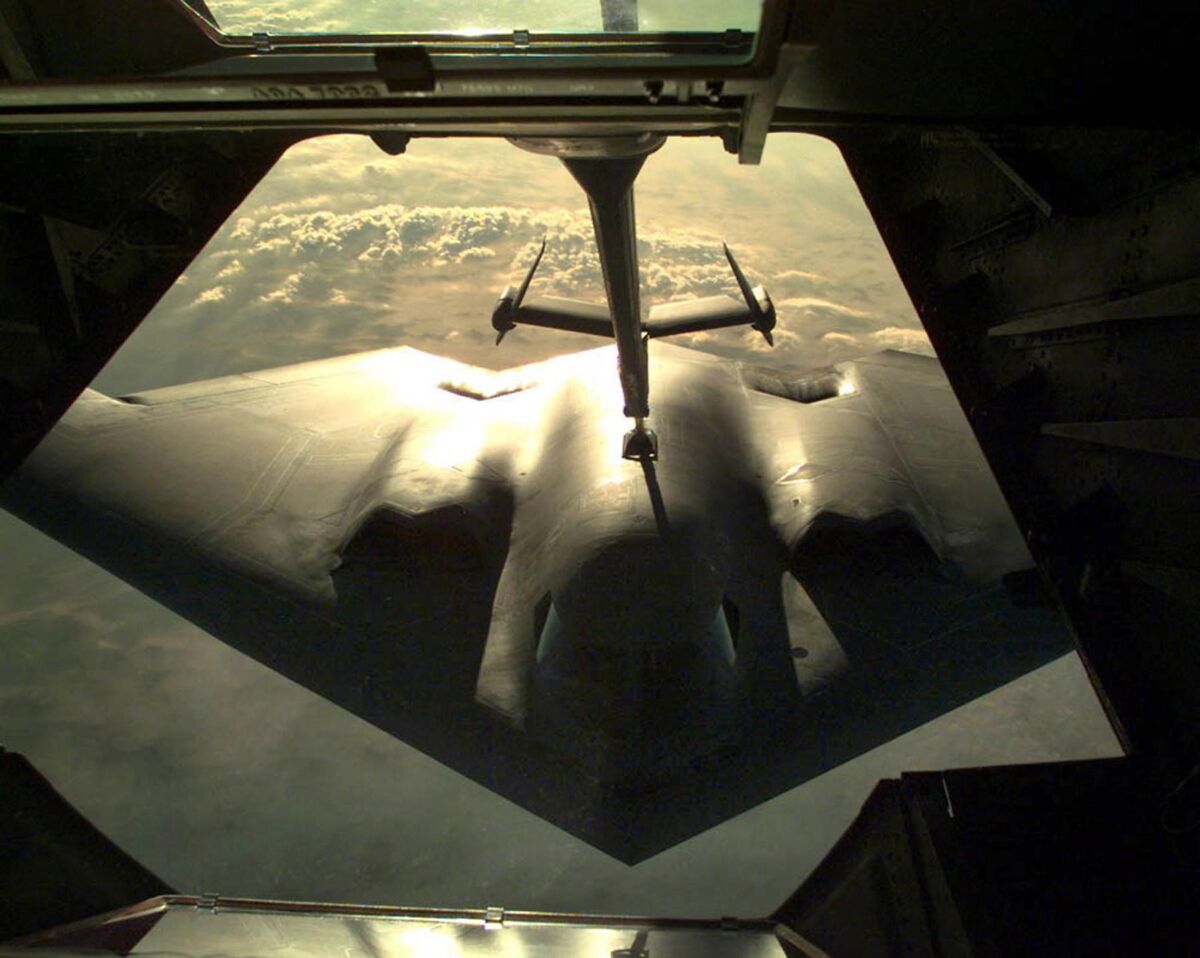
A week ago, it became clear that there is only one military superpower capable of conducting an air operation that involves stealthily crossing multiple continents, entering a war zone, and launching precision bombs on protected nuclear facilities, only to return its aircraft and pilots unscathed.
Much is said about the expansion of China’s armed forces and the fact that its Navy has the largest number of ships, but we still do not know how it would perform in the fog of war. In contrast, we do know that Russia’s conventional military machinery was halted by a numerically weaker but better organized and determined enemy like Ukraine.
While the unique military capabilities of the United States are the result of decades of investment and technological advancements, Washington is also demonstrating its influence in waking up continental Europeans from their post-historical slumber—except for the ever-vigilant France—prompting them to allocate 5% of their gross domestic product to defense, after years of failing to meet their own commitment to spend 2.4%.
Prior to this week’s NATO summit, President Donald Trump once again downplayed the principle of collective defense contained in Article 5, as a way to remind other members of their own security responsibilities. In fact, NATO Secretary General Mark Rutte sparked laughter and criticism by stating in The Hague that “sometimes, Daddy has to use strong language,” regarding the intervention in the Iran-Israel conflict that forced a ceasefire.
It is true that Trump’s style and his preference for tariffs test the patience of those who believe that American democracy, while not perfect, plays a rather positive role in international relations, even when it has behaved imperially. Historian Niall Ferguson, in his book “Colossus” (2004), argued that it is indeed an empire, but a liberal one. That is, it not only supports the international exchange of goods, labor, and capital, but also believes in and defends the conditions without which markets cannot function: peace, order, the rule of law, honest governance, and stable fiscal and monetary policies.
Ferguson, of course, identified factors that could hinder the power, given by the sum of three deficits: resources (excessive debt); personnel (less talent in key positions); and attention (many objectives, little follow-through).
Regarding how the Trump administration is addressing this inherited scenario, at least in the military realm, Vice President J.D. Vance, who represents the more “isolationist” wing of the government, indicated this, in contrast to Secretary of State Marco Rubio, a “classic Republican internationalist,” or the “prioritizer” Undersecretary of Defense Policy, Elbridge A. Colby (China, China, and China).
“What I call the ‘Trump Doctrine’ is quite simple: First, a clear American interest is articulated, and in this case, it is that Iran cannot have a nuclear weapon,” Vance explained at a dinner in Ohio on Wednesday. “Second, the problem is attempted to be resolved through aggressive diplomacy. And third, when it cannot be resolved diplomatically, overwhelming military power is used to resolve it, and then you have to get out of there before it becomes a prolonged conflict,” he concluded.
In the forums of that collage called the Global South, which will soon meet in Brazil as part of the BRICS, or in those propaganda organs that simulate being press offering “alternative views,” the decline of the West is often denounced, and hegemonic behaviors targeting the United States are rejected (while some hide their own).
However, whether one agrees with Trump or not, the fact is that his nation as a power transcends his mandate, and its role is indispensable when facing threats to international security, such as a large-scale invasion in the heart of Europe or a regime sponsoring terrorist militias seeking to develop nuclear weapons.
Regarding maritime democracies with common interests and values located on the same continent, rebuilding the relationship with Washington will be a key task for whoever assumes power in Chile in March 2026, always keeping differences in mind, but first making the effort to understand them.
Juan Pablo Toro is the Executive Director of AthenaLab
El Mercurio, June 28, 2025