COLUMN | How Society Views Defense
This article was translated automatically and may contain differences from the original. For reference, read the original.
- by Richard Kouyoumdjian
- Opinion
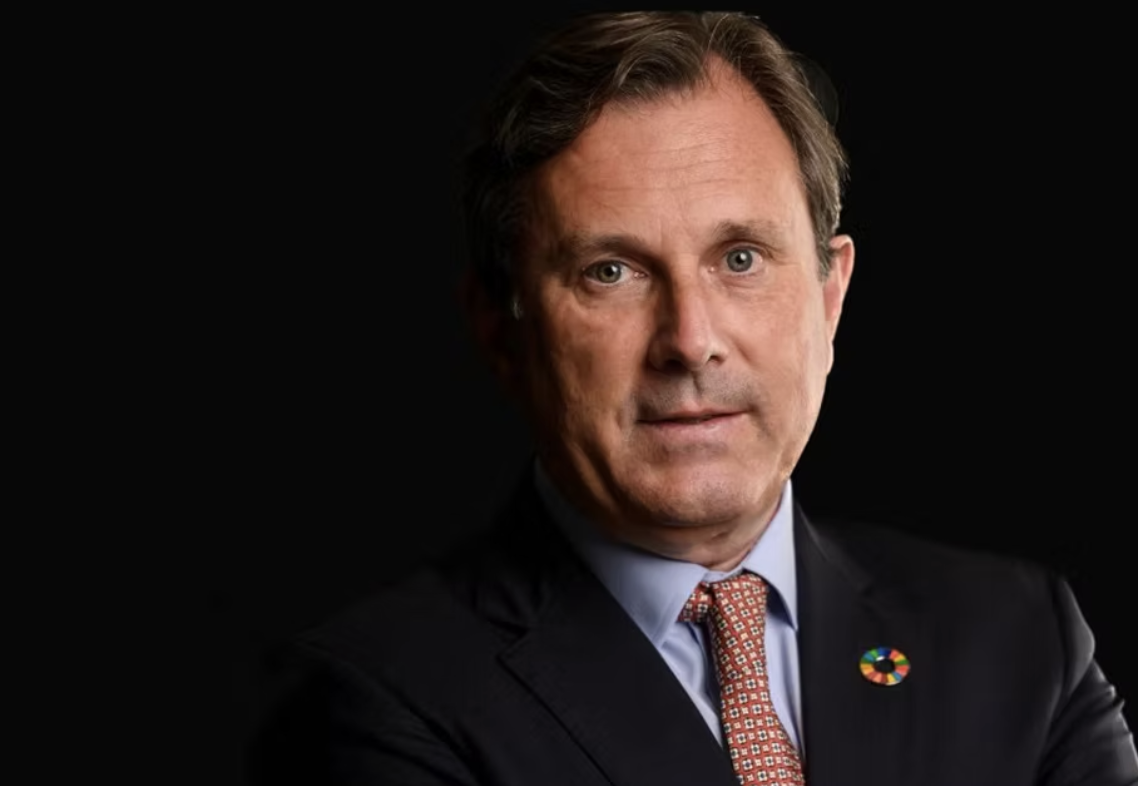
We spoke with Richard Kouyoumdjian, Vice President of Athenalab, about the new edition of the annual survey on Perceptions of Foreign Policy and National Security in Chile and the importance of other countries in the region beginning to conduct similar surveys to gather information on how society views defense.
Athenalab presented the new edition of its annual survey on Perceptions of Foreign Policy and National Security in Chile, conducted in collaboration with Ipsos, which raises some interesting questions about the perceptions held by both the general public and experts regarding the country’s relationship with other countries in the region and the world, as well as the main threats. We spoke with Athenalab’s Vice President, Richard Kouyoumdjian Inglis, to analyze these results and the need for other countries in the region to start conducting such surveys, which are essential for defining public policies related to national security, public safety, defense, and international relations.
The survey began in 2019, as Kouyoumdjian recounts, before the COVID-19 pandemic, and reaching a series of six years allows for more solid indicators and the ability to analyze trends. “There is already a certain continuity that has been adjusting to the geopolitical reality in which we live. In 2020, we were somewhat affected by the social outbreak, but the global geopolitical reality had not changed; COVID was just beginning, Argentina was just under Alberto Fernández, and in Chile, we were under Piñera, still looking towards the Pacific Ocean, with our references being Australia and New Zealand.” he states.

Since then, they have observed some changes reflected in the survey, which is the only one of its kind in Latin America, highlighting the distinction made between the general public and specialists, allowing for both perspectives.
Kouyoumdjian emphasizes that in recent years, “both groups are beginning to express that Chile’s foreign policy interests are more related to border protection and illegal immigration. Something similar, I suspect, has occurred in Argentina. People are concerned about Venezuelan immigration, the porosity of the border we share, especially to the north. I believe that a significant portion of specialists in Argentina, if you ask them what their greatest concern is, it is Bolivia, the overflow occurring in Bolivia, they have elections, the country is broken, they mismanaged all their wealth.” He underscores the conflict between Evo Morales and President Luis Arce, as well as the issue of drug trafficking, which is evident in the survey, where both the general public and specialists highlighted drug trafficking, illegal immigration, and border protection as the main foreign policy objectives Chile should pursue.
The Bolivian crisis, which has practically turned into a failed state, generates a security problem in the north for both Argentina and Chile, and illegal immigration would not be as significant if there were more control from Bolivia, as well as the entry of drug traffickers. Kouyoumdjian highlights that, in this regard, the northern border with Peru is very controlled because it is only 180 km long, “it is very easy to control” and adds that “the border with Bolivia is the main problem, where individuals enter and exit, and the difficulty of control, and in Chile, the public has been sold the idea that all evils are imported through that border, transnational crime and illegal immigration. It was enough that 1% of illegal immigrants were bad. And this illegal immigration occurs at the same time that a change in the behavior of criminals, whether imported or local, begins to be observed, establishing a benchmarking of bad practices or good practices among them. So everything became more violent; hitmen, kidnappings, and organized crime began to operate quite deeply. I believe Argentina was a bit more advanced; that is, Argentina had Mrs. Bullrich and a good Ministry of Security operating. It seems to me that the situation in Rosario is a bit more controlled.” At this point, Kouyoumdjian emphasized the importance of having good intelligence services, as otherwise, “you think everything is fine, and organized crime, when it is operating well, is when it makes no noise. It makes noise when it is trying to take territories, control, eliminate its competition, and all that sort of thing.”


Within the objectives of foreign policy, there is a divergence between the general public and specialists when it comes to issues such as presence in Antarctica, projection to the Asia-Pacific, and resolution of border conflicts, which hold little relevance for the general public but considerable weight among specialists.
On the other hand, Kouyoumdjian points out the confusion among the general public, who present national security objectives, such as combating drug trafficking and regulating migration, as foreign policy objectives, “but experts tell you the same thing.”
Another aspect the survey examines is which countries people feel are closest and what the objectives of foreign policy should be. “In this regard, one of the surprises you will see with the general public is that China has ranked quite well in the survey,” explains Kouyoumdjian, noting that China is considered Chile’s main trading partner, followed by the United States, Japan, Spain, and Brazil, while experts place it second, below the United States, and rank the United Kingdom fourth.
Another point of emphasis is in response to the question of which countries serve as models for Chile, where for the general public, the United States, El Salvador, and China appear in third place, which must be separated from the idea that society views China as a trading partner and the notion that they want to emulate it, where for the majority of society, the model to follow is more the United States. Kouyoumdjian attributes part of China’s ranking to the fact that “in Chile, no one wants to feel pressured to enter this competition between the United States and China; it is their problem. We are countries that literally would try to remain unnoticed, ‘let us continue conversing with the rest of the world, do not involve us in your global fight’” although he added that, following the airstrike on Iran carried out by the United States during the so-called 12-day War, where the United States demonstrated such military power, precision, and capability to execute actions wherever it pleases, “I believe that if you conducted the survey today, there would be a better perception of the United States, and people would align with it.” On the other hand, the emergence of El Salvador in second place, where Canada previously held that position, is due to the security situation and the achievements of President Nayib Bukele.


However, “when experts give their opinions, they still see New Zealand, Australia, Singapore, Canada, and Ireland. Experts have not changed; they continue to look at countries that are more or less equivalent” explains Kouyoumdjian.
Another aspect where differences between the general public and experts are noted is in perceptions of threats to national security. “People clearly see drug trafficking, organized crime, border porosity, and have a memory of the pandemic. Experts also rank drug trafficking and organized crime at the top, but place cyberattacks in second place” highlights Kouyoumdjian.

The survey has included the concept of national interests “to educate our political class. Let’s say there is something called the national interest, and there the general population understands that territorial integrity remains the primary national interest and that the country can develop, something that experts generally agree on” he asserts and adds that then the survey focuses on the missions of the Armed Forces. Here, there is another divergence where the general public focuses on secondary tasks, such as border protection, disaster assistance, and combating drug trafficking, along with the defense of sovereignty, as the four most relevant missions, while specialists continue to prioritize the defense of sovereignty, surveillance and protection of borders, and protection of national interests, a reality that is also perceived in other countries in the region. “It is to be expected because countries like Argentina and Chile have not been in a state of war in recent times. And the last time we were closest was when we showed our teeth almost 50 years ago, so the budgetary aspect begins to fail because they demand five mission areas, but there is no money for the other four that are not defense” he posits and adds that “the general public, this is my personal opinion, does not have a clear understanding of the difference between two people carrying weapons and in uniform. For them, probably someone from the Gendarmerie is very similar to someone from the Army, and someone from the Naval Prefecture is very similar to someone from the Navy. So, they do not necessarily distinguish, and there is a very interesting issue that in general, people agree that the National Security Council should have a more active role, that is, that we have a permanent Council where the main authorities of the country are integrated and participate.”


Focusing on security forces, there is a notable interest from both the public and experts that the police should be dedicated to preventing crime and maintaining public order, and they do not want to see them performing musical presentations, equestrian displays, participating in parades, or guarding mass events.
“There is a very interesting question regarding mandatory military service. The general population is 33% very much in favor of having military service, then there is 20% who are partially in favor, and 26% are opposed” emphasizes Kouyoumdjian, explaining that among experts, the survey shows 46% very much in favor and 16% partially in favor, against 18% opposed, although he believes that people support military service until it is proposed that their children must fulfill military service. He highlighted that military service has a purpose, which is to train an 18-year-old as a soldier so they can integrate into an active reserve. “The point is that it is another matter to involve them in internal security tasks or border protection, where you also have to apply criteria; you cannot just grab a rifle and shoot; that requires different training and probably requires many more entrance exams to the Armed Forces or military service than one would do to simply prepare someone for war” he explains.

Data and Not Narrative
As Kouyoumdjian highlights, the survey allows for the generation of a time series and the ability to make projections with concrete data. “I believe that in Argentina, they should talk to the Athenalab team, and some Argentine institution should adopt the methodology and work, perhaps also with Ipsos, and begin to generate a series regarding Argentina as well, because the interesting thing is that, just as some people say ‘data kills narrative,’ others say ‘data generates narrative.’ I believe that here data generates narrative and also data kills narrative. Why? Because it allows for contrasting opinions, both from experts and the general public” Kouyoumdjian opined, noting that in Chile, the survey has become Athenalab’s most valued product, “because it provides a number to a world that has never had numbers, at least in this part of the world.” He also added that “this survey is very useful for both the Ministry of Defense and the Ministry of Foreign Affairs; it provides support for what they do. They can say that there are experts and the general public who hold a certain opinion, and they can blame the survey if they wish” he concluded, emphasizing that this type of data is useful for supporting decision-making.


