COLUMN | Between Colombia and Mexico: Lessons from the Fight Against Drug Trafficking
This article was translated automatically and may contain differences from the original. For reference, read the original.
- by Juan Pablo Toro
- Opinion

Committed leadership; hitting the criminals where it hurts; good relations with the U.S.; maritime interdiction; and not deploying military forces without an exit strategy. Some of the lessons learned from the war on drugs.
When reviewing the proposals made daily to address the country’s security crisis, many seem to stem from fear, which is understandable. This is not only due to the mobilizing nature of that emotion among citizens, making it useful for those who appeal to it for political reasons, but also because of the Chilean society’s inexperience in the face of the overwhelming power of drug trafficking and the sophistication of organized crime in its various forms.
Reflecting on my years as a correspondent for The Associated Press between 2000 and 2007 in Colombia and Mexico, two of the main battlefronts in the so-called War on Drugs, I recall some positive and negative experiences that I believe are worth sharing.
LEADERSHIP MATTERS. When the violence associated with the internal conflict peaked in Colombia due to the actions of narco-insurgencies, Álvaro Uribe came to power with the promise of being “the first police officer” and “the first soldier of the Homeland.” More than a campaign slogan, the president made security his priority from day one, which meant firm political leadership of the armed forces and police, implementing difficult decisions—such as declaring exception zones in areas dominated by guerrillas or asking businesses for an emergency tax—and personally assuming the costs of the mistakes that, without a doubt, will always exist when thousands of troops go on the offensive. His government (2002-2010) reduced cocaine production to levels that now seem unattainable and systematically decreased homicides, attacks, and kidnappings. Today, the governments of the United States, Argentina, and Peru urge the OAS to declare the Tren de Aragua a terrorist organization, not out of fear of an explosive attack, but to have more and better tools to dismantle it. This requires committed leadership. HITTING THE CRIMINALS WHERE IT HURTS.
Every time a single asset was seized from a drug trafficker, it had to be proven that it was the result of ill-gotten gains, a judicial process that would restart if new properties, cars, etc., were discovered. Officials in Uribe’s government realized that criminals have difficulty justifying their wealth quickly and proposed a reform that shortened the time to provide evidence. In other words, “express forfeiture” was introduced; after a few months, the state becomes the owner of the asset if no justification is provided within the established timeframe. Additionally, laws were enacted to toughen penalties for front men, and access to assets was denied to family members. In summary, the decision was made to complicate the business of crime and use its own funds to combat it or rehabilitate its victims. But this also required bold judges (by the way, it is essential to read “The Brave Are Alone” by Roberto Saviano, about anti-mafia judge Giovanni Falcone). RELATIONSHIP WITH THE UNITED STATES.
Whether called co-responsibility or combined attack, the United States is aware that it is the largest consumer market for cocaine produced in Latin America and rarely denies assistance to combat drug trafficking when requested, provided there are reliable authorities on the other side. It is rather governments like that of Evo Morales (2006-2019) in Bolivia and Rafael Correa (2007-2017) in Ecuador that decide to expel U.S. anti-drug agents, with the results we all know in those countries. Cooperation or advice from Washington is also useful for addressing phenomena associated with the drug industry, such as money laundering (the Treasury Department sanctioning Mexican banks) or effective prison control (the Federal Bureau of Prisons advised on the construction of the maximum-security prison in Cómbita, Colombia). Therefore, having a good relationship in this area with the United States has positive and deterrent effects. Even a son of Joaquín “El Chapo” Guzmán preferred to surrender. A SEA OF OPPORTUNITIES.
When the region is flooded with 3,700 tons of cocaine annually, drug interception becomes a priority. While police do valuable work on the streets, the reality is that large shipments are seized at sea. Even the builders of narco-submarines understand this. Therefore, improving controls at ports, equipping navies and coast guards with more resources (ships, radars, drones), enhancing information exchange with friendly navies, and coordinating patrols are more efficient ways to remove thousands of kilos from circulation. Regional maritime interdiction operations like “Orion VIII” or “Hammer” should become more frequent or be emulated at the sub-regional level, such as along the Pacific coast of South America. DEPLOYMENT WITHOUT PROJECTION.
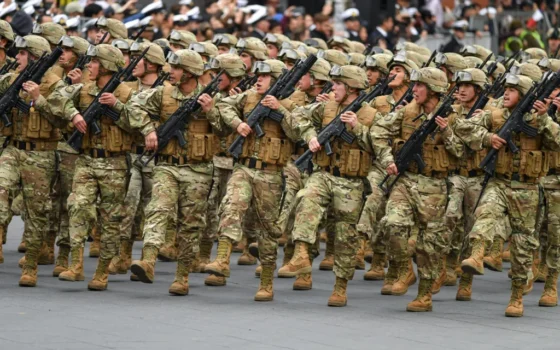
In December 2006, less than 10 days into his term, then-President Felipe Calderón deployed the Army to reclaim territories where the state was challenged daily. Rather than being intimidated, the cartels advanced toward militarization, acquired heavier weaponry, hired ex-soldiers, and co-opted municipal agents. Meanwhile, the proposal to unify police forces and create a large federal force was systematically undermined by Calderón’s opposition in Congress. His term was described as one of the most violent, as would be those of his successors Enrique Peña Nieto and Andrés Manuel López Obrador. The latter leftist leader ended up employing the military to manage customs, operate airports, and build trains. In other words, it is easy to send soldiers to combat drug traffickers, but it is difficult to return them to barracks if their exit strategy is not projected from the outset, perpetuating emergency situations that are inherently temporary. Juan Pablo Toro, Executive Director of AthenaLab
A more condensed version of this column was published in El Mercurio A4 on 19/07/2025.