COLUMN | Who is Responsible for National Defense in Chile?
This article was translated automatically and may contain differences from the original. For reference, read the original.
- by Richard Kouyoumdjian
- Opinion
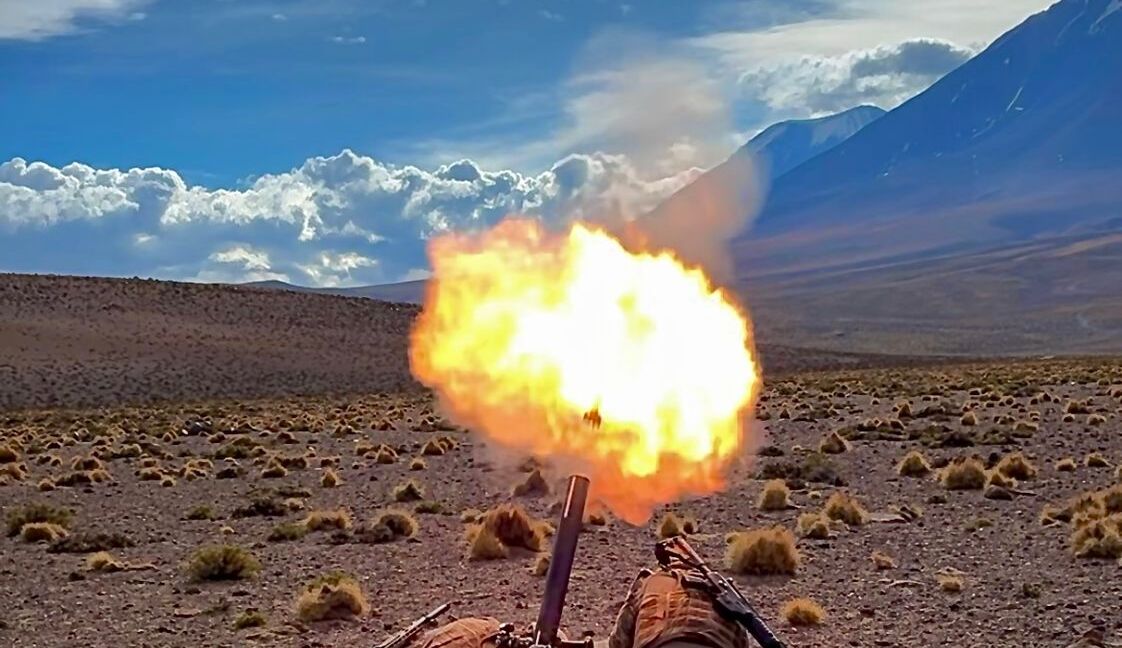
Everyone must assume their responsibility for National Defense. These are decisions of great importance for the country's future and must be made with patriotism, professionalism, seriousness, and timeliness.
Who is responsible if Chile does not have its strategic capabilities available in a timely manner when needed? This is a difficult question because the cycles related to the development of strategic capabilities are long and involve many actors from different administrations. However, it is clear that the Presidents of the Republic, the Ministers of Defense and Finance, and the Defense Committees of Congress have an undeniable responsibility in this matter. The problem is how to make that responsibility effective if they fail to maintain the capabilities that Chile needs for the defense of its territory, sovereignty, and the protection of national interests wherever they may be located. It is essential to remember that multiple factors must converge to have a specific strategic capability, where material or weapon systems are only one of them.
The next question is, what responsibility do the Armed Forces have in the renewal of strategic capabilities? The Armed Forces, by constitutional mandate, are professional, hierarchical, obedient, and non-deliberative, conditions that are quite restrictive for asserting their technical and professional opinions. Some argue that the definitions and responsibilities regarding defense investment are at the political level and that National Defense must adjust to what is resolved. However, there are others, including myself, who say that if the institutions do not take the initiative to present their needs and viewpoints, to explain to politicians the consequences of degrading strategic capabilities, renewing material, retaining talent, maintaining training levels, updating doctrine, ensuring logistics that guarantee proper readiness, and a level of ammunition that allows training under realistic conditions, no one will lift a finger for defense. Above all, the Armed Forces must pressure political authorities to ensure that the political guidance definitions for conducting defense are updated and useful for planning processes. There have been international cases where institutional leaders have resigned in protest when the processes, in their view, are not well managed by the political level.
There are not many countries where the Ministries of Defense are led by professionals in the field or where there is a concern for having a critical mass of civilians trained in defense. In recent years, Chile has had ministers who are not specialists, whose closest experience usually comes from having served on the Defense Committees of the Chamber of Deputies or the Senate, which leads them to rely excessively on their Undersecretary of Defense, the Chief of the Joint Staff, and the institutional commanders. Since the reform of the Ministry of Defense in 2010, there have been good Undersecretaries of Defense, notably the first three who held the position for all four years of their government, allowing them to work without interruptions. Unfortunately, in President Boric’s government, there have been four Undersecretaries of Defense, which has evidently affected management and the results obtained, including the fact that the defense policy has still not been published to date.
Why does the above matter? It matters because decision-making in the field of defense encompasses issues of great seriousness that affect national security and can also entail operational risks that may cost the lives of our soldiers, sailors, and aviators. One only needs to recall the disaster of the ARA San Juan and the chain of poor decisions, both political and military, that culminated in a tragedy. Being a Minister or Undersecretary of National Defense without the proper preparation is something we should seek to avoid, as otherwise, the political leadership of the government over defense is deficient.
The government, and particularly the Ministry of Defense, is responsible for developing defense policy through the undersecretariat, as well as military policy, which includes the force development plan. Prior to this, the government must assess risks and threats, which is the basic input required for proper planning.
It is in military policy where the development of the forces required for risk and threat scenarios is determined, that is, the strategic capabilities necessary to manage and deter what we believe may affect us in the future.
There are several internationally accepted methods for force development. Typically, a mix of them is developed, depending on the systems being developed. In the case of Chile, we have a force development defined by capabilities, but heavily marked by the sensitivity of certain threats. The development of Iranian drones in Bolivia and the new acquisitions by Peru and Argentina must be constantly scrutinized and analyzed, ensuring that our capabilities can continue to provide the necessary deterrence to guarantee peace at our borders.

Capability-based force development is nothing more than equipping oneself with various capabilities that are deemed most suitable for defending and protecting national interests and allowing for the development of all mission areas that political leadership imposes on defense. This method is very characteristic of uncertainty scenarios like those experienced at the end of the Cold War when it was not very clear who posed the threats, but it was clear that there were mission areas that needed to be covered. For more details, I recommend viewing this document from AthenaLab.
While the copper law was in effect, a relevant variable in the force development equation corresponding to the budgetary factor was resolved, generating certainty in defense decision-making. This is why creating uncertainty regarding the flows and baseline contributions of the new law for financing strategic capabilities is not a good idea.
Force development requires a clear and precise definition of national interests, and from those interests, a correct assessment of threats and risks emerges. If we are not clear on this point, everything that follows runs the risk of being misguided. For force planning to be complete, it must consider the five domains: land, maritime, air, space, and cyber, keeping in mind that the purchase of material is only one part of capability development. Personnel, training, doctrine, and logistics also contribute to developing capabilities.
For the exercise to be correct, we must also define whether the Armed Forces will be involved in internal security tasks, as is the case in the Southern Macrozone, and whether the Army will take charge of the borders. Performing such tasks regularly and not exceptionally requires the development of capabilities that are typically not present if the objective is to face traditional military threats.
It is also important to understand that institutions like the Navy, like most navies globally, perform maritime police and coast guard duties, obligations that should not be a budgetary issue for defense. The legislator provided for the financing of the Maritime Service through the Navigation Law, but the Ministry of Finance engages in the bad practice of appropriating more than half of the revenue generated through this channel.
If we focus on developing force based on capabilities and deterring threats, and we provide stability to the flows determined by the law, we should not have issues. However, continuing to think that the National Defense investment budget is managed in thirds is a mistake that disregards serious planning based on internationally used methods. There will be projects that require additional funding allocations for material acquisition and other capabilities that will require greater financing for training and maintaining operational standards.

It is assumed that the annual discussion of force development and strategic capabilities should take place before the budget is discussed. I hope this has been done, but there are indications that lead me to believe it was imperfect and that the government’s priority is on public security, sidelining all strategic efforts.
It is to be hoped that all involved actors understand the force planning process and how the development of strategic capabilities works. The responsibilities of each are clear, and I hope we do not fall back into the old practice of developing force only when threats are just around the corner.
I will consider it a success if we start by having capable professionals as Ministers and Undersecretaries of Defense. Respecting the processes of defining interests and determining risks and threats is fundamental for having good defense policies. Systematizing the processes will allow us to escape the “Solomonic” trap of dividing resource allocation into thirds or thinking that the collective is an end rather than a means, essential but a means nonetheless, for better National Defense. The cyber domain and everything associated with new technologies such as drones, autonomous systems, and artificial intelligence deserve a column in themselves. For now, let us conduct a proper assessment of risks and threats, and understand what national interest we must protect.
Everyone must assume their responsibility for National Defense. These are decisions of great importance for the country’s future and must be made with patriotism, professionalism, seriousness, and timeliness. There are many decisions that cannot afford further delays without jeopardizing the deterrence that has provided us with more than 140 years of peace, albeit a peace with significant upheavals.


