COLUMN | General Pedro Varela, New Commander in Chief of the Army
This article was translated automatically and may contain differences from the original. For reference, read the original.
- by Richard Kouyoumdjian
- Opinion
General Varela will need to address the issue of talent retention. In recent years, many senior and superior officers with excellent training and international experience have been lost, which are now more necessary than ever due to our complex reality and insecurity.
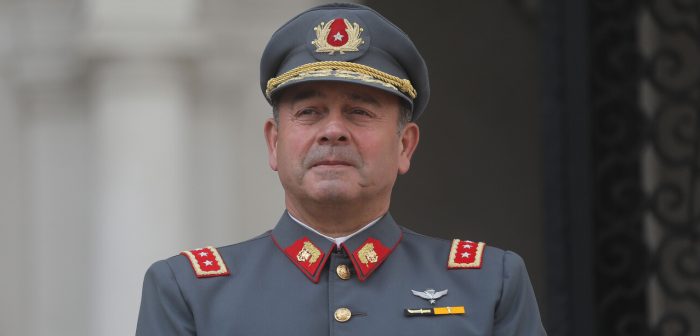
It may be quite bold to write about a person who is not well known, but I find comfort in the fact that I have received good references from retired military officers regarding General Varela, who has been appointed as Commander in Chief of the Army (CJE) for four years starting March 9, 2026.
Some interesting characteristics, which may sound irrelevant to many: he is from the cavalry branch, breaking a 24-year tradition in which the Commander in Chief was from the infantry. He is not the son of a military officer, which has not happened since General Pinochet. These are not minor details in an army where it was traditional and expected to be an infantryman and the child of a military officer. While I have nothing against paratrooper commandos—quite the opposite—I would have preferred that he was not one, as this would mean four consecutive administrations in the hands of officers from that sub-specialty.
General Varela arrives at the helm of the Chilean Army with an interesting background, which includes having served as Commander of Land Operations (COT, the heart of the Army), Commander of the Northern Joint Command (borders with Peru and Bolivia), Commander of Special Operations (special forces and intelligence), head of the military mission in Washington, and previously, for several years, Director of Military Intelligence, which is quite welcome under the current circumstances.
Everything indicates that President Boric selected the right person for the position and that his appointment received the approval of right-wing political authorities, so he should not have problems with the government that takes office on March 11, which, according to polls, is expected to be right-wing. In the event of a lack of alignment, the president can remove the high command of the Armed Forces and Carabineros de Chile, but it is considered very unlikely that this will occur.
His appointment, with the announcement of the high command for 2026 on Thursday the 13th, involved the departure of two older generals, along with three other division generals, resulting in a significantly changed body of generals for the coming years. In this sense, as crucial as the CJE is the Chief of Staff position, which will be occupied by General Guillermo Altamirano, who in practice is the one who leads the Army on a day-to-day basis, allowing the CJE to focus on relations with Defense, Public Security, the Defense committees of both chambers, the Joint Staff, other institutions, and the police.
Although General Varela is appointed, he will not assume until March 2026, so the Army will remain under the command of General Iturriaga until that date. There is only one CJE in the Army, and for now, that remains the current Commander in Chief. I do not recall instances where transitions have occurred with dual leadership, but nonetheless, General Varela is and has been part of the high command for several years, and his recent experience as COT provides him with particular knowledge and expertise regarding the Army’s human and material capabilities and its needs in those areas.
If there is one area where General Varela should dedicate his time, it is in understanding the financial reality of the Army and the state of national finances. The Army is finishing the year with a significant cash deficit, and unless savings measures are taken that would result in a loss of capabilities, the deficit is expected to persist into 2026. The solution lies in a budget that acknowledges all that is being asked of them in terms of internal security, as well as maintaining their deterrent capacity, which comes not only from training but also from having the necessary personnel, as well as the maintenance and modernization of equipment.
Along with the above, he should begin to understand what the possible new authorities in Defense and Public Security have in mind. This is because in all government programs—except for that of Eduardo Artés—there is talk of a greater use of military personnel for internal security tasks. It is well known that the Army is short on soldiers and cannot cover all that is being asked of them to produce effective results, or at least what the politicians have in mind.
In conclusion, General Varela will need to address the issue of talent retention. In recent years, many senior and superior officers with excellent training and international experience have been lost, which are now more necessary than ever due to our complex reality and insecurity.