Reinforcing the Strategic Commitment to Antarctica
This article was translated automatically and may contain differences from the original. For reference, read the original.
- by Juan Pablo Toro
- Opinion
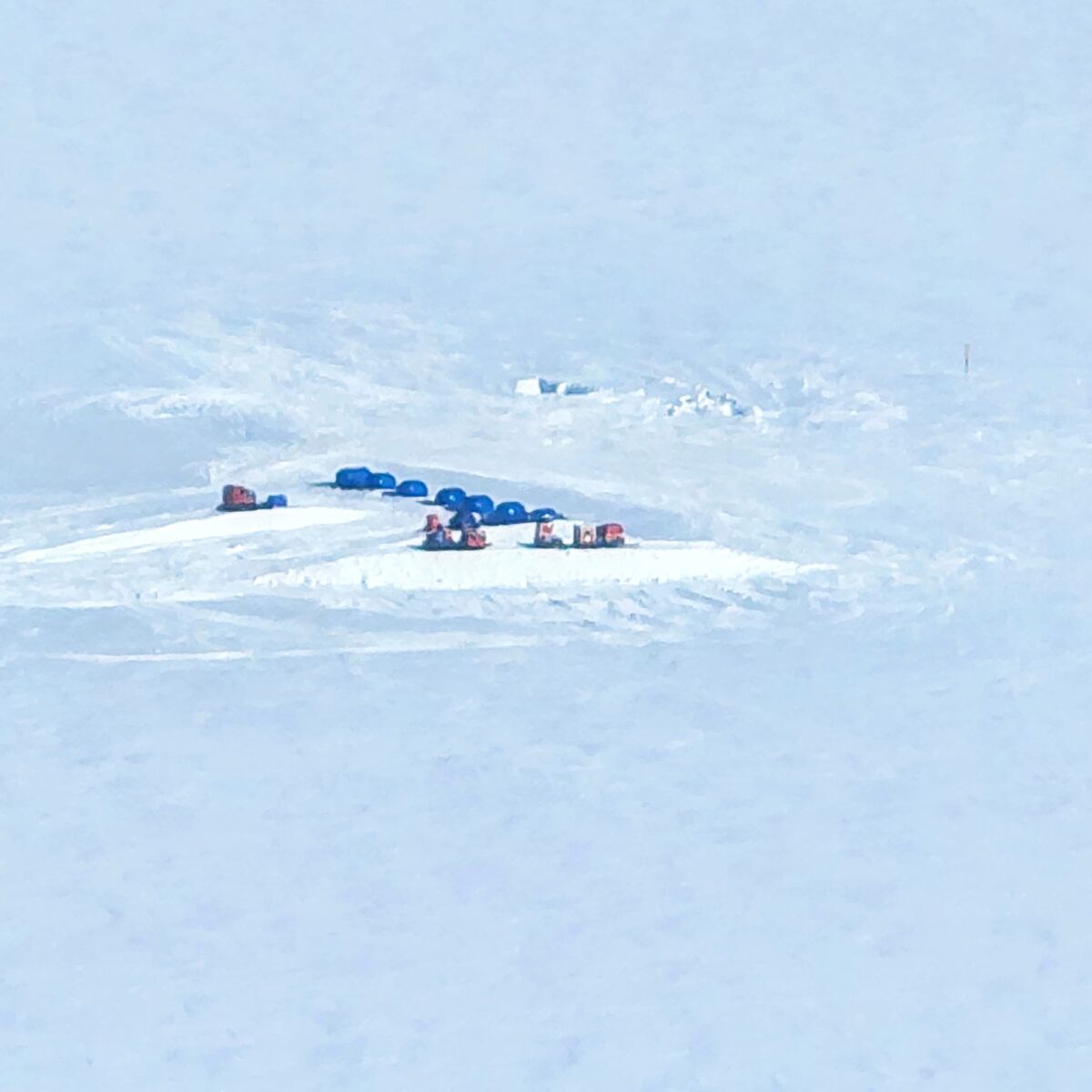
Chile is conducting a significant naval operation lasting 160 days in the southernmost region to transport 8,000 tons of cargo to Antarctica, aiming to improve national infrastructure in a context of increasing strategic competition.
Discreetly and systematically, a significant naval operation is underway in the southernmost part of the continent to transport 8,000 tons of cargo to Chilean Antarctica in order to enhance national infrastructure, following the path charted nearly eighty years ago by Commodore Federico Guesalaga Toro, when the ‘Soberanía’ base (now Captain Arturo Prat) was established.
For 160 days, the Chilean Navy will mobilize materials to be used at both the Teniente Marsh aerodrome and the first stage of construction of the new dock at Bahía Fildes. This is no easy task, as it involves crossing the ever-challenging Drake Passage, unloading cargo without any semblance of a commercial port, and operating in a hostile environment.
The need to improve, modernize, and even expand existing Chilean bases in the white continent could not be more urgent due to the effects of time and climate, as well as the growing interest of powers and third countries that seem to be positioning themselves advantageously for a not-so-distant future, where international treaties continue to degrade due to unilateral actions.
This year, China submitted a draft environmental assessment to the Antarctic Treaty Secretariat for the construction and operation of its sixth base — featuring a main building of 900 m² and a scientific research center of 500 m²2 with a capacity for 25 people — at Cox Point, an area with no territorial claims. This occurs while Beijing has yet to complete its fifth installation, which is being supplied by two icebreakers that set sail this month with 4,000 tons of cargo.
Just 18 kilometers away, Russia will rebuild the Russkaya station — closed since 1990 — to operate year-round, and there are plans to establish a landing strip.
Apart from their physical proximity, both powers also appear to be diplomatically coordinated in blocking initiatives from Chile and Argentina for the creation of Marine Protected Areas (MPAs) under the Convention for the Conservation of Antarctic Marine Living Resources. Recently, the Kremlin arrested a Ukrainian scientist in the occupied Crimean Peninsula, who linked the refusal to establish MPAs with an interest in the eventual exploitation of hydrocarbons.
In the case of the United States, its signals toward Antarctica are ambiguous, although its base at the South Pole has a presence in each of the seven existing territorial claims. While the research vessel ‘Sikuliaq’ from the National Science Foundation is traveling to the continent for the first time, this ship is temporarily replacing two icebreakers that used to be stationed almost permanently in Punta Arenas.
Finally, it is noteworthy that while India has allocated funds for the construction of a fourth base, which should be operational by 2029, Australia has contracted a British architectural firm to make substantial improvements to Davis. Even the arid United Arab Emirates announced that they will establish their own polar facility.
All of the above not only highlights the importance of the naval operation taking place this summer season but also compels the next Chilean government to reinforce its strategic commitment to Antarctica, outlining future scenarios where necessary national capabilities are combined with possibilities for cooperation with like-minded countries, while also clearly identifying opposing interests.
Juan Pablo Toro, Executive Director of AthenaLab
November 22, 2025