Elections in Colombia: “Boric, Petro, and Lula could be part of a regional shift further to the left”
This article was translated automatically and may contain differences from the original. For reference, read the original.
Ex-Ante, May 30, 2022
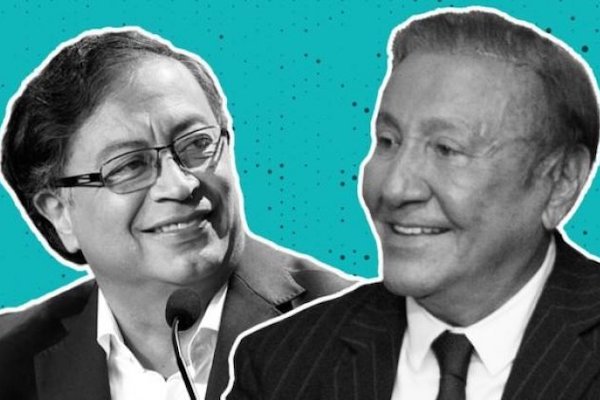
The Executive Director of AthenaLab, Juan Pablo Toro, lived in Colombia for five years, and in this interview, he analyzes the presidential election in that country, won by the leftist candidate Gustavo Petro (40%), followed by the right-wing populist Rodolfo Hernández (28%), the major surprise of the day. The second round will be on June 19.
-It was a surprise that the right-wing populist Rodolfo Hernández came in second. How does this affect the one who appeared to be the favorite, the former guerrilla Gustavo Petro?
-That Hernández surpassed Fico Gutiérrez (24%), from the traditional right, was a huge surprise. Hernández does not come with support from political parties; he is outside the system and is a construction businessman who did not participate in the debates. He appeared on TV programs, ran a campaign on social media, and indeed had quite a few outbursts.
Nevertheless, Petro’s vote is significant: eight million votes, which is not what he expected, for sure. But it is a gigantic advance for someone who represents the left in a country where the left has never governed.
-Does Hernández have a chance of winning in the second round? At least the numbers give him a chance.
-I would say he has possibilities. He received over 5 million votes, and Fico Gutiérrez came in third with also over five million votes; thus, if they combine, they surpass Petro. The question is how many of Gutiérrez’s votes can be directly transferred to Hernández. It is estimated that at least three million votes would be transferable. Hernández has much room to grow, while Petro does not. Petro’s ceiling is lower. Furthermore, in Colombia, there is a gene that is quite resistant to the left, which explains why it has never governed, and this relates to history, where the left was identified with guerrilla movements.
-Does Hernández’s significantly older age work against him?
-While he is 77 years old, he represents a will for change. Petro also claims to embody that, but he has been in legal politics since the 1990s. He was previously a guerrilla fighter of the M-19, a well-known face for many years, and was the mayor of Bogotá. Hernández has had a rather curious but successful campaign on social media, which has allowed him to navigate some of the controversial statements he has made.
-Nonetheless, it is unclear what Hernández wants. What are his bets?
-It is a populism that we have seen in various parts of Latin America, very critical of politicians, promising to combat corruption, etc. However, there is no clarity on how he intends to address the more complex issues in Colombia, such as the resurgence of violence and controlling inflation.
-Are both proposals populist?
-Hernández’s has some populist components, attached to a charismatic leadership, unlike Petro, who comes from a hard left, although he has tried to distance himself from that past. Both have some populist elements: claiming to represent the true people of Colombia, above traditional parties. The point is that Petro has a bench in Congress, while Hernández does not, and what we have seen in Latin America is that presidents without a bench fare very poorly.
-Who does Hernández resemble?
-A not very good reference is Bucaram from Ecuador. He has some of that. A businessman turned politician, quite folkloric. After coming in second, he made his message from his kitchen; on election day, he was at the pool. He has insulted his rivals, slapped a councilman who accused him, and made inappropriate comments, such as when asked about Vichada, a jungle department. He said he did not know where it was, and still won there.
-He also said he admired Hitler.
-Of course, he said he was a great German thinker. Another time he said he thought women should support from behind. Hernández reflects the discontent with traditional authorities. Surely the more leftist sector of the Liberal Party will go with Petro. But the Conservatives will not. The rest of the parties will line up behind Hernández to ensure that Petro does not come to power.
-Last week it was announced that Colombia is becoming a “major non-NATO ally.” How could this partnership be affected if one or the other wins?
-The U.S. has provided $10 billion to Colombia over the last two decades to combat drug trafficking and insurgency. Petro is not someone who believes in free trade; it seems unlikely that he would support mechanisms like the Pacific Alliance, let alone the TPP. The U.S. and Colombia share intelligence, training, and equipment, which allows for close monitoring of what is happening in Venezuela, and with Petro, all that cooperation could be significantly limited. This is why I believe it raises concerns among more traditional business or political sectors.
-With all due respect, is Petro’s left more similar to the Frente Amplio than to the Concertación?
-He is more like the Frente Amplio. Remember he was invited by Boric to the change of command. Petro comes from the M-19, a guerrilla that was very active and strong in the 80s. Sadly remembered for the assault on the Palace of Justice, where Petro was not directly involved, according to what is said and known. It is a guerrilla that later demobilized as a result of a fairly successful peace process and reintegrated into civil life.
-Petro was the mayor of Bogotá. Why is his management evaluated poorly?
-He had a terrible management in the capital. In fact, one of the interesting things about this campaign is how Petro has been able to reinvent himself despite his poor management in Bogotá. Returning to your question, Petro is closer today to the left represented here by President Boric. One can find certain similarities and alignments, but the Colombian landscape is very different from the Chilean, due to having had a strong bipartisanship and historical guerrillas.
-Is it proven that Petro participated in armed actions?
-It is very difficult for someone from the M-19 not to have done so during their time, but at least he was not involved in the major armed action that was the assault on the Palace of Justice, where a large part of the judiciary died. Petro’s non-participation in that action is what allows him to be more presentable as a candidate.
-And how important are his connections with chavismo?
-Petro did have direct contacts with Hugo Chávez when he was an amnestied and unemployed coup colonel, starting to circulate around America. There were strong connections; there are photos, records; these are not conspiracy theories or anything. Also with Maduro. During the election, Petro has tried to distance himself from the Venezuelans, from Maduro’s regime, with stronger and harsher criticisms. This is what he needs to do to have a chance of accessing the Palacio Nariño.
-What is the relationship between Petro and Boric?
-They have grown closer. Generationally they are in different worlds, but fundamentally there is a certain ideological alignment in representing a harder left that is coming to power. This year there is also an election in Brazil, with the possibility of Lula returning to the Palacio de Planalto. In that sense, Boric, Petro, and Lula (the elections in Brazil are in October) could be part of a regional shift further to the left.
-Colombia has had public order problems, and Petro has said he will dismantle the Esmad, which is the riot police.
-Yes. In 2020, there is a report from CSIS called The Age of Mass Protests, which states that in 2019 there were large protests in many countries. Sometimes Chile wants to feel a bit unique, but there were protests in Colombia, Ecuador, Lebanon, and Hong Kong.
-What impact will this election have on the fight against drug trafficking?
-Colombia remains the world’s largest producer of cocaine. The peace process with the FARC was rushed and poorly executed, which has led to record levels of cocaine production. How will Petro or Hernández address this? The decisions they make will have a very strong regional impact. Therefore, we must be extremely attentive to what happens.
Source: Ex-Ante