INTERVIEW | General (R) John Griffiths and the Role of the Armed Forces at the Northern Border: "I believe there is insufficient support for the use of force"
This article was translated automatically and may contain differences from the original. For reference, read the original.
Ex-Ante, March 1, 2023
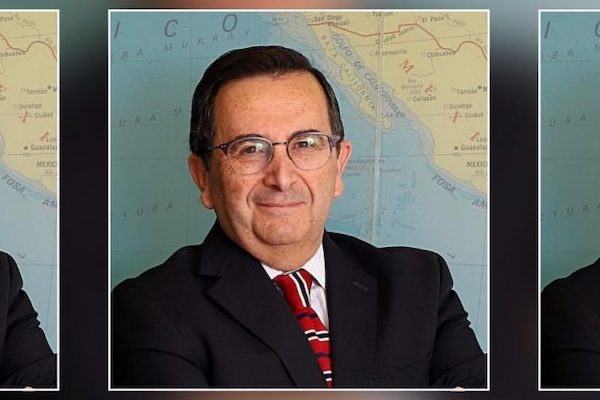
The former Chief of the Army General Staff analyzes the legal norms established in the decree with the force of law for the protection of border areas and the deployment of Armed Forces and Order personnel in those areas. He points out that, based on the maintenance of public order, these norms are insufficient, especially given the likelihood of facing criminal organizations with high firepower.
Mario Gálvez
-What do you think about the deployment of military personnel at the northern border?
-The military control of land borders has always been a constitutional activity of the Army in peacetime. Now, the deployment for public order functions is another matter. Certainly, the constitutional framework contemplates this in exceptional circumstances. With all this military deployment—recently ordered—I believe there is no necessary and adequate support for the use of force against the probable and potential phenomena and threats at the border that far exceed mere maintenance of public order.
-Is there legal support for the deployment of troops for immigration control?
-The legal support that exists is that described for the phenomenon of illegal immigration through the eight rules for the use of force outlined in Article 11 of DFL. 001, dated February 9, 2023. Since they are defined for the maintenance of public order, I believe these norms fall short of adequately addressing the spectrum of possibilities and potential situations for the use of force at the border. Primarily, to confront the criminal organizations operating there, which possess high firepower.
-Does that mean they are insufficient?
-Considering the nature of the security threats present at the border for decades, it seems entirely reasonable to suggest that they are insufficient and fall short. Moreover, these measures do not seem to adequately address the underlying security problem, which is of a different nature than the public order measures that are designed.
–In preventive identity control, the Armed Forces and Order are expressly prohibited from searching individuals, their belongings, clothing, or vehicles. They also cannot take individuals to the nearest police unit if they cannot verify their identity. What is the utility of deploying military personnel at the border, then?
-This highlights the lack of authority for the responsibility assigned. If effective border control is desired, it is necessary to provide the equipment, technologies, training, doctrine, norms, rules for the use of force, and adequate legal support to those who will have the mission of securing the national border. Currently, there is a security scenario and reality where the probability of armed confrontation with drug trafficking or criminal gangs is high.
-Could the possible weaknesses or contradictions of these norms judicialize the actions of the Armed Forces in these tasks?
-There is no doubt that this possibility is high. Hence, the question arises about what effect this will have on the forces in the future.
-Do you believe that military presence will have a deterrent effect on the illegal entry of migrants?
-Deterrence requires two elements: the “capacity” to deter through the use of force and the “political will” to execute or employ that force to achieve the required behavioral change through deterrence, which is only confirmed through the “final behavior” to be adopted by the actor subject to deterrence. It is important to note that deterrence does not occur simply because an actor desires or states it, nor solely because a certain force is present. Therefore, if the possibility of using force is not well defined and supported, deterrence will not be credible and will not have the desired effect.
-What does international experience say about this type of action?
-International experience indicates that when armed forces are used in internal security situations, they must be provided with the appropriate authorities—especially legal ones—to reasonably fulfill their mission. Failing to do so is merely managing the problem, not solving it.
Source: Ex-Ante