PODCAST | What is at stake in the NATO summit?
This article was translated automatically and may contain differences from the original. For reference, read the original.
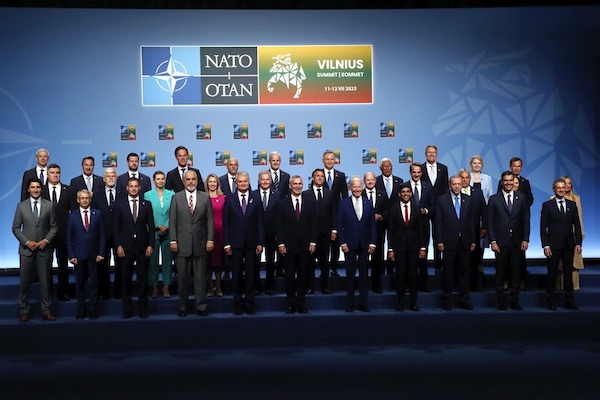
Yesterday, the summit of leaders from the member countries of the North Atlantic Treaty Organization (NATO) began in Vilnius, Lithuania. As was the case last year in Madrid, the meeting is overshadowed by the war in Ukraine. However, this time there are elements that have significantly changed the landscape. On one hand, the incorporation of Sweden into the alliance was announced, a prospect that just a few months ago seemed impossible due to Turkey’s refusal to grant its approval. Now, Turkey has changed its position after negotiating matters related to its accession process to the European Union and the acquisition of armaments.
With Sweden’s incorporation, Vladimir Putin’s nightmare—which was also his argument for invading Ukraine—becomes a reality: Russia now faces a strengthened alliance.
Ukrainian President Volodymyr Zelensky has expressed his disappointment with the current course of events, as he had hoped for his country’s incorporation into NATO but found promises conditioned on the end of the war. However, he cannot be too disappointed, considering that he has received significant announcements of increased contributions from powers to bolster his arsenal amid his counteroffensive against Russian occupying forces. This includes the controversial cluster bombs that the United States promised to deliver. What can be expected from this NATO summit in times of war?
Today we discuss this with Juan Pablo Toro, Executive Director of the think tank AthenaLab.
Source: Crónica Estéreo LT


