Security: Promises Are Carried Away by the Wind
This article was translated automatically and may contain differences from the original. For reference, read the original.
El Líbero, October 13
Chileans are relinquishing their freedoms by avoiding certain places and times, and democracy weakens with every inch gained by crime.
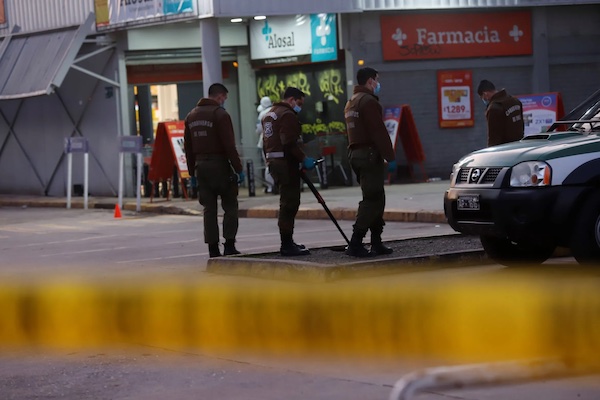
Everything becomes more difficult when promises are not fulfilled. Exactly one year ago, on October 12, 2022, President Gabriel Boric committed to strengthening security “not in words, but in concrete actions” while announcing a 4.4% increase in the national budget for that item. Today, it seems that commitment has not materialized. Chileans are experiencing the highest level of fear recorded in the survey by the Fundación Paz Ciudadana: 30.5% nationwide report feeling afraid.
It is true that the results of actions against crime may take time to manifest, but Chileans do not rate the work of institutions positively either. According to that same index, the Police Investigations Department is the highest rated with a score of 4.7, followed by Carabineros with 4.4 and Gendarmería with 4. At least these institutions pass, as mayors, public defenders, prosecutors, judges, the government, and parliamentarians receive failing grades, especially the last two, which score 3.2 and 2.2 respectively.
State institutions seem unable to meet the challenge, or at least that is how they are perceived. The rating received by the government is particularly concerning, as it is currently responsible for providing us with security. It is at this point that the promises made become smoke, and the blind blows dealt in the first six months hurt more than ever.
The poor institutional evaluation and high levels of fear have a direct impact on citizen behavior and the quality of democracy. In light of the scant results from those in power and the little success observed in their actions, Chileans have changed their habits. And how could they not! Nearly 40% report always or almost always hearing gunfire or shots in the air, over 50% fireworks, and almost 60% report the same regarding drug use in public spaces.
The demolition of narco-mausoleums and attempts to contain narco-funerals are highly visible issues but have little impact. At the end of the day, Chileans are relinquishing their freedoms by avoiding certain places and times, and democracy weakens with every inch gained by crime. What Chile needs today is a clear and precise security policy, where authorities specify the axes that will guide their work against crime and how they will be measured, while simultaneously initiating a serious institutional modernization that prepares the state to combat the new criminal landscape that has taken hold since last year.
It is necessary to design a strategy that encompasses the before and after of crime, in order to generate prevention, prosecution, and punishment by integrating all institutions to respond to a multidimensional phenomenon. Pending legislative projects include the Ministry of Security and the intelligence law, both fundamental for undertaking the modernization we need to face the new criminal context.
Pilar Lizana
Researcher, AthenaLab
Source: El Líbero
The opinions expressed in this article are those of the author and do not necessarily reflect the views of AthenaLab.