John Griffiths speaks with Ex-Ante about organized crime and the role of the Armed Forces.
This article was translated automatically and may contain differences from the original. For reference, read the original.
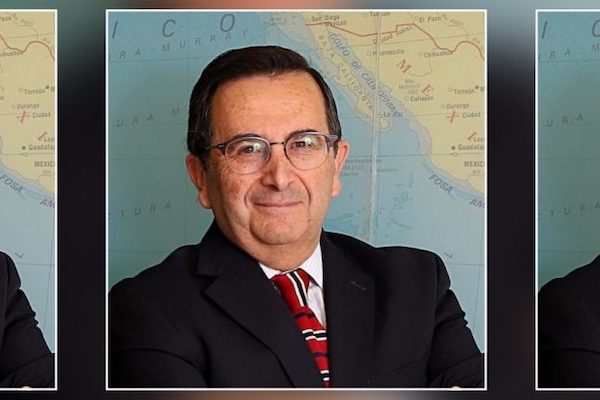
General (r) John Griffiths on the role of the Armed Forces against organized crime: “Right now, we are groping in the dark.”
The former Chief of the Army General Staff of Chile argues that the Armed Forces cannot be expected to operate normally when facing exceptional states. “What must always accompany this is a very clear level of the use of force and a very clear legal framework in which the force will be used.” He explains why “today we are addressing the symptoms as they appear and not the disease.”
-The army stated in the Cosena that it was not trained for public order. What do you think of those words?
-When the political level resolves the use of the Armed Forces in internal security matters, our legal framework has the tools, and this is called a constitutional state of exception. Is exceptionalism enough? No. What must always accompany this is a very clear level of the use of force and a very clear legal framework in which the force will be used. Because if the forces are deployed without legal backing or clear rules of engagement, it is evident that the mission cannot be fulfilled. Ultimately, it will end up harming the people.
-Commander in Chief Iturriaga stated that duties and roles must be clearly established, along with a robust legal framework that does not promote impunity.
-As democracies around the world do. There is no democracy that strips the Armed Forces of powers when it is going to assign responsibilities; you must grant them authority to operate in that area. And the authorities are very clear: our Penal Code enshrines legitimate defense. But we must go further and assume the political will to want to use the Armed Forces.
-Iturriaga himself said that these are tasks that require interaction with the population, and the Army is not prepared for that. Why?
-The function of the army is normally not internal, except in exceptional cases. However, the army has accumulated experience in dealing with the population during constitutional states of exception or disasters. Also in some specific security situations, such as in northern Chile, in border control.
What needs to be clearly defined is what the role of the army will be in dealing with organized crime in major cities. Because in that area, undoubtedly, the public force, Carabineros, and the PDI are responsible for it. Does that mean the Army should remain uninvolved? No. Because if we have a national security problem, the Political Constitution has tools to impose the use of the Armed Forces.
What I cannot expect is that if I have a constitutional state of exception, I apply a legal framework of normality to the Armed Forces. Forgive me, but that does not work.
-In fact, the Minister of the Interior, Carolina Tohá, requested support from the Armed Forces against organized crime. What are the complexities of that matter?
-First of all, it is essential to have a clear understanding of what is expected from the Armed Forces. Additionally, a strategy must be designed. Because it is not about the Armed Forces replacing the security forces. It is about them together forming a task force to address specific sectors, in geographical areas, with a strategy for improved public security. Where the Armed Forces can, as is done in Brazil and other countries, establish the perimeter, the geographical framework, so that the law enforcement and security forces can operate within it with full support and security.
-You mentioned the case of Brazil; I understand that there the Armed Forces intervened in some favelas dominated by drug trafficking and had specific rules. Do you see that as possible in Chile?
-If it is not possible, we will not solve the problem. Our country is not in intensive care, but it is in intermediate care. We need a legal framework that does not restrict the powers of the police forces or the Armed Forces.
This does not mean falling into impunity or unjust acts. But if there is an act that threatens the physical integrity of a member of the Armed Forces, legitimate defense applies. I cannot restrict that to the Armed Forces.
-But that is part of the current law.
-But in the end, it is tied to a matter of legal and judicial translation. So what needs to be agreed upon, and that is why the question is very good, are several aspects: the political actor, assuming responsibility and creating the conditions for the Armed Forces to perform their mission alongside the security forces. Second, the Judiciary and the Public Ministry must understand that they must apply the norms in that context. And if the norms do not exist, well, the Legislative Power must create the laws and regulations so that law enforcement and security forces and the Armed Forces can act efficiently.
As long as we do not understand that, as long as we do not resolve it, we will continue doing more of the same. And you know that if I keep doing more of the same, I cannot expect different results.
-Another thing that happened in Brazil is that the Armed Forces would arrive, eliminate the drug traffickers, but a year later they would leave, and within two weeks everything would return to normal. I imagine that the Armed Forces alone are not enough; comprehensive solutions are needed.
-That is the point. The Armed Forces are not the solution to a problem that deeply affects the rule of law. Our country is facing a governance problem; it has a crisis of institutional integrity. We are being subjected to actions by groups linked to criminal organizations involved in drug trafficking operating in our country. Why? Because today Chile has and suffers from institutional fragility.
Until we correct that, we will not solve anything. I would say that what needs to be done today is to start with better border control. It is crucial, and we have not done it, because today anyone can enter through our border “at will,” as they please.
-Can the Armed Forces contribute more in that area?
-Of course. A strategy must be defined because right now we are groping in the dark. What needs to be defined is the “why” we want the Armed Forces, where we will use them, and where they can make the best contribution so that our law enforcement and security forces, Carabineros, and the PDI can do their job well. It seems to me that today we are addressing the symptoms as they appear and not the disease.
Source: Ex-Ante