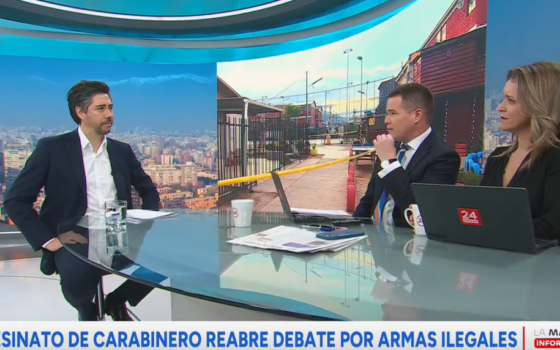
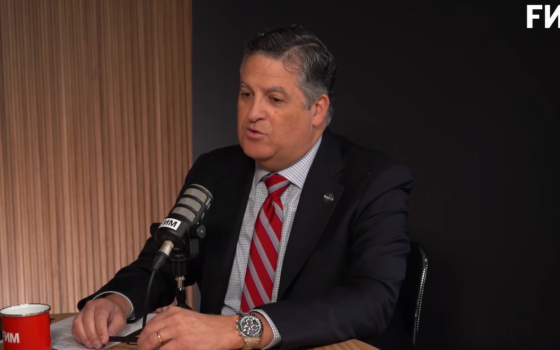
John Griffiths is interviewed by Ex-Ante about Israel's absence at FIDAE.
This article was translated automatically and may contain differences from the original. For reference, read the original.
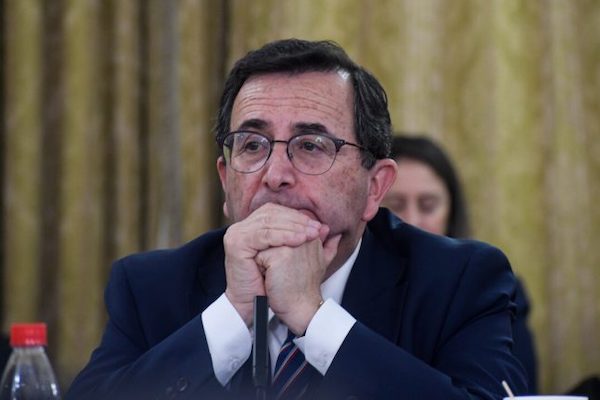
General (r) John Griffiths on Israel’s absence at FIDAE: “Chile relies on the Israeli industry for its weapon systems.”
Former Chief of the Army General Staff and Head of National Security and Defense Studies at AthenaLab, John Griffiths, comments on the Government’s decision to suspend Israel’s participation in FIDAE, while Tel Aviv considers withdrawing its military attaché in Chile. “The three institutions, Army, Navy, and Air Force, some more than others, have components and weapon systems of Israeli origin. The decision is sovereign, made by the current Government, and is legitimate, but I hope they considered the pros and cons,” he states.
-To begin with, is it a bad signal that Israel is not participating in FIDAE, as announced by the Government?
-It is a decision that the Executive can make. I imagine they have taken all the information into account to make it, as Chile is a country that significantly depends on the Israeli industry for its technological and weapon systems.
The three institutions, Army, Navy, and Air Force, some more than others, have components and weapon systems of Israeli origin. The decision is sovereign, made by the current Government, and is legitimate, but I hope they considered the pros and cons.
-How important is participation in FIDAE?
-Exhibitions are very important for countries developing acquisition programs and also to assess the level of technology. Today, technology is the most relevant factor in defense.
For example, if we wanted to have a better-protected border, we will never achieve that with personnel alone. We cannot place a person every five meters along the 350 kilometers of border we have with Bolivia. It would be better to explore the possibility of purchasing drones or satellite radar systems produced by Israel.
-Does Chile spend on armament in accordance with its GDP?
-Chile is not a country that buys many weapons, but it needs to modernize its weapon systems. The protection, for example, of its armored units, the issue of drones. Exhibitions are very relevant because they allow you to talk in person with the people behind those systems and see the characteristics and new offerings in the market.
-How important is Israel as a supplier of armament and technology for Chile?
-Israel is a supplier of weapon systems or technology that is relevant on a global scale. And especially for Chile. The F-35 helmet has components from the Israeli industry. The Iron Dome system, which is used to intercept satellites, also does.
Scientific and technological innovation has taken Israel from 1948, when it had no military industry, to being one of the most significant countries globally in its military industry and technology in general. For example, in water technology: it went from having a water deficit to having a surplus. It is technology, it is knowledge. Chile, in that sense, depends on Israel.
-Is Boric’s distancing from Israel a complex strategic decision?
-When you buy a weapon system, it is not like going to the supermarket. You are purchasing a strategic relationship with that country. Because then comes the issue of maintenance and spare parts. I buy a strategic relationship because I need to ensure the supply line for spare parts in the future, in ten, twenty, thirty years. I need to ensure training, modernization, etc. Therefore, there is a dependency.
-Is Israel among the top countries selling arms to Chile?
-Our suppliers are predominantly Western, the United States, Europe, and Israel.
-You speak of the strategic relationship with Israel. What consequences could arise from Israel recalling its military attaché in Chile?
-The Executive must consider all aspects of the decision. Because if you are left without a defense attaché from a country that supplies you with weapons in the system, and not just the weapons, but also the maintenance and modernization of many projects that are in development, it will undoubtedly complicate operational capability.
-Do the series of issues that have arisen with Israel under Boric’s government affect the country’s position?
-The question is whether there will be other measures that could potentially be taken that could affect Chile. In other words, the table is open. When we start talking about the defense attaché leaving, about them not coming to FIDAE, etc.; it is evident that the relationship is not good.
The question is: How much could the additional measures that Israel might take now affect Chile’s security and its weapon systems? That is the reality. I am not saying anything that is not logical and coherent.
-In that sense, could it be said that the government has been careless or negligent?
-I would not say either careless or negligent. I want to believe that they considered all the elements to make a decision. Political decisions of this type are thought out, rational, and discussed. And I imagine they were well advised.
-If you were an advisor to the government, would you have recommended acting differently?
-The role of the Armed Forces is to say: look, if you do this, these are the implications. If you do not do this, these are the consequences. The Government decides.
-Is Israel’s contribution irreplaceable for a country like Chile to have high defense technology?
-It is not irreplaceable, but it is vital when you already have an installed weapon system. Suppose you have an aircraft whose components are 60% from Israel. It is critical because it means either keeping that flight platform operational or not. Or if you have a ground weapon system, a missile, and you cannot operate the ammunition because you do not manufacture it, you lose your defense capability.
-The terrorist attack launched by Hamas left 1,200 Israelis dead. Following Tel Aviv’s response, the death toll has reached 30,000. How does this affect Israel’s international image?
-No one desires war; and it is evident that it damages Israel’s image on the global stage. But Chile, due to its history, tradition, and foreign policy norms, has always managed this issue with great prudence, with a certain neutrality. And making every effort to be an actor that dialogues and promotes peace agreements. That has been Chile’s tradition.
-Has the historical neutrality of Chilean diplomacy on this issue been lost?
-Certainly, because here we have two large communities. The largest Palestinian community abroad and a significant community of Israeli origin. Both coexisted peacefully without issue. So that is very positive for the country. And perhaps it laid the groundwork for discussing these matters between the two communities, even exploring some peace proposal.
It would not be good to import a conflict that was not ours, because we always maintained a policy of neutrality. I remember that when the creation of the State of Israel and Palestine was voted on in 1948 at the United Nations, Chile voted neutrally.
Source: Ex-Ante