El Líbero interviews Richard Kouyoumdjian
This article was translated automatically and may contain differences from the original. For reference, read the original.
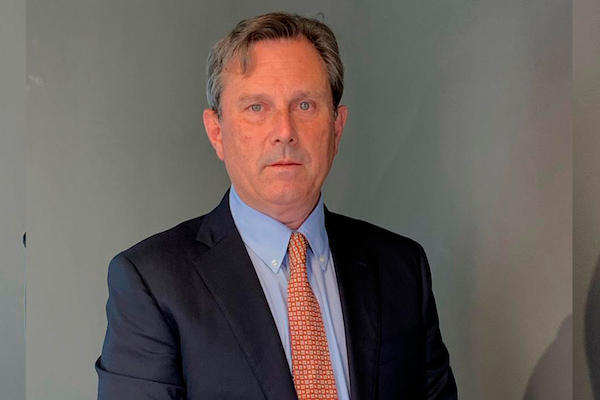
Richard Kouyoumdjian, defense expert: “The government must assume the judicial cost of deploying the Armed Forces on the streets. That is the difference with Bukele”
In conversation with El Líbero, the vice president of Athena Lab, director of the Maritime League of Chile, and former Navy officer asserts that we are facing a “national security” problem. “We need to involve the Armed Forces to support the police. How is that done? Bukele-style,” he states. He adds that “the question is whether the President is willing to take on that task and not start by saying nonsense like the Rules of Use of Force or critical infrastructure.”
Following the request from the mayor of Maipú, Tomás Vodanovic, for military presence in the municipality, the debate over the role the Armed Forces should play amid the security crisis in the country has been established. It has been the ruling party itself—including the Communist Party—that has brought the issue to the table, which some have interpreted as a desperate move ahead of the upcoming municipal elections.
However, the government and the opposition are still far from reaching a consensus on what this role should be, while the Armed Forces have so far shown reluctance to assume this role. Regarding this issue, El Líbero spoke with national defense expert and former Navy officer, Richard Kouyoumdjian, who asserts that the Armed Forces do not need a law on critical infrastructure or Rules of Use of Force filled with protocols to take on this challenge, but rather a clear mandate and for the political class to assume responsibility.
-What do you think about mayors, even from the left, requesting military presence on the streets? So far, the Armed Forces have not been very supportive of this measure.
-Until now, I was very opposed to including the Armed Forces, because it is not their role, but when one begins to observe the characteristics that organized crime is taking on and that it begins to take territories and replace the State, I have to consider it a national security problem, and there I do have to use the Armed Forces as one of the solutions.
-How do you evaluate or how effective has the presence of the military been today in the north or in La Araucanía?
-This is more than a political issue. In the north, the presence of the Army has made us more efficient in receiving and registering migrants, which is already an advance, because at least we are registering them, but it is not that we are sending them back. In the south, meanwhile, the presence has helped reduce violence, but it is a presence of control that has allowed pressure to decrease, which is like throwing a Panadol at the problem.
-What is needed then for the presence of the Armed Forces to be effective?
-The Armed Forces do not have a clear mandate. The State is just beginning to recognize the problem that exists. Until now, it had always been classified as a criminal problem, so it was a problem for the Public Ministry. Additionally, it is important to understand that years ago Chile had an Army intensive in personnel and low in technology. Today it is the opposite; it is strong in technology but low in personnel. They are forces that are prepared to eliminate or neutralize enemies, and the fact that we have them deployed as fixed-point guards is not effective.
-Has there been a lack of recognition by the government that we are facing a national security problem?
-As long as we continue to declare that the problem is criminal, we will continue to apply criminal remedies, police remedies, and we will not apply the remedies that situations of insurgency, terrorism, or drug trafficking require. Therefore, the diagnosis is incorrect, because governments do not want to assume the cost of having to go solve the problem.
-The Undersecretary of Defense, Ricardo Montero, stated last week that “it is not a good idea to place military personnel directly in neighborhoods, but rather in critical infrastructure”.
-One wonders why the government is pushing so hard for the critical infrastructure law. Because the critical infrastructure law allows the Executive not to have to go to Congress every 15 days to request the maintenance of the State of Constitutional Exception. The critical infrastructure law allows the Armed Forces to be assigned to protect critical infrastructure. The question is what part of the critical infrastructure is at risk that they insist on this position. Here, either constitutional exceptions are created outright or a constitutional amendment is made where the Armed Forces become part of the public force.
-Why do you think this is not done?
-All of this requires Congress, and the President wants to avoid the discussion in Congress and use the critical infrastructure law to deploy the military, but to protect critical infrastructure, when the truth is that the critical infrastructure is not at risk.
“The Armed Forces close the perimeters and the police enter knowing that the Armed Forces are further back”
-Now, the Rules of Use of Force are also being debated in Congress, which are said to provide clarity to the military regarding their actions in these new tasks.
-The Rules of Use of Force (RUF) presented by the government come filled with rules that must be followed and characteristics that make them inoperative. When you are facing internal security problems with weapons, you do not have time to follow extensive protocols. Again, we become very protective, probably with proposals from the National Institute of Human Rights or from people who have prioritized the position of human rights, but take a view of social protest. Here we are not talking about social protest. What is the problem that Santiago has?: Organized crime.
-What characteristics should those rules have? Because we are talking about war weapons…
-Here we need appropriate Rules of Use of Force to combat organized crime. In the south, we continue to talk about a criminal problem when it is a problem of insurgency and terrorism, of national security.In the case of Santiago, we have a problem of organized crime that is taking control of the territory, and the first thing one must do is take control of the territory and ensure that the State is present. Let us not get entangled with critical infrastructure and the RUF. We need clarity in the diagnosis.
-And what role should the Armed Forces take in that? Replace the police?
-We need to involve the Armed Forces to support the police. How is that done? Bukele-style.
-But the President of El Salvador has been questioned regarding human rights for this method. Do you think it is something convenient to replicate in Chile?
-The human rights problem in El Salvador is not in the capture of criminals; it is in how people are guarded in prisons, in what comes after. So here one must be willing to take the remedy.
-You say that the role of the Armed Forces would be to support the police. How does that apply in practice?
-The Armed Forces close the perimeters and the police enter knowing that the Armed Forces are further back. They enter with drones, helicopters, etc. And the objective is to capture organized crime and put it in jail before organized crime reaches such a level of strength that it becomes unmanageable. We do not want to reach Mexico. The Armed Forces support the police, but the police enter. The Armed Forces provide a security perimeter and support if necessary. The Armed Forces do not have enough personnel to be placing soldiers at fixed points or as guards. Additionally, I am warning the criminals where the Armed Forces are, and I want them not to know.
-Amid the debate, it has been suggested, even by former military personnel, that the Armed Forces do have the capabilities to fulfill these functions, but they do not want to do so to avoid risking their personnel.
-The Army has the capabilities, but those capabilities are not to safeguard critical infrastructure. The government is all aligned stupidly in the same theory, but that is not going to work.
“The Armed Forces demand clarity in the mission and political protection”
-What do the Armed Forces need to go out on the streets?
-The Armed Forces demand clarity in the mission and political protection. Here, politicians and the government must assume the judicial cost of deploying the Armed Forces on the streets. That is the difference with Bukele. Bukele said, ‘I assume the political cost.’ So the Army needs to know its mission to prepare, and hopefully it is not permanent, but it must have absolute political and judicial support.
-Should President Boric assume political responsibility?
–The military want clarity from the government and the judicial system about who is responsible for the order. And there will probably be bullets, yes. But take me to court if I step outside my mandate. The question is whether the President is willing to take on that task and not start by saying nonsense like the Rules of Use of Force or critical infrastructure, which is a ruse to avoid going to Congress.
-Do you think it is possible for the government to support such an action?
-I do not know if there is any political interest from the government to complicate things and not resolve the problem. Here, we should not get entangled; this is a national security issue, organized crime is growing, gaining territory, and armed. If we do not stop it now, it will be too late, and we already know how this ends.
March 18, 2024
Source: El Líbero