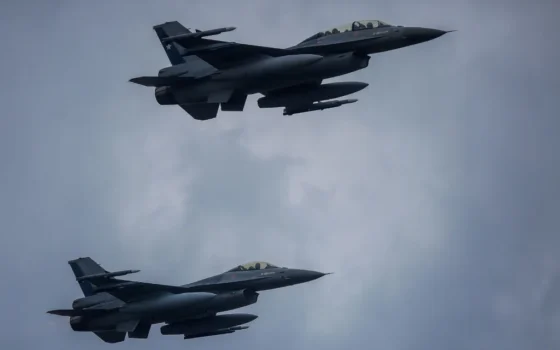
COLUMN | Without security, no economy can function
This article was translated automatically and may contain differences from the original. For reference, read the original.
- por Richard Kouyoumdjian
- Entrevistas
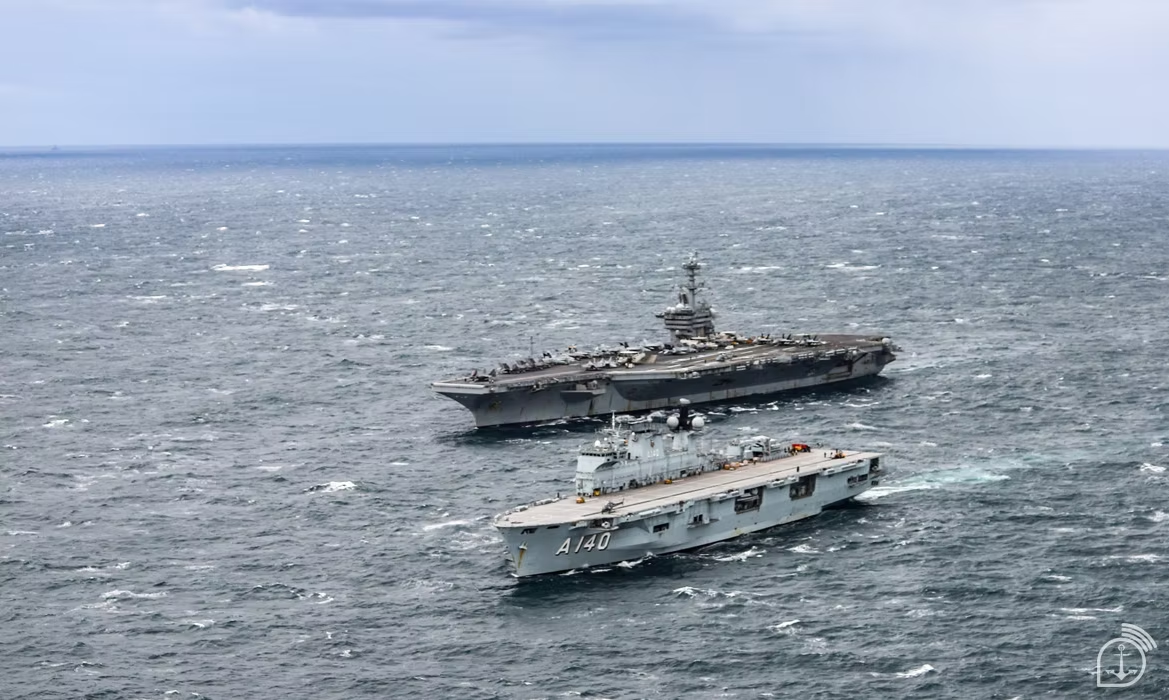
We interviewed Richard Kouyoumdjian, Vice President of AthenaLab, to analyze the current challenges facing the Armed Forces of Latin America, with a special focus on Argentina and Chile.
The Armed Forces of Latin America are facing an increasingly complex situation, where growing threats, especially asymmetric ones, such as transnational crime and terrorism, are compounded by ever-tightening budgets, personnel exodus, and a political sector that fails to understand the state’s need for defense. We spoke with Richard Kouyoumdjian, Vice President of AthenaLab, about these issues and what defense institutions can do to improve their situation.
Pucará Defensa: What is the state of defense in the region?
Richard Kouyoumdjian: I believe that the general situation of defense faces administrative budgetary difficulties, in an environment where Public Security is prevailing and where defense projects are always long-term and not simple. Additionally, in a situation where there are no complex and immediate issues with neighbors, as is the case from Argentina to Chile, which sometimes attracts the attention of the political world and the press. Therefore, the challenge for a country like Chile is how to make the budgetary model work, and indeed, the investment budget has not been interrupted, but the operational budget is affected by the fact that the State of Chile has not undertaken a task like the one Milei did upon entering government, which was to say, ‘I will cut everything possible, but I will not affect security and defense.’
The problem is that the first budget adjustment made in January in Chile is equivalent to 544 billion pesos, about 600 million dollars. What they did was ensure that Carabineros and the Police of Investigations were not affected, while applying a reduction of between 15 and 18% to the rest in personnel expenditure and general expenditure, known as subtitles 21 and 22. Thus, the Army and the Navy, which are more labor-intensive, are hit more directly.
We have a problem there. How do you resolve that problem? In Argentina, it is probably simpler to make an adjustment like the one the Milei government made, because a large part of the expenditure is at the provincial level, even though much of it is through direct transfers from the central government, as provinces do not have sufficient own revenue to cover all their expenses and need some help from the central government. The other difference, unlike Chile, is that the situation Milei faced when he assumed government was probably more catastrophic than the reality in Chile. The reality in Chile is somewhat healthier in that sense, but when you cut operational budgets for the Armed Forces, they must begin to seek permission from the Ministry of Defense to recycle investment budgets into operational budgets to avoid halting operations. Today, the Armed Forces, at least in the case of Chile, are not only having to finance their regular training but also have the need to operate in what is called the Macrozona Sur, that is, the area of Mapuche insurgency, or providing support in the north, in the northeast border, particularly regarding the border with Bolivia and Peru, whether maritime or land.

PD: Was there any specific allocation to operate both in the Macrozona Sur and in the north?
RK: I would say that there have not been regular budgets allocated. There may have been some supplements at some point, but one of the problems the Armed Forces had is that when you send people to operate in these areas, you have to pay them a zone allowance, and it also impacts family economics, meaning that when a person leaves the port, airbase, or barracks, many military personnel often take on other jobs in the evening, such as Uber drivers or similar applications, or when they leave and are no longer at home, the spouse does not have the same freedom as when he is at home and has to take care of the family, and she also lacks work freedom. So all these factors generally cause problems, and the Armed Forces seek to pay some zone allowance that was typically not in the budget.
Additionally, what happened in the case of Chile is that there was not only an adjustment in this government, but in the Piñera government, they made a rather simplified version of a zero-based budget. They took a few years in which spending was lower and said this is the zero base; costs, at least in the case of the Navy, took a year when there was no RIMPAC or UNITAS and operations where special allowances exist.
The Armed Forces in Chile have budgets in dollars and budgets in national currency. All of this primarily affected the national currency budget. However, there was not much intelligence on the part of the Ministry of Finance when it decided to make the cuts.
Therefore, I see as a main issue states that need, in the face of lower revenue scenarios, to adjust the size of the state, which do not recognize that by law or constitutionally, the security function is primary and exclusive to the state. And sometimes, like the governments of Kirchner or Alberto Fernández in Argentina, social programs have taken on too much size, and the big issue is how to disconnect those social programs while increasing your spending in the area of defense or security in the proportion that corresponds.
So an adjustment was made, and perhaps another will follow. There are many politicians who find it somewhat difficult for the government to make a second adjustment due to the election year, but the fact is that whoever takes over the government will have to deal with this problem.

PD: How do you see this impacting the capacity of the forces both in Chile and regionally? Because all countries are in a similar situation.
RK: This means that eventually, it can affect you in two main areas: primarily in the number of training hours. You probably end up dedicating fewer hours to maritime or aerial patrols, or sometimes simply do not have the personnel or complete equipment to maintain the patrol rhythm, if you do not have fuel problems. And the second point here, in the case of Chile, I see a direct impact on military service and the capacity of conscripts, especially since the remuneration for conscripted soldiers has been adjusted and is now even more expensive. And with such a significant cut in the Army, the Army will tend to protect its permanent personnel and not necessarily address the problem of conscripts, who are the main source of supply for what is called the professional soldier, which is a hybrid between conscript and permanent personnel, individuals who can serve for limited periods, that is, for 4 or 6 years, earning more than a conscript and less than permanent personnel. Today, also in the existing security scenarios, the trend is for private companies, which, due to the state’s failure to provide security, prefer to hire members of the Armed Forces to join their own security teams.
At least Chile may have its programs more established; I believe the press shows that the Argentine economy is improving, but I would not necessarily know if the state’s revenue capacity is doing so to support investment in defense, because Argentina has a rather poor track record in that regard. And I do not know if, given the credit of foreign banks towards Argentina, Argentina can move forward with the acquisition of F-16s or naval material; that is, the plans at the level of the Argentine Ministry of Defense exist, but the economic reality in Latin America is not very different from one country to another, and therefore, unless there is a well-structured program, there may be some risk there. Some flight materials like Hercules or P-3 from the United States have already arrived, which come ‘ready to use.’
So, in the case of Chile, I believe that the Armed Forces must continue to focus on Public Security, but also with budgets that are somewhat tight and with politicians who fear the public’s reaction when they cut economic programs. In the case of Argentina, the level of the crisis is quite deep. The patient was going directly to the ICU and said, ‘Okay, do what you have to do with me.’ But in the case of Chile, this patient is a bit more complex.
And the second point is that all countries in Latin America are affected by the same issues; that is, if we have to renew our equipment, prices are no longer the same because there is greater demand in Europe, the United States, and Asia, and now, with the latest developments in global security, the Europeans themselves have declared that they do not have the capacity and need to generate capacity to manufacture equipment that means increasing from 2% to 2.5% and eventually to 3% of GDP. That capacity does not exist in Europe, nor does it exist in the United States, nor in Asia.

The Argentine and Chilean military industries can do some things, but they have their limitations; that is, neither will manufacture F-16 missiles, and what we have in capabilities is quite basic, such as 105 mm artillery shells or for mortars, but nothing sophisticated, guided munitions, etc. However, the reality of Public Security requires labor, and its type of equipment is simpler and less sophisticated than that required by the Armed Forces for more complex tasks.
The Peruvians have, along with the Brazilians, more established programs, and a somewhat similar case is that of Chile. That is, once you have your active shipyards, a degree of construction and launching in the shipyards, closing those shipyards becomes very expensive. Therefore, it is always beneficial to be building something. The Peruvians have already purchased material of Korean origin mainly, but we do not have much certainty about the quality of that material.
The Argentine and Chilean sailors and soldiers are somewhat more sophisticated. They are now accustomed to American and European material and culturally do not feel close; if you notice, even at the time of greatest rapprochement between Alberto Fernández’s Argentina and the Chinese, military equipment was purchased from China, which did not happen in Peru and Bolivia. For the Brazilians, it is also not the case; they prefer to build things locally with American or French technology.
PD: How does the budget issue affect not only operations but also personnel? Regarding the fact that many people are leaving for private companies or other jobs due to limited career prospects and low salaries.
RK: I believe the issue in countries like Argentina or Chile is critical because, to begin with, your military academies or schools are good and generate good military, naval, or air personnel. Historically, they used to steal pilots for airlines, but today the issue is a bit more complex. If you conduct a survey in Argentina and see how many marines or professional soldiers in the Army are leaving, you will probably find that it is more than the public perceives, and this is also true at the officer level.
I believe that what is happening with our Armed Forces is a reflection of the economic reality and the fact that governments prefer to finance social programs rather than address what defense means. Now, it is not that they are unconcerned about security; if you look, probably the Ministry of Patricia Bullrich has a good budget, and no one is leaving there because new options and opportunities are likely being generated within that ministry that did not exist before. But as for defense, I do not see a good outlook because governments struggle with it.
In Chile, we have an election year, so these issues will be discussed, and I know that the more right-wing candidates, namely Johannes Kaiser and José Antonio Kast, in their programs include a more active use of the Army and the Marine Corps in the style of what happens in Colombia, Mexico, or El Salvador, to assist the police in combating organized crime and in border protection. Or to take more decisive actions in the Macrozona Sur against Mapuche insurgency, things that Argentina has done.

Argentina has tightened the screws a bit on the insurgents in the southern zone, and today the Armed Forces are not directly involved, but they do provide some security for the operations of the Security Forces.
The great conclusion, in our geography, is that in the absence of specific threats, things are more internal; that is, if they are going to be used with greater or lesser intensity in the fight against crime, all budgets may end up requiring them to dedicate more resources to other functions and not to their primary role.
Finally, I believe there is one thing that affects the entire region, which is that the new American administration wants to know which side you are on: Are you with me or against me? Something we expected would come more from the Chinese than from the Americans. For the Americans to demand this from countries whose economies are geared to supply the East, that is, Asia and China in particular, shows a lack of understanding of how the economy works; that is, the Peruvians are clear about it; they orient themselves to whoever pays for the party. But Milei, no matter what he says about the Chinese world, says nothing about the Chinese; he prefers not to get involved because he knows it will cost him dearly. But on the other hand, the Americans are demanding alignment from countries like Argentina and Chile, and I do not see what the purpose of forcing it is, as the Chinese, so far, apart from certain investments they have made in the region, are not behaving like a global power that wants to control the area. The Chinese are still very focused on their own territory and ocean access or behind, via Mongolia or some of the countries of the former Soviet Union or of a Muslim nature.
So, the Chinese at most approach Australia or the Tasman Sea, but they have not come. There was a time, a few years ago, when Chinese ambassadors were the version of what they called the ‘warrior wolf’; they were quite assertive and demanding, but they saw that this did not serve them.

PD: Latin America negotiates with everyone and provides to both China and Europe and the United States and buys from all.
RK: Yes, in the case of Chile, exports to China account for 35% of the total; it is very strong.
But for the Trump administration to demand alignment more with one than the other. We say that we do nothing wrong for the United States to come and demand from us. But on the other hand, the Navy and the Air Force are very intensive in the use of American equipment. And, to my knowledge, I do not know any Argentine or Chilean pilot who is willing to have their American material replaced with Chinese material. And I believe the Chinese are aware of this and are not concerned; they are pragmatic; they are not hegemonic so far in cultural terms nor in land possessions. They are more concerned that they are not violated again as they were in previous opportunities, always from the sea.
PD: That is true, and it is seen in the enormous development of their navy.
RK: But it still does not operate globally; it mainly operates in the South China Sea and occasionally sends a unit to the Indian Ocean and the Southwest Pacific. Or eventually to the Mediterranean; a Chinese flotilla has passed through South America, but they pass once every 15 or 20 years.

PD: How do you think the global situation can influence Latin America?
RK: I don’t know if you remember at the beginning of the inauguration; I don’t know if it was Trump or the Undersecretary of State or Vance who said that Latin America was not a priority, that there were other places in the world that worried them more. Although it was not very diplomatic or political, he has effectively fulfilled all his campaign plans, at least directionally. I do not know if exactly each one in detail, but if he says that we are not a priority, we do not have priority; it does not mean that they will eliminate Southern Command, but it no longer has any equipment, except for the barracks.
PD: China may see it as an opportunity.
RK: China, like the United States, will want access to rare earths. They do not come to buy manufactured goods in Chile and Argentina but to seek raw materials, just as they sought before, they continue to seek now, and will continue to seek later. But when I am told that China built the port terminal in Chancay, we have a problem if we intended to have direct maritime traffic to China. But it is because China has surpluses in some sectors; sometimes it does not have investment opportunities in its own country and goes out to make investments in certain sectors it knows, but that does not mean they bought Peru and the Chancay area; they built a port.
Indeed, the United States wants to push China out of the area, which is closer to them, and they did not criticize Chancay, but rather the Panama Canal, which is something they developed, which is closer to them and more strategic for them.

PD: Although Panama ultimately accepted the request from the United States, could it lead to a shift of countries to look more favorably at China as a country that can provide security against a United States that demands from them?
RK: The United States will not attack you; it will raise tariffs, isolate you, and you will stop having an active relationship with the United States. Now, if China is going to replace the United States in the same way that the United States related to us, I see it as difficult, both for cultural reasons and language issues. They will probably be the second most important embassy of a foreign country, but from there to say that they have an agenda to be a new controlling power in the South America we know, I see it as very difficult.
PD: How do you see Europe’s stance towards the region? Now that it is isolating itself from the United States? While they mainly look at Russia, what perspective do you think they have towards Latin America?
RK: I believe that Europe’s only interest in Latin America is commercial. And today it will continue to be so because with the United States, it is confirming what was feared since Trump’s first government, that the United States would be undermining NATO or ceasing to cooperate in European defense; Europeans will probably have to discontinue some type of social aid programs they had for Latin America if they want to dedicate a greater percentage of GDP to defense.
PD: In that sense, the projection towards Antarctica, which is becoming increasingly important for the powers.
RK: The Antarctic projection remains as important as it was 10 years ago; what happens is that what is called the Drake Passage and the Strait of Magellan take on importance as strategic passages. Now, strategic for whom? For the United States basically, when they want to move fleets from one side to the other, but it is not strategic for Europeans or the Chinese. But both ocean passages are also of interest to everyone due to the climatic reality affecting the Panama Canal, which is not operating all the time or is not allowing the tonnage it should allow.

PD: Further north in Latin America, how do you see the issue of security against organized crime? What happens in Mexico, Colombia, Central America, which today increasingly involves the Armed Forces, but the problem continues to grow.
RK: The problem continues because countries do not have specific strategies to combat organized crime, and if you had strategies as the military world understands them, you would probably have more clarity on the military forces necessary to support the police.
Another issue is that Latin American countries have poorly developed or not well-developed intelligence functions and the capacity to contribute predictive data regarding the evolution of these phenomena. Due to past fears, we never wanted to give powers to intelligence agencies that we associate more with the military governments that were in charge decades ago, and people confuse security services with intelligence services.
PD: One sees this situation in much of Latin America; initially, it was related to Colombia, but now, looking from the south, the problem has been growing in Peru, Ecuador, Bolivia, and Paraguay, and organized crime is also shifting towards the Southern Cone, towards Chile, Argentina, and Uruguay.
RK: Yes, the main issue there is that Latin American countries are affected by the same types of phenomena; that is, we have political systems or politicians in charge who are poorly capable of making tough decisions and evolving the system to adjust to new realities, and sometimes they are more in the condition of ‘let my 4 years pass quickly, and I will leave it to the next one,’ or they have to face much more critical and extreme situations, as is the case that justifies Milei’s election in Argentina. Milei, without the drama Argentina had, would never have reached the government.
And countries are more or less affected by internal situations. In Peru, it does not matter the approval level of President Boluarte, but they manage to separate economic issues from security issues, and the country continues to function. In Argentina and Chile, everything is much more integrated, and the management of governments is measured in terms of security, but none of these countries have active and good public security strategies that recognize that every strategy must have, as the Americans say, ‘ways, means, and ends,’ and they do not have that. The governments in the region sometimes do not have specialists in the field, err in their diagnoses, and therefore in the solutions to apply.

PD: Do you see a lot of ignorance on the part of the political sector in Latin America regarding defense, the need for the Armed Forces, and how to use them?
RK: I believe so; I think the public does not understand it. There has probably been a revaluation of the military function that is accepting that the military world contributes to security issues. But that is because the security situation has escaped their hands. Along with that, the military forces of the different countries have been among the least corrupt and are less affected by other problems; we know they are not perfect, but when you compare them against the rest of the state or municipal apparatus, they clearly stand out.
PD: It is seen in all countries; in surveys, they are the most valued institutions by the people.
RK: The other thing that is happening is that the military function is the demand for military or police personnel in the private and state sectors, which, in the case of Chile, for example, translates into retired army and Carabineros generals taking on security director positions in municipalities, because the state has been so focused on national police issues that they have somewhat neglected local matters.
And all crisis management and disaster prevention have also fallen into the hands of the various regional directors of what is called the National Disaster Prevention Service (Cenapre). Today, we estimate that at least 3 or 4 regional directors are ex-military or ex-navy. This is understood because, in this world, which is also affected by a more capricious global climate, you also need to have that capacity that is normally appreciated in the military world, which generates a second demand for military personnel to manage these types of situations.
It happens that today we are in a more complex, more disordered world, and it requires the military world; they are hierarchical, disciplined people, and generally very well prepared.

PD: What do you think should be done from politics and the Armed Forces to face these challenges? What changes do you think are urgent to make?
RK: One must accept that there will be some outflow of personnel due to demand, but this is like the strategy of some auditing firms that you knew trained future accountants, auditors, or people who worked in auditing very well, and if you wanted someone, you had to go look for them there.
That the military world has a certain drainage towards the private and non-military state world, I believe is very good news, as it begins to significantly broaden the employability of military personnel. I believe that for the military world, having employability that recognizes their expertise, discipline, hierarchy, and work capacity is very good, and this must be understood that more than being in Pucará Defensa or in AthenaLab, they will be in municipalities or provinces that need sophisticated security teams. Because this is like when I speak in the Municipality of Las Condes; I tell them, ‘Yes, we are much better than other municipalities, but we live in a bad region, and inevitably we will be affected at some point.’
The problem is whether you can reject it or if you are equipped to handle it, and there one must see the reality of Colombia, Bolivia, Mexico, and although we are so sophisticated, the Argentines and Chileans, we are also countries of the Southern Cone. We think we are more European, but at the end of the day, it is most likely that the virus will reach us.
PD: What do you think governments can do in a scenario with less budget, less personnel, or personnel leaving, and on the other hand, more diversified threats?
RK: To have much better prospective capacity to give more effectiveness to the use of their forces. And they will have to explain to their public and to people in general that without security, there is no investment, no functioning economy, and nothing that can be sustained. I believe that is critical in future scenarios.
The chiefs of the general staffs of the different forces or commanders in chief are the ones who must generate those capabilities at the level of employability and the capacity to be employed in other areas, but putting a bit more restrictions on the initial period you have for officers or troops or classes, putting tougher exit conditions after 10 years, but after 10 years, you can start to release them, and you probably have to refine your military, naval, or air reserve models. If you want, you will have to operate a bit more like the Israelis, where your military force has a good part of it in reserve, but in Israel, there is very little difference between the effectiveness of a permanent Brigade and a reserve Brigade.

PD: And in this, the capacity for lobbying from the Armed Forces with politicians will be important to explain that without defense, there is no economic development or investment.
RK: The politician understands the problem up to Public Security; it is difficult for them to extrapolate it to defense. That is to say, things have to happen like what is occurring with European countries regarding Ukraine and Russia. A situation of that type must occur for European governments to revalue the defense function, unlike the French, British, and American Armed Forces, which are permanently in action, always involved somewhere and in something. Thus, the military function is always more present. But the rest resembles Spain, Italy, or countries that have military capabilities, but no one believes they will use them someday.
PD: This is what happens in Latin America, where outside of asymmetric conflicts like in Colombia, or the issue of organized crime, the Armed Forces have practically never been in combat or have not been for many years. So they have this vision that they will never employ the military instrument in a war.
RK: Exactly. Now, many times the closest proximity of the military instrument itself being effectively used in military tasks were peace missions or participation in exercises like RIMPAC. In the case of Chile, I always had to fight with the fact that, for example, RIMPAC became more of a goal than a means. That is, attending RIMPAC was like the sought-after objective for certain units of the squadron or in the air world participating in Cruzex, which allowed them to operate ‘peer to peer.’
Now you see the Argentine forces when they deploy to the north or the Chileans when they go to the northern border or the southern zone; their equipment is 100% military tanks, night vision devices, so it seems that these forces are going to face a very sophisticated criminal reality or Public Security, because the police equivalent that arrives is not as sophisticated.
So, I believe we are living a reality; there is a word that has become popular recently, very liquid. But you cannot assume that the future of 5 or 10 years will be stable. You may be hit by some catastrophic event, climate change, or it may be that you did not monitor and work well on issues against transnational crime. The reality is that Argentina has to deal, just like Chile, with a Bolivia that is a failed state. And it has realities where it is unlikely to have a 100% military scenario; everything is hybrid. What I see going forward is all hybrid, and we are fortunate to be located in the Southern Cone of South America, but if Chile were France and Argentina were Germany, both would be operating between the two, seeing how we do it, if the United States is going to take away the blank check it issued when NATO was created, and that one has lived at the expense of the fact that the Armed Forces in Europe basically disconnected when the Cold War ended, but they see that something is approaching again, and they are countries that today do not have a military culture; they had it, but they no longer have it.
So I believe that if you are the Chief of the Joint Chiefs of Staff of Argentina, Brigadier Isaac, and Petri comes and says, ‘Well, Brigadier, why do we organize ourselves?’ Brigadier Isaac will responsibly say, ‘For anything.’ Because there are capabilities that Brigadier Isaac and the different institutions must generate in the long term as well as in the immediate term. For example, if governments decide that the multinational peace enforcement or peacekeeping force in Ukraine will be non-European countries, so that they are not NATO members. And the Chileans and Argentines set off. If they pay the bill, they will leave immediately, happy to have a bit of action. So, it is a vision that would be quite similar, probably, to what Bosnia Herzegovina was.
I believe that recent times, regarding the military function, are of very complex planning because everything has happened at an impressive speed. So, I have to see what minimum capabilities I need to develop when I have to have flexibility, adaptability, people, more organized units of special forces or airborne brigades because they have more flexible designs, naval forces that are highly integrable.

Now I observed a China that is a global power behaving as a regional power, but if it changes its mindset, it can take a more global stance and actively move outside the South China Sea, and that changes the equation. Also, this demand from the United States that you are with me or against me, but in the case of Chile, it is not so evident because Chile has historically had its non-aligned strategic posture, recognizes an affinity with the West, but knows that the bill is paid by China.
Here we understand that our defense ministers are not professionals in arms; let us assume the position of the heads of institutions when they make these evaluations of ‘what do I need to prepare for and what do I need to be prepared for in the future’ has become very complex. What I would invest in is intelligence capacity. In today’s world, this is like working in a private company and not having a good marketing department. You will go bankrupt; that is, if there is something that will allow you to have some flexibility and capacity to adapt to realities, it is to have good military and civilian intelligence services.
And with integrated capabilities, not these issues that are silos that do not communicate with each other. These are not matters that amateurs can handle; they must necessarily call on professionals in security and defense.