INTERVIEW | Robert Evan Ellis: "Iran is like the modern version of the Vietnam War"
This article was translated automatically and may contain differences from the original. For reference, read the original.
- by Evan Ellis
- Interviews

Professor at the U.S. Army War College and former advisor to Mike Pompeo—former Secretary of State in Donald Trump's first administration—Ellis draws a parallel between events in Iranian territory and the long conflict in Southeast Asia. "We must remember that the U.S. narrative in Vietnam for a decade was that military victories were indeed real," he says.
With hundreds of analytical articles on international affairs and five published books, Professor Robert Evan Ellis has taken his work to commercial and government forums in 27 countries. Now, during his visit to Chile, he participated in seminars and discussion panels on the global landscape alongside AthenaLAB, an institution dedicated to the study and analysis of national defense and international relations in Chile. In conversation with La Tercera, the expert shares his perspective on the war in the Middle East.
Did Donald Trump believe that the death of Ayatollah Ali Khamenei would lead to the fall of the Iranian regime?
I believe there are always influences. Of course, President Trump has had a series of victories in the use of force, or the threat of it, in other areas. The most relevant is his success in Venezuela: a very targeted military action that removed Nicolás Maduro from power and changed the nature of our cooperation with the regime now led by Delcy Rodríguez. That success may have given the impression that something similar was possible. The experience of President Trump working with the Israelis last year on the campaign against Iran’s nuclear capabilities and air defense also played a role. However, this time Iran had a premeditated plan to form a decentralized command after the blow to its leadership, as well as a plan to respond asymmetrically: on one hand, applying pressure by extending the war to economic targets of its allies, and on the other, using asymmetric tools such as the proliferation of drones, missiles, and ships capable of laying mines.
Trump has stated that peace talks with Iran are underway, although Tehran has denied this. What are some possible scenarios for this conflict?
That is a difficult question. I believe it is unthinkable that there would not be some form of conversation, but we need to define what constitutes a conversation versus a negotiation. Regarding the scenarios, it is complicated because, in my opinion, there is a perception on Iran’s part that it needs to go all the way, and part of its strategy is to win by surviving. For me, the military efforts of the United States and Israel have been quite successful in destroying almost all of the Iranian Armed Forces’ capabilities and much of its command and control infrastructure. I believe it has been a quicker and more overwhelming victory than the first U.S. victory against Iraq in the Gulf War. In many ways, this is like the modern version of the experience in Vietnam, because we must remember that the U.S. narrative in Vietnam for a decade was that military victories were indeed real. But by the time of the Tet Offensive, the Vietnamese strategically understood that the goal was not victory on the battlefield but the strategic victory of survival. Of course, there is always the danger that the conflict could escalate in unforeseen ways. So, I believe it could continue for a long time, but we could also reach an agreement in the short term.

How feasible is it for the U.S. and Israel to decide to launch a ground invasion of Iran?
Well, the term invasion can imply many things. It is possible that there could be ground troops on a smaller scale. For example, a logical and primary target is Kharg Island. With the defeat of its defenses a week ago, it would not be so complicated to occupy this island and thus, without destroying its oil capacity, remove more than 90% of Iran’s productive capacity to send oil, especially to countries like China that depend on it. However, if this occurs, Kharg quickly becomes a magnet for Iranian attacks.
How can China take advantage of the conflict in Iran?
China has a great opportunity to observe how the United States conducts war. From its way of integrating cyber activities, precision strikes, maneuvers, to design better strategies to prevent the U.S. from doing the same against China if there is ever a war with them in the Indo-Pacific. There is also the danger that China could take this moment to initiate actions to undermine Taiwan’s autonomy. Although I see this as a possibility that poses great danger, it is of limited probability. And perhaps a third point is that China seeks to capitalize on any resentment in the world towards the new U.S. narrative.

And why do you see the possibility of a Chinese operation in Taiwan as limited?
I see a balance between two factors. In my opinion, China perceives that ending Taiwan’s autonomy is one of the most significant symbolic acts as part of its national restoration by 2049, the 100th anniversary of the takeover of mainland China. Xi sees this as a major part of his legacy. And the United States, tied up in this war in Iran, having expended many of its precision missiles and air defense systems, could provide an opportunity for China, with its fresh and capable Armed Forces against a U.S. that is currently diverted and partially depleted.
Considering the capture of Maduro earlier this year and the pressure on Cuba, the regional order seems to be in transition… Where is this new balance heading?
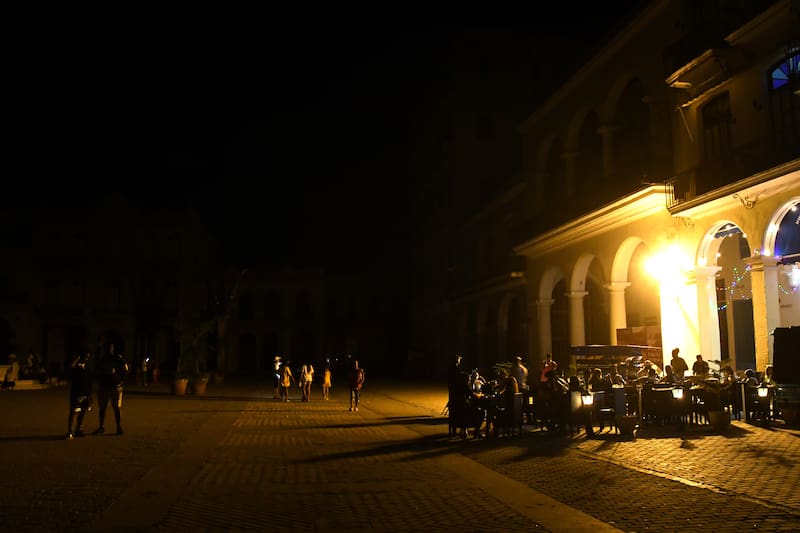
Well, for me, there is an interaction between several forces. I believe that, throughout the region, for reasons more related to internal political dynamics and less to actions taken by the United States, countries are very willing to cooperate with us. With actors like President Kast, who visited Florida to meet with President Trump, or countries like Argentina or Ecuador, where the election of Daniel Noboa was, in part, due to fears of leftist radicalism, under the shadow of Rafael Correa and Luisa González. Or here in Chile, due to fears that the Communist Party, led by Jeannette Jara, might come to power. We must recognize that we have a region with a strong willingness to cooperate. This is a great opportunity for the United States, which is focusing more on Latin America and mentions it first in its national defense strategy document, which speaks of defense cooperation and Latin America as an extension of the defense of our homeland. This has shown its intention and has been successful in demonstrating its ability to intervene selectively, as in Venezuela, which has implications for the rest of the region up to Nicaragua. And of course in Cuba, where an additional dimension of these actions is effectively restricting its access to oil from Venezuela, from Russia, from Mexico, etc., and above other pressures, creates the possibility of an agreement in Cuba, although I suspect that the communist regime will survive even if there is a regime change.
What do you believe is the objective of the Trump administration in Latin America?
Well, first of all, it is defined through the lens of U.S. benefit, although it does not exclude the possibility of benefits for our partners in the region. That is, it is about controlling things that negatively impact the U.S.: controlling immigration and, with that, controlling the gangs that have brought violence to major U.S. cities since 2023-2024. And, obviously, also the drug flows, which have literally been killing—at least previously—over 100,000 people each year. Aside from that, there is also the desire to have a relationship with the region that brings benefits through business. Whether it be business related to lithium, agricultural products, etc.
What is the status of the war between Russia and Ukraine in this global context?
Well, I believe that due to the modern nature of this war with drones, it seems to be mainly stalled. It appears that Europeans have managed to somewhat replace much of the U.S. aid to allow Ukraine to continue fighting. Ukraine has also impressively built its own military industry, with the production and tactical use of drones that have effectively denied Russian advances, although it cannot continue this indefinitely. But it appears to be stalled. The problem is that, on one hand, while Ukraine is not losing, obviously this shift in the U.S. posture gives hope to Russia. Also, the increase in oil prices gives hope and more resources to Russia. And whether China and other actors will continue to assist Russia, like North Korea, is a question. What I fear is that we could see unpredictably how this war and this stalemate continue to take lives and a significant part of the economies of both countries for a long time.