Could Chile have combat drones? The future of national sovereignty defense
This article was translated automatically and may contain differences from the original. For reference, read the original.
- by Richard Kouyoumdjian
- Interviews
When the United States and Israel decided to wage war against Iran, U.S. President Donald Trump mocked that he would exterminate the Persians in three weeks. However, history has been quite different.
The first surprise bombing occurred on February 28. In other words, the joint military operations have lasted two months, much longer than initially anticipated.
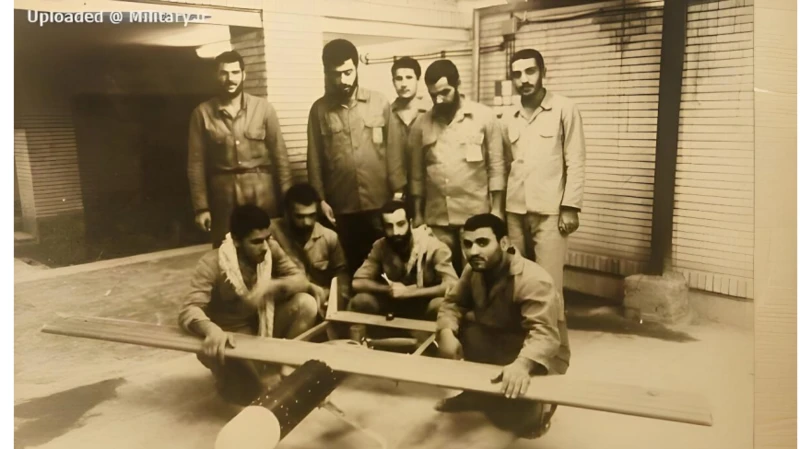
The main reason this war has extended far beyond expectations has been Iranian drones. This is not a baseless assertion: multiple defense sources confirm it, as does Algerian military expert Akram Kharief in his recent book titled “In the Shadow of the Shahed.”
The author explains the strategy that has allowed the country to become a significant player in the global military industry, despite U.S. sanctions and restrictions, as stated by the BBC in an article titled “How Drone Manufacturing Turned Iran into a Key Player in the Global Military Industry“.
In light of this scenario that positions drones as primary weapons, in Press Room we spoke with Richard Kouyoumdjian. Our interviewee was an officer in the Chilean Navy, a weapons engineer from the Naval Polytechnic Academy, and founding vice president of the AthenaLab Studies Center dedicated to issues of international relations, national security, and defense.
Iran and Ukraine’s Kamikaze Drones
Drones have long ceased to be solely civilian. Modern wars are almost inconceivable without the use of combat drones. Kouyoumdjian believes they are not a relatively new tool, but their multilateral use is new. “What happens is that probably the use of drones in the more recent past was something exclusive to the United States, which used them as part of their toolkit in the conflicts they faced in the Middle East, Afghanistan, Iraq, or Syria.”
Iran employs so-called kamikaze drones, which are low-cost, long-range, and used in a swarm tactic. “The first war I saw where there was a quite intelligent use of this was in the recent conflict between Azerbaijan and Armenia, the military operation ‘Lightning’ in September 2023.”
In this conflict, “Armenian armored vehicles were hunted by these drones, not of the Iranian type, but the more typical drone you see with four propellers that locates and drops a bomb or illuminates the target for another to shoot,” he explains.
However, we are talking about kamikaze drones in Iran. “They do not need a pilot: they operate with GPS or navigation systems, locate the target, and crash. What they do, through swarming or saturation, is not very different from electronic saturation warfare. You can saturate all the defenses of a country, which is typical of what the Americans do; they did it in Venezuela. In this chaos, you create physical saturation: you saturate, enter, and it only takes two or three to hit.”
Does Chile need or could it have combat drones?
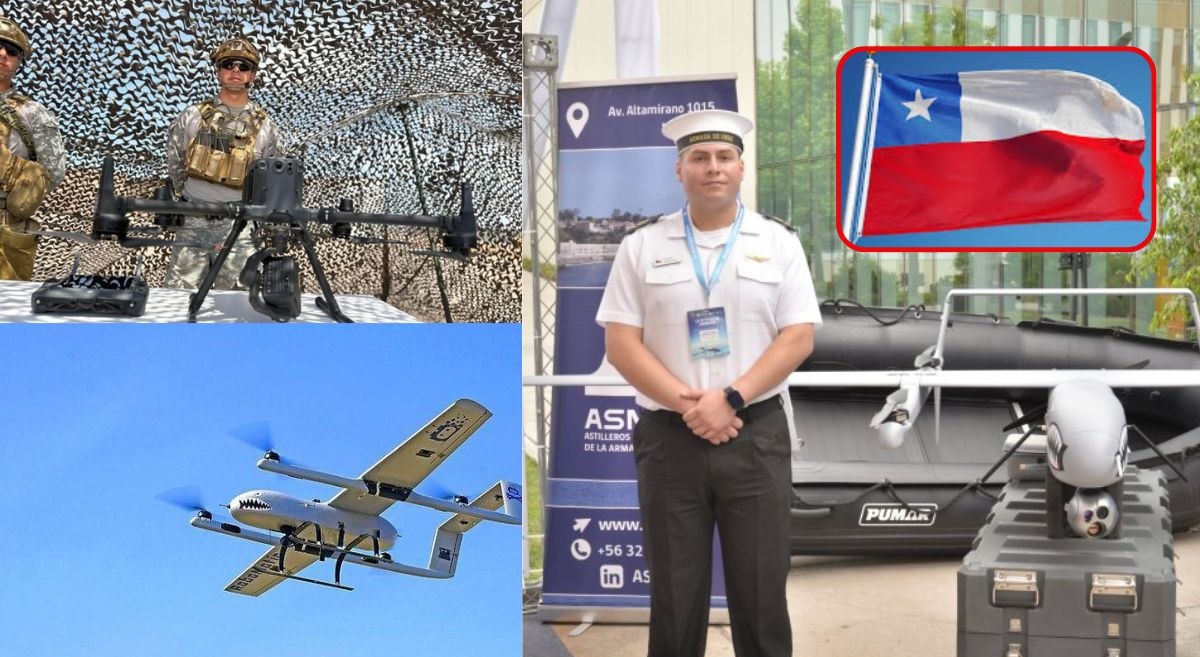
Our Armed Forces often showcase projects or programs that use drones.Evidently, they are for civil, security, or even cartographic use.
“If we had drones, who would we use them against? On the northern border, they are used to transmit images and can fly in any weather condition, at any altitude; they replace satellites, and if equipped with infrared cameras, they can substitute for reconnaissance aircraft.” Additionally, civil use includes “firefighting. In the Municipality of Las Condes we have a drone brigade used for police surveillance,” he exemplified.
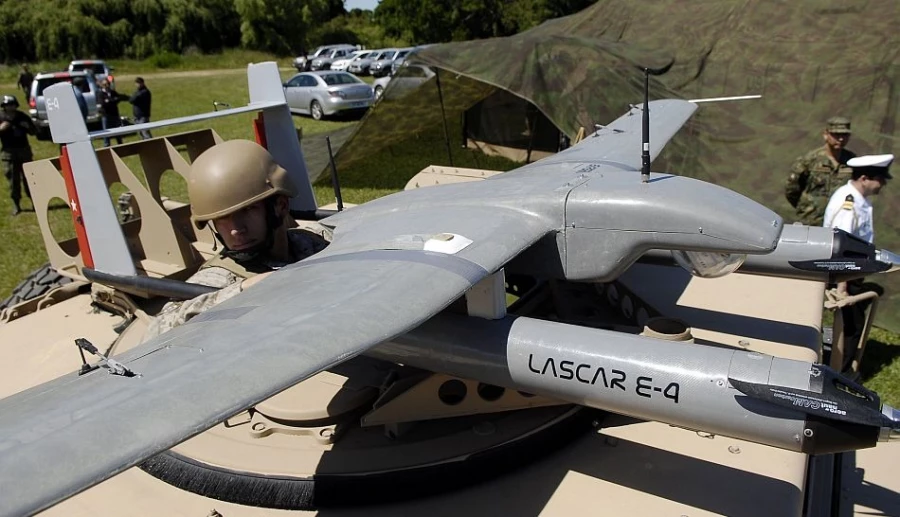
While Chile has drones, I could not specify what type. Nevertheless, “there is nothing preventing Chile from having drones equipped with explosive payloads.In the conflict in Ukraine, their use is very clear, as is the case with Iran, but not necessarily for Chile. Chile could have combat drones, but, who would it use them against?”
Peru has F-16s, Argentina does too, but used ones. Should Chile buy F-35s or develop Chilean drones? Our interviewee established that “we buy and develop elements for defense, not necessarily for attack. One can say that an F-16 has the capability to attack Buenos Aires or Lima, certainly, but the point is that, from the moment we develop capabilities, it is to detect threats to our airspace and to be able to intercept anything that enters. An F-16 is perfectly capable of intercepting any drones you put in front of it.”
“The hypotheses of a conflict today are not active with a neighboring country,” assured the defense specialist.
And Bolivia? It is known that this country has drones, specifically Iranian ones. Our expert clarified that in the inventory of Iranian drones “there are from the first generation to the most current. The ones Bolivia had at one time were extremely slow and were not kamikaze. If you ask me, there is nothing of that operating anymore,” he concluded.