International, Security, and Defense Challenges of Boric's Government
This article was translated automatically and may contain differences from the original. For reference, read the original.
- by John Griffiths & Juan Pablo Toro
- Analysis
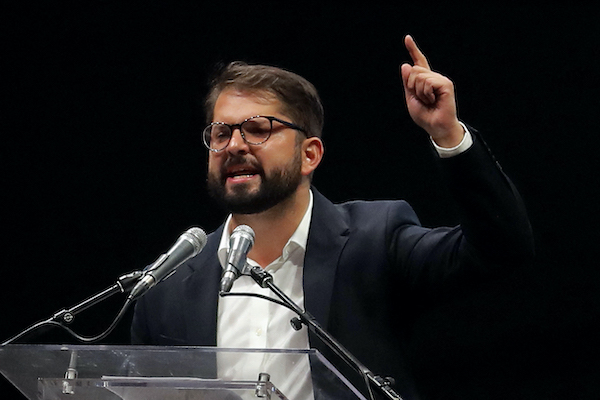
The relationship that Gabriel Boric’s government will have with the world will depend on both the design of its foreign policy and the interaction of the decisions made to promote or safeguard Chile’s national interests. In this regard, it may find acceptance, rejection, or indifference from its counterparts. Much will depend on the inherited international context (strategic competition among powers, pandemic, climate change, and regional fragmentation), but also on its ability or that of its officials to attempt to shape the environment.
In terms of security, there are transnational challenges with domestic impact, such as drug trafficking and border pressure from irregular flows, which emerge as urgent concerns. Boric and his delegates have the opportunity to demonstrate that they have proposals to implement rather than just criticisms.
Regarding Defense, it is a fact that the Armed Forces remain among the best-evaluated institutions in the country, in a situation of widespread discredit. No president has failed to rely on them, whether in the face of an earthquake, a massive fire, or a pandemic. With a national reach and deployment, their primary task remains the protection against external threats in a world where geopolitical risk is only increasing, as various reports and analyses point out.
CHALLENGES IN THE INTERNATIONAL SPHERE
- China-U.S. Rivalry: Perhaps this is one of the most complex challenges for Chile’s foreign policy in decades. Chile must adopt a stance regarding this rivalry between the two powers, which is reflected in the commercial, diplomatic, military, and technological arenas. Our country has already felt its effects firsthand, but has yet to incur associated costs, particularly regarding digital connections, data usage, and energy infrastructure. Of course, there are options, such as maintaining the ambiguity of being simultaneously part of the Belt and Road Initiative and participating in the Rimpac naval exercise. Some even conceptualize this as “neutrality” or “autonomy,” allowing for the continued exploitation of the lucrative economic relationship with China while deliberately overlooking that this country is governed by an authoritarian regime that does not respect human rights, which Boric has made a central focus of his future administration. Democratic countries that attempted to maintain neutral positions, such as New Zealand, have ultimately leaned towards a vision of openness and freedoms associated with the Indo-Pacific. Because to have autonomy, one must possess significant weight. And while his government may not want to choose between Beijing and Washington, we will see how long it can resist doing so.
- Border Controversies: One thing is ideological alignment, which depends on the circumstances of time and person, and another is the national interest, which is permanent. Regarding neighboring countries, Boric faces several controversies that transcend any affinity. For example, concerning the defense of national interest, during the government of former President Allende and while serving as Foreign Minister, Clodomiro Almeyda managed to secure the commitment of Argentine General Alejandro Lanusse, in accordance with the provisions established in 1902, to sign an agreement to submit the dispute over “the islands south of the Beagle Channel” (1971) to arbitration, additionally subscribing to a “Dispute Resolution Agreement” (1972). These were the antecedents of the British arbitration, but it is clear that the defense of national interests took precedence over any other consideration (affinity or antipathy), not confusing a means, such as good multilateral relations, with the objective of defending Chile’s permanent national interest.
- Argentina: The elected president will encounter new Argentine territorial claims in southern waters, which have prompted successive complaints from Chile and the promulgation of new maps and instruments aimed at reinforcing national rights, especially towards Antarctica. Continuing down this path, without being swayed by the gestures that Fernández and Fernández will extend towards a leader with limited international experience, will be a challenge for the leader who prides himself on being from Magallanes, that is, close to the area of controversy. Otherwise, he may repeat the perplexing and gratuitous affinity demonstrated by the current administration of Sebastián Piñera.
- Bolivia: The Chilean claim regarding rights to the use of the waters of the Silala, a binational river, remains to be resolved in the International Court of Justice (ICJ) in The Hague; this could occur next year. If we take into account phrases like “sovereignty is not negotiable” from Boric, relations with La Paz should continue to be based on the premise that the Treaty of Peace and Friendship of 1904 is the cornerstone of that relationship for Chile. However, there are several issues to address where common interests prevail; for example, controlling all types of smuggling across the border, where cooperation has been elusive thus far.
- Peru: There are still pending aspects regarding the implementation of the ICJ ruling from 2014, as Piñera himself acknowledged during a visit to Lima. On one hand, the “terrestrial triangle,” a territory of 37,610 square meters that both countries dispute due to differing interpretations of the 1929 Boundary Treaty and the ruling from The Hague. On the other hand, the adaptation of Peruvian legislation to the United Nations Convention on the Law of the Sea, which the Peru Libre Party, led by President Pedro Castillo, vehemently opposes due to its claim of sovereignty over the 200-mile zone. In the context of the chronic instability that Peru is experiencing, it seems very difficult to resolve these pending issues.
- Diplomatic Signals and Tools. Those in charge of Boric’s international relations, such as Senator Juan Ignacio Latorre, have linked the recovery of Chile’s international image to the signing of the Escazú Agreement on the environment, or the United Nations Migration Pact, which the Piñera administration left in limbo. However, at the same time, they abhor the Comprehensive and Progressive Agreement for Trans-Pacific Partnership (CPTPP) that was revived and promoted by Michelle Bachelet’s second government. Multilateralism, more than a cause or a tradition of foreign policy, is primarily a tool justified by national interests. If these are more likely to be achieved collectively, by coinciding with those of others, then it should be pursued vigorously. And vice versa. While some Latin American leaders expect Chile’s support for Escazú, others, admired by so-called progressives, such as Canadian Justin Trudeau or New Zealand’s Jacinda Ardern, await the ratification of the CPTPP.
- Regionalism and Realism. Latin American integration organizations are immobilized by deep disagreements over how to respond to the authoritarian drift of countries like Venezuela and Nicaragua, or due to the lack of concrete results over time (Mercosur, for example). Even the management of the pandemic could not revitalize them. For this reason, Latin American efforts may be positive but ultimately unproductive, as they will occur with governments burdened by all kinds of internal problems and priorities, especially economic and social ones.
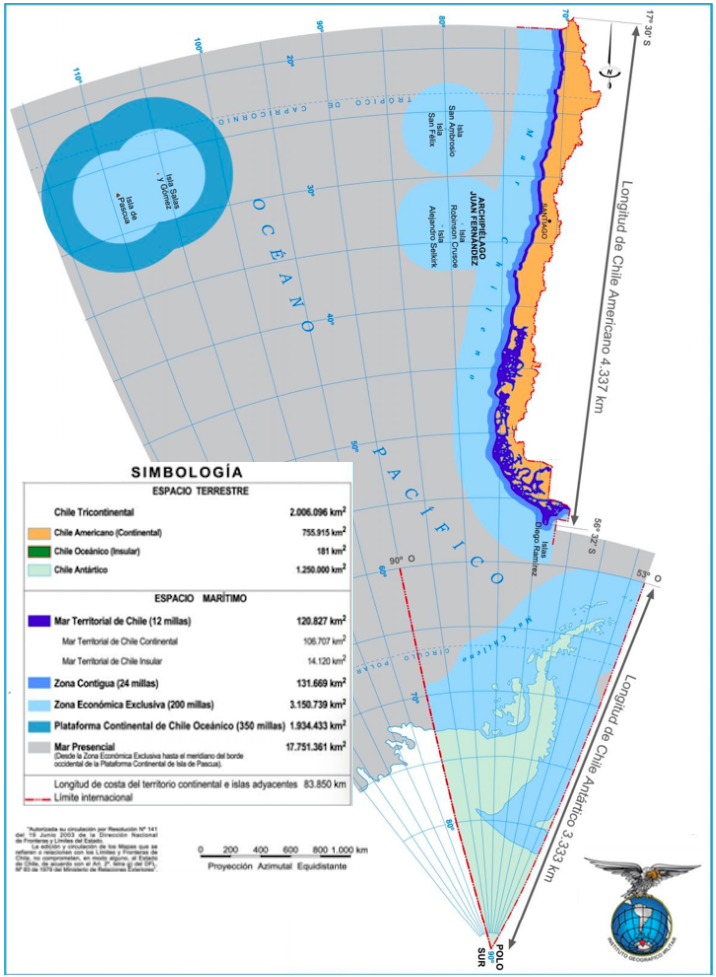
- Tricontinentality: It would be beneficial for the elected president to always have a map in view that reminds him that Chile is present in America, Antarctica, and Oceania, where the unifying factor is the Pacific. This serves as a platform to connect with the world (Boric grew up seeing the Strait of Magellan), compensating for our size as a landlocked country (maritime zones) and building an identity as a coastal state (image) in one of the most dynamic regions of the world.
CHALLENGES IN THE SECURITY SPHERE
- Migration and Intelligent Border Control: Currently, there are over 1.6 million immigrants in national territory, representing 8% of the total national population. This is the result of a regional migration process (primarily from Venezuela), which has had various emphases and directions at the hemispheric level. This situation requires improving preparedness to receive individuals aspiring to a better life within Chilean society, meeting entry requirements and denying access to those with criminal backgrounds. This necessitates “intelligent border control” to balance the legitimate right to migrate with the appropriate security of our borders. This control should better articulate the current human resources deployed, with the use of platforms and novel data management and monitoring technologies to control the extensive, porous, and permeable land, maritime, and air borders.
- Drug Trafficking and Crime:Most surveys indicate that nine out of ten people consider it the main security problem in the country. Consequently, neutralizing its actions and penetration into various segments of society, including major institutions, will constitute a significant challenge. Undoubtedly, intelligent border control is an important collaboration to neutralize drug trafficking at the national level. Furthermore, although Chile exhibits a low murder rate of 6 per 100,000 inhabitants, the objective data shows that in some municipalities of Greater Santiago, this figure has exceeded 10 murders per 100,000 inhabitants, which constitutes an out-of-control security phenomenon and a situation deserving of attention to prevent it from escalating nationally. It is important to note that criminal organizations related to murders and drug trafficking are closely interconnected, as well as with other threats. A national strategy involving national authorities, regional and local governments, and civil society should be a priority.
This challenge presents itself as one of the most complex issues to resolve given the multidimensional nature of the phenomenon. In this conflict, various illicit manifestations persist, such as timber theft, extortion, drug trafficking, armed groups, etc. Additionally, the context is influenced by long-standing ethnic claims with varying interpretations regarding their scope. A very good diagnosis, combined with an adequate level of intelligence, will be required to begin re-establishing the rule of law, clearly identifying those acting outside the law to bring them to justice, while simultaneously seeking a political agreement with indigenous organizations, which are often distant from one another.
CHALLENGES IN THE SPHERE OF NATIONAL DEFENSE
- Maintaining the Operational Capability of the Force:It is a fact that Chile will face serious economic restrictions in the coming years. The question is how this conditioning will impact the realm of Defense without affecting the necessary maintenance of the force’s main capabilities regarding its platforms, training, and education. The easiest but most irresponsible response is simply to set a budget reduction without addressing the effects it entails, especially the necessary investment in capabilities made since President Ricardo Lagos’s government (2000-2006). However, the most appropriate course for the national interest is to determine priorities while ensuring the maintenance of the most urgent capabilities, without resorting to populist measures.
- Military Pension System:This issue constitutes a significant factor and incentive for personnel retention within the institutions. Its existence is based on maintaining salaries below the line or average of public administration for the same level of specialization and responsibility, prioritizing retention and incentives at the end of a military career, where individual rights are affected, such as availability 24/7, relocations, work hours, mandatory time away from home, etc. Consequently, it may be very appealing to present this issue as a so-called privilege, without understanding the rationale behind this modality, which is present in the vast majority of democratic countries globally. Neglecting this uniqueness carries the risk of seriously affecting the current recruitment and retention of highly qualified personnel in the force, placing Defense on an equal labor footing with activities and professions regulated by a market, an aspect foreign to the essence of military activity, which is the sole responsibility of the State. It is estimated that this could be an unnecessary source of conflict with the Armed Forces, which will need to support and execute the policies of the future president in their role as their commander-in-chief.
- Definition of Military Roles and Functions:We are witnessing an increase in the spectrum of missions that the Armed Forces can fulfill, motivated by the current strategic context. However, this extension of missions has clear limits, to avoid affecting the essence of their activity as guarantors of national sovereignty. To avoid mistakes, we must clearly define these limits, assuming their collaboration in multiple phenomena, such as disasters and pandemics, without them being employed in unjustified missions that distort their readiness, training, and preparation. This is an open issue that will require addressing by the new political authorities.
LAND, MARITIME, AND AIRSPACE OF CHILE