ESSAY | Relevance or Obsolescence of the Tank?
This article was translated automatically and may contain differences from the original. For reference, read the original.
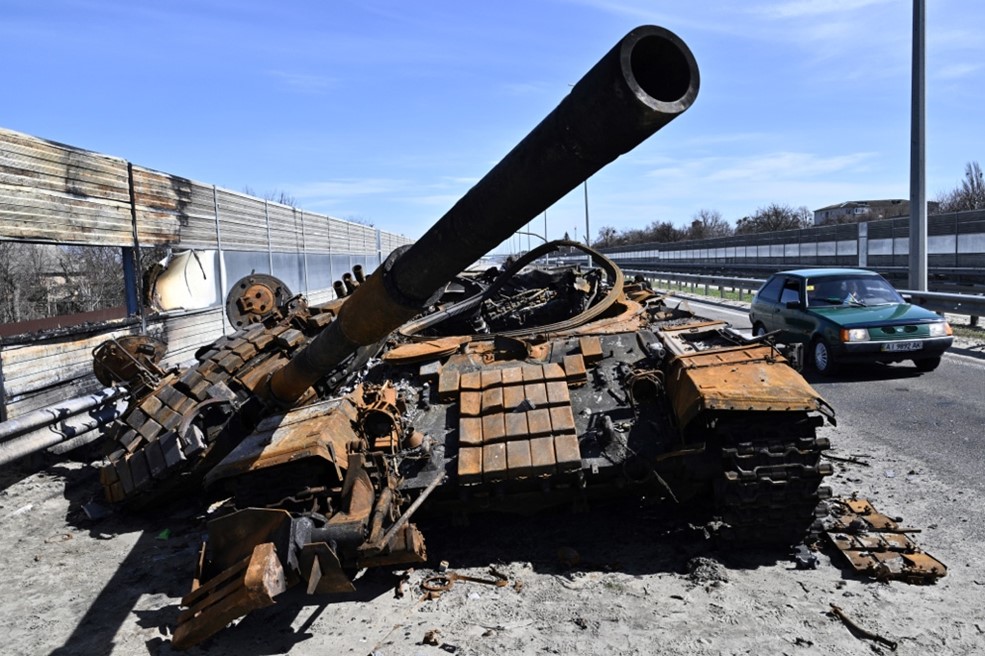
The Russian invasion of Ukraine has produced striking images. Some of the most widely circulated show destroyed Russian tanks and armored vehicles on roads, rural paths, or in the midst of towns, not to mention many others abandoned by their crews. From these records, voices have emerged once again proposing the end of tanks and other armored vehicles.
However, these images are not exclusive to the Russia-Ukraine conflict of 2022; there are also records of numerous destroyed armored vehicles in other scenarios, such as Israel’s incursions into Lebanon in 2006, the Russian intervention in Georgia in 2008, or the Armenia-Azerbaijan conflict of 2020. The problem does not end there, as alongside the destruction of armored vehicles, there is a perception of certain ineffectiveness or limited utility in their use.
At first glance, there is a temptation to link the extensive destruction of armored vehicles with a loss of their utility on the current battlefield. The emergence of effective and comparatively much cheaper anti-tank weapons, along with the trend to continue operations in urban centers, confining tanks to narrow streets, are facts that could justify the large number of destroyed vehicles and strengthen the idea of their obsolescence.
In short, the utility or relevance of tanks and armored vehicles in the current war scenario is being questioned. From this question, multiple responses could arise to explain the situation, ranging from the view that armored vehicles have ceased to be effective due to new weapons and the urban environment, thus becoming obsolete, to the notion that their failure in the current war is related to other circumstantial factors that do not necessarily demand their removal from arsenals. Additionally, the question arises as to whether they are indeed being employed in the appropriate manner and in contexts where they possess substantive advantages, whether due to the scenario, weather conditions, or type of adversary.
ARMOR AND ITS OBSOLESCENCE
In general terms, tanks are weapon systems that possess three fundamental characteristics that differentiate them from other weapons. First, mobility and speed. Despite their size, tanks can cover long distances at speeds exceeding 70 km/h, along with the ability to move off-road. Second, the protection offered by armor, which is not impenetrable to some weapons, but provides effective defense against light arms, which are the majority found on the battlefield. Third, the firepower represented by their main gun, which allows for combat at long distances, capable of destroying targets beyond the reach of other weapons. In summary: mobility, firepower, and protection are ideal characteristics for their use in distant combat or deep within the adversary’s deployment.
The phenomenon of the obsolescence of weapon systems or the idea that some lose their relevance is an eternal discussion. In some cases, the replacement of technological innovations has been effective. The emergence of firearms progressively displaced the bow and sword, leading to their disappearance. The airplane buried the Zeppelin used until World War I, and vehicles with combustion engines replaced those drawn by horses or sailing ships.[1]. However, the same has not occurred with other platforms. The invention of the torpedo and submarine affected the performance of warships, yet they are far from being obsolete. It is undeniable that tactics and techniques of use had to be adjusted, and measures developed to nullify or minimize the effect of threats. Similarly, the design and development of surface-to-air missiles undoubtedly threaten the use of attack aircraft, but in no case does it threaten their existence, as electronic decoys or weapons have been developed to strike targets beyond the reach of anti-aircraft weapons.
It would not be prudent to invade a maritime space filled with submarines or platforms equipped with anti-ship missiles capable of detecting and destroying surface vessels at long distances without preparing the scenario and adopting measures to counter them. It also would not have been efficient if the international coalition forces that invaded Iraq in 1991 had not executed Operation “Desert Shield” before “Desert Storm.” The former nullified Iraqi command and control capabilities, as well as its air defense potential and other means of impact and operational reach. All of this is part of a maneuver aimed at creating conditions for decisive operations, producing the required asymmetries at the right place and time, leveraging one’s own capabilities and exploiting the vulnerabilities of the opponent. Nothing new at all.
To determine whether tanks are obsolete given the magnitude of destruction suffered and the limitations that could be visualized in their use in the current context, it is necessary to first analyze what has happened. Considering the figures from Oryx, a platform that tracks Russian material losses in the war against Ukraine, incorporating only what has been documented graphically (photo or video), the losses in armored vehicles amount to 4,814, while tanks alone reach 885 (it is estimated that the losses are higher, as only those with documented records are counted).[2] Russian losses are not limited to destruction by state-of-the-art missiles, but also include vehicles captured or abandoned by their crews. All of the above, without considering the evident maintenance and logistical supply problems that have affected Russian armored units. The majority of these losses occurred in the first month and a half of the war, when the largest operations were concentrated in the north and east of Kyiv. The Russian option was to advance rapidly on the Ukrainian capital, capture it, and replace the government. For this, they employed a significant portion of their forces and advanced directly into the adversary’s heart.
The problem is that this did not work as intended. First, Russian forces prioritized—due to various reasons—advancing along roads, which restricted the mobility and dispersion of their armored units. Additionally, when a vehicle stopped, it caused the rest of the column to become stagnant, increasing the risk of being attacked. Similarly, the terrain where they received the majority of the punishment is associated with proximity to populated centers or crossroads. All of this occurred with a logistical support system that was at least deficient. In short, they were destroyed in circumstances where they could not exploit their mobility, speed, and all-terrain capability due to poor employment.
Moreover, this restriction on mobility, combined with the terrain correctly selected and prepared by Ukrainian forces for action, prevents armored units from engaging at long distances, subjecting them to the combat rules of smaller units, which, equipped with anti-tank missiles like the Javelin and N-LOW, were highly effective. Again, a situation that nullifies the advantages of the tank: mobility, firepower, and long-distance combat. What has been described is not new, but armies have solved it by integrating armored units with infantry, so that the latter provide protection to tanks in scenarios like those described above. In the case of Russia, the formation of the Battalion Tactical Groups (BTG) consists of a force of between 700 and 800 soldiers, of which only about 200 are infantry, which is insufficient, leaving tanks potentially defenseless against ambush tactics by special forces or small patrols.
Finally, the effectiveness of the anti-tank missiles provided by the West, as well as the drones employed, has been very high. The design advantage of Russian tank armor, such as the older T-72, has proven ineffective against missiles that strike their targets from above, where protection is much lower. Drones have been used to detect and locate columns of armored vehicles, and in the case of Turkish Bayraktar TB2s, also to destroy tanks. However, the effectiveness of the weapons used against armored units does not impose the obsolescence of the tank; rather, it compels the implementation of measures to avoid or nullify them. Regarding anti-tank missiles, what most armies contemplate is to accompany armored units with infantry capable of eliminating those anti-armor cores through close combat. This does not consider the implementation of technological solutions such as anti-missile defense countermeasures. On the other hand, the use of tactics and air defense means, including electronic means, allows for blocking or complicating the use of drones. The above, apparently, did not work for the Russians.
As has been succinctly evidenced, what we are facing is not the obsolescence of armored weapons, but rather the abandonment of the basic principles of tank employment by the Russians and, on the other hand, the effective action of Ukrainian forces. The former sacrificed the main characteristics of tanks, transforming them into vulnerabilities; the latter exploited the means at their disposal, including the correct selection of terrain, creating a favorable scenario to generate the asymmetry that benefited them. The result, as mentioned, is thousands of destroyed Russian armored vehicles. In summary, it is human capability that makes the difference. Hence the importance of having educated forces—trained and skilled—in the art of war.
CHILE, RELEVANCE AND UTILITY
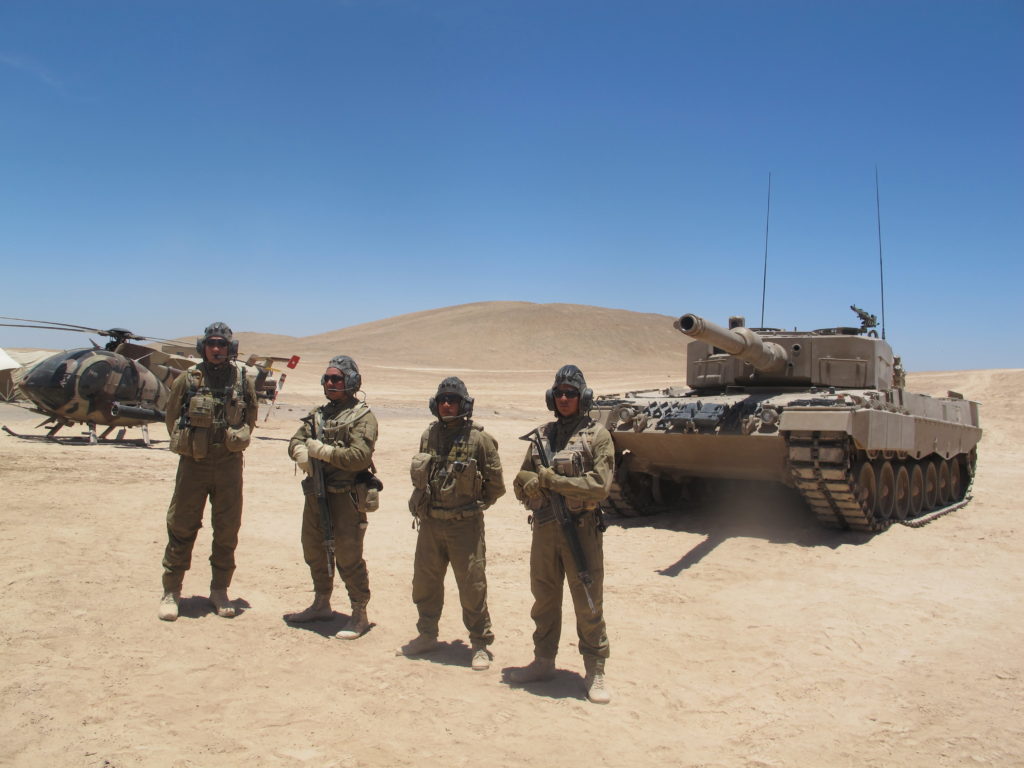
From the review conducted above, it is concluded that tanks and armored vehicles are not obsolete; rather, what loses utility and relevance are the concepts of employment, lack of flexibility, and limited adaptability. This is equally applicable to our country. Chile decided to modernize its armored fleet at the turn of the century, incorporating weapon systems such as the Leopard 2A4 tank, Marder combat vehicles, and M-109 self-propelled artillery pieces. This set of assets has complemented the operational capabilities of the armed forces, contributing to achieving credible deterrence.
Are they a guarantee of success? Of course not; otherwise, one would have to ask the Russians and Ukrainians. However, given the geostrategic reality of Chile’s defense, where the land scenario in the extreme north and, to a lesser extent, the extreme south, as well as the forces we must deter, present a context that provides favorable conditions for the use of armored means. The experiences observed in the conflict in Ukraine, as well as those experienced by Israel in 2006, Russia in Georgia (2008), or what has emerged from the use of armor in the Armenia-Azerbaijan conflict of 2020, indicate not the obsolescence of the tank, but rather the need for Chile to ensure the training and preparation of crews and leaders capable of adapting their use to different scenarios and situations, according to how the operational context changes.
Likewise, one might ask what would happen to our strategic deterrence posture if we did not have these systems, in quantity and quality, while our potential adversaries did. The answer, at first glance, leans toward one that recognizes the virtues of these and other weapon systems and their contribution to the security of our country, making it desirable to maintain these operational capabilities in the future.
The use of combined arms units has re-emerged as the focus of effort for the armies of developed countries, as stated by the Chief of the General Staff of the British Army, General Sir Patrick Sanders, at the last conference on land warfare held by the Royal United Services Institute in London last June, which Athenalab attended. In the case of Chile, this approach has not changed, and there is no indication that the strategic context will change in the medium to long term.
FINAL CONSIDERATIONS
- The relevance or obsolescence of the tank has been a long-standing discussion that resurfaced due to the Russian setbacks in the war in Ukraine and the significant destruction of material that has been evidenced.
- However, reports on the use of these means indicate a deficient use, where their potentialities have not been exploited, but rather, they have been exposed to environments that exacerbate their vulnerabilities. This is due to poor human decision-making.
- On the contrary, Ukrainian forces have adapted their means to limit the mobility and range of tanks, while facilitating and exploiting the capabilities of small units with anti-tank missiles, as well as the intensive use of drones.
- Like any weapon system, the effectiveness of the tank is determined by its proper employment, which adapts to a scenario where it can exploit its real capabilities, such as mobility, protection, and firepower. It is the commanders who are responsible for defining the best platforms and units to employ, according to each particular situation and context.
- More than the obsolescence of this weapon, what is in question is the capacity of Russian leaders to adequately utilize the tools of their arsenal, adapting to the changing scenarios that modern battle presents. Likewise, it cannot be overlooked that this entire discussion is largely due to the effectiveness of Ukrainian troops, who managed to confront a potentially superior enemy by adapting their forces and tactics to generate advantages on the battlefield.
- The war in Ukraine is prompting some states, such as Poland, Norway, or Malaysia, to develop tank acquisition projects, while others, like the Netherlands, are reevaluating their decision to dispose of them. This week, Poland alone announced the purchase of 180 K2 Black Panther tanks from South Korean manufacturer Hyundai. These are in addition to 28 M1A2 Abrams tanks purchased from the United States.
- In the national case, the existence of armored forces decisively contributes to generating significant operational capabilities that enhance the national deterrent effect, a strategic option for Chile to address its defense. The geostrategic context, as well as the characteristics of the forces to be deterred, are clear foundations for affirming the relevance of this weapon system.
- The training of tank crews and their commanders, developing qualities such as flexibility, adaptability, and problem-solving in changing environments, are the qualities that should be fostered before proposing that the tank become an obsolete weapon.
- In the region, the armored capability of the Chilean Army is far from being obsolete, representing a powerful platform, in line with the reality of the regional scenario, its geography, and the likelihood of use.
Marcelo Masalleras Viola
July 26, 2022
[1] However, the use of livestock for military activities remains necessary for reconnaissance or support in geographically challenging areas such as mountains and forests.
[2] Oryx, “Attack On Europe: Documenting Russian Equipment Losses During The 2022 Russian Invasion Of Ukraine.” Reviewed on July 25, 2022 at: https://www.oryxspioenkop.com/2022/02/attack-on-europe-documenting-equipment.html