For Latin American countries, geopolitical competition begins at sea.
This article was translated automatically and may contain differences from the original. For reference, read the original.
- by Carlos Solar
- Guest Contributions


The region faces rivalry among superpowers that demands more active maritime aspirations and broader defense alliances.
During a visit to the Chilean port of Valparaíso in November 2022, Vice Admiral of the Royal Navy UK and Second Sea Lord, Martin Connell, delivered a lecture on what is needed to be a modern and highly flexible maritime force. Addressing an audience that included high-ranking naval officers, both retired and active, Connell discussed being a maritime power through “interoperability,” “force multipliers,” and “modular approaches.” His presentation featured British aircraft carriers, guided missile destroyers, and nuclear-powered submarines.
While military capabilities and advanced vessels in Latin America are far from matching those of the United Kingdom, Connell’s message resonated in the hall. “Maritime power is not just about the size of the fleet, but also about wisely and carefully choosing allies,” he noted while moving on to discuss cutting-edge weaponry such as stealth technologies,stealth, cyber capabilities, and high-end drones.
Time will tell, but for now, one of the best alternatives for maritime countries in Latin America (only two countries are landlocked, Bolivia and Paraguay) in the geopolitical competition is to strongly invest in maritime presence and build defense alliances with like-minded countries. This should be a response to maritime movements among Western and Eastern powers that states in the Western Hemisphere cannot ignore. If Connell’s words are taken seriously, they could help promote a more active maritime policy for states in the region extending from the Indo-Pacific to the South Atlantic.
Turbulent waters ahead
The arrival in January 2023 of the 86th Iranian fleet—comprising the warships Dena and Makran—that crossed the Panama Canal and docked in Rio de Janeiro, raised alarms throughout the region, especially at the U.S. Southern Command (SOUTHCOM) based in Florida. Tehran claimed that the flotilla was peacefully circumnavigating the globe, but the regime has forged long friendships with local authoritarian regimes, particularly with the military diplomacy of the Venezuelan government, which is currently under heavy sanctions from the United States and the United Kingdom.
Weeks earlier, unconfirmed reports emerged that Beijing was considering building a naval base in Ushuaia, Argentina, which could bring the People’s Liberation Army (PLA) closer to Antarctica and the Strait of Magellan that connects the Atlantic and Pacific Oceans. China already has a military antenna in Patagonia that it uses for its space program, with little oversight from the Argentine government. An additional PLA base in the South Atlantic would help Beijing create a chain of military stations that could link to its extended presence in the Gulf of Guinea in Africa.
Additionally, the presence of Chinese fishing fleets—typically consisting of hundreds of industrial vessels—stationed off the Galapagos Islands in Ecuador, in waters near Chile in the South Pacific, or off the coasts of Argentina in the South Atlantic, has raised concerns among regional governments given China’s poor environmental track record and the growing evidence of illegal, unreported, and unregulated fishing practices.
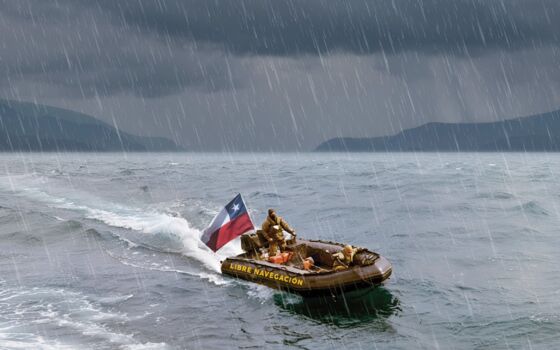
In late 2020, for example, Chile, Colombia, Ecuador, and Peru issued a joint statement discouraging illegal fishing in their exclusive economic zones, although they avoided naming Chinese vessels. In response, the Chilean Navy increased control over fishing activities near its coastal jurisdiction using OPV-80 class vessels and P-3 Orion maritime patrol aircraft. Despite these and other efforts, including assistance from the U.S. Coast Guard, illegal fishing remains rampant in Latin America, extending from the Gulf of Mexico to Cape Horn.
Iran’s old and new incursions into the seas of the Americas should reinforce the notion that Western-leaning countries in the area cannot neglect the protection of their strategic maritime environment. In turn, U.S. SOUTHCOM is actively working to prevent anti-Western powers from illegally using territorial waters, accusing China, Russia, Iran, and Cuba of “interference and influence peddling in the region.” The Pentagon has increased its Intelligence, Surveillance, and Reconnaissance (Intelligence, Surveillance and Reconnaissance) capabilities for the Americas, although it still represents a very small portion of its global ISR capacity, which generally takes the form of a network of spy planes, satellites, and drones. Unfortunately, much of what happens at sea cannot be shared with counterparts in Latin America.
“China’s economic position in Latin America is forcing Pacific Ocean countries to view the Indo-Pacific as a natural extension of their maritime interests and sovereignty.”
A senior retired official from one of the Five Eyes countries (the intelligence alliance between the U.S., the UK, Australia, Canada, and New Zealand) told this author that much of the intelligence gathered on hostile movements at sea remains out of reach for states that share intelligence with Five Eyes members, as they have vulnerable communication channels that could compromise critical information, potentially leading to confrontation.
However, the current maritime supremacy of Five Eyes should not hinder new defense alliances in the Americas around capacity development strategies across the five domains: maritime, land, air, space, and cyber. Such partnerships are essential considering that China is already ramping up its plans to maximize ISR capabilities in the region in geographical areas where different military theaters are located.
The question that arises is how to make maritime power an element that helps build lasting military policies and coalitions for Latin American countries.
Geopolitical games are, ultimately, a mix of war capabilities and state political maneuvers that need to be constantly refined and restructured. As Alessio Patalano argues, there is a global need to create strategic fluidity among governments to connect the use of maritime power and ultimately promote foreign policy interests. Latin American countries must take this advice seriously.
Focus on the Pacific Basin: economic prosperity and naval dominance
The Pacific Basin is a crucial area for the Americas given the significant trade relations with industrialized countries in the East, particularly with Japan and South Korea, but especially with China. Any disruption of trade in the Indo-Pacific would severely impact the trade of Peru, Chile, and Brazil, which export significant amounts of goods to Chinese buyers. Beijing’s relationships with these countries, in turn, are ad-hoc and differ from one another, posing serious challenges for the integration of foreign policy in the Americas.
On one hand, in Peru, Chinese investments are deeply rooted in the construction of critical infrastructure, such as the Chancay megaport, which aims to become a regional hub displacing other competitors. In Chile, on the other hand, local authorities decided that the first fiber optic cable connecting South America and the Asia-Pacific region (via Australia and New Zealand) would end in Japan. China had proposed that the line terminate in Shanghai, but this was dismissed. As reported by Nikkei, “this decision comes amid a U.S. pressure campaign to keep China out of global telecommunications projects.”
Similar initiatives for Huawei to install 5G networks throughout the region have faced criticism from the U.S. Nevertheless, the Chinese conglomerate’s plans to advance digital integration in Latin America are in full swing. Through its regional headquarters in Mexico, Brazil, and Chile, Huawei seeks a strategy of investment and expansion in mobile and cloud services.
In perspective, China’s economic position in Latin America is forcing Pacific Ocean countries to view the Indo-Pacific as a natural extension of their maritime interests and sovereignty.
An empirical example is the renewed Comprehensive and Progressive Agreement for Trans-Pacific Partnership (CPTPP), a significant turning point for continental geopolitics. The mega trade bloc shows strength in its numbers without strategically depending on China.
“There is a clear risk that Latin America will delay its maritime projection by several years, a differential factor that could become irreparable compared to other developing regions.”
The CPTPP comprises 11 countries (Australia, Brunei, Canada, Chile, Japan, Malaysia, Mexico, New Zealand, Peru, Singapore, and Vietnam) and is valued at approximately 13% of global GDP. Countries such as Taiwan, Ecuador, China, and the United Kingdom have formally requested to join the trade agreement, with the latter being the most likely to be accepted.
In one of the latest official foreign policy documents from the United Kingdom, the government justified joining the bloc by stating that it could mean that 99.9% of the country’s exports would be eligible for tariff-free trade with CPTPP members. Its accession could transform them into the second-largest services exporter in the world. The CPTPP, the document argues, “goes further in key areas of interest for the UK, with advanced provisions that facilitate digital trade, modern rules on data that will help the UK’s cutting-edge technology sector globalize, and will allow for more financial and professional services markets to open up.”
One of the goals of CPTPP members is to integrate Indo-Pacific trade and digital services into the Americas to free up other related sectors of their economies, including agriculture, manufacturing, and mining. However, in the current climate of superpower competition, there are concerns that Beijing’s presence in the trade area may raise serious doubts about data security laws and the subsidization of high-tech industries in favor of Chinese interests.
The U.S. and its allies, such as Canada, Australia, and Japan, would likely prefer that China be excluded from the trade agreement and further marginalized from maritime economic activity.
Nevertheless, President Joe Biden has shown no intention of joining the CPTPP; rather, his administration launched the Indo-Pacific Economic Framework for Prosperity in May 2022 with 13 other countries, none from Latin America. Unlike former President Barack Obama, who viewed the Trans-Pacific trade bloc as a way to restore U.S. leadership in the Americas, Biden has missed a significant opportunity here.
The way forward
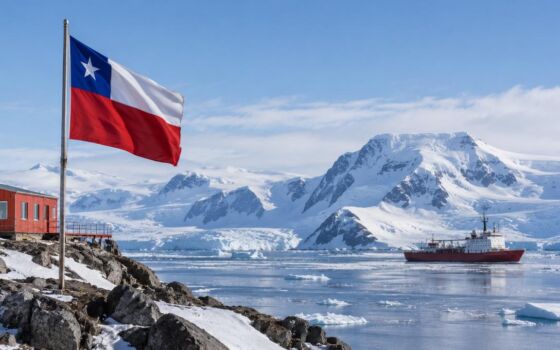
Two other regions that have relatively important diplomatic, scientific, and environmental implications for states in the region are the South Atlantic, including Argentina’s territorial claim over the Falkland Islands, and Antarctica, especially regarding the upcoming review of its governance treaty. These regions are as important to Western Hemisphere countries as the Pacific Basin, but they are less economically rich, thus receiving less attention. In this landscape, there is a lack of a comprehensive governance approach where sustainable development intersects with foreign policy and defense agendas.
Parallel policies in the maritime domain should consider where key elements of state policies overlap, including humanitarian, development, cultural, and security needs, to define a clear path forward. Meanwhile, the geopolitics of Latin America marked by poor political governance in Andean countries and extreme polarization in Brazil—among other hotspots—industrialized countries are rushing to expand their maritime jurisdictions in search of power projection and clever allies. There is a clear risk that Latin America will delay its maritime projection by several years, a differential factor that could become irreparable compared to other developing regions.
As Vice Admiral Connell advised, Latin American countries must adapt to the geopolitics of the 21st century, be flexible in their approaches to maritime power, and seek alliances to address global security issues independently, but not separately.
Dr. Carlos Solar
Senior Research Fellow RUSI
January 31, 2023
*This commentary was originally published on the Royal United Services Institute (RUSI) website and translated by AthenaLab with the author’s permission.