James Clapper: "I don't think Washington needed a paper stating that the Afghan government was not viable."
This article was translated automatically and may contain differences from the original. For reference, read the original.
La Tercera, Sunday, September 4, 2021
Francisco Aravena
The former U.S. Director of National Intelligence acknowledges that the chaotic exit from Afghanistan will cast a shadow over the commemoration of the 20th anniversary of the September 11 attacks. However, he supports Biden’s decision and recalls his own experience monitoring the operation to eliminate Bin Laden from the White House. “It was a closure for an entire country, and particularly for the U.S. intelligence community.”
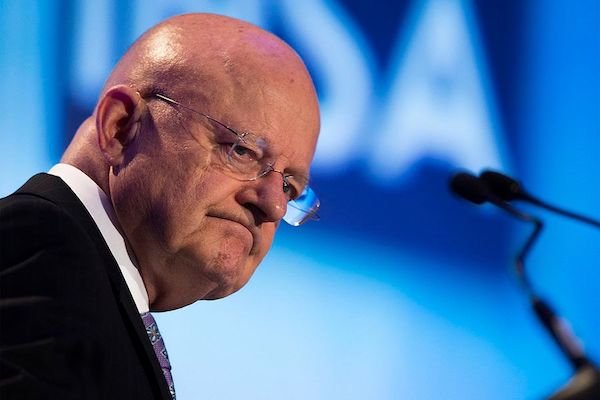
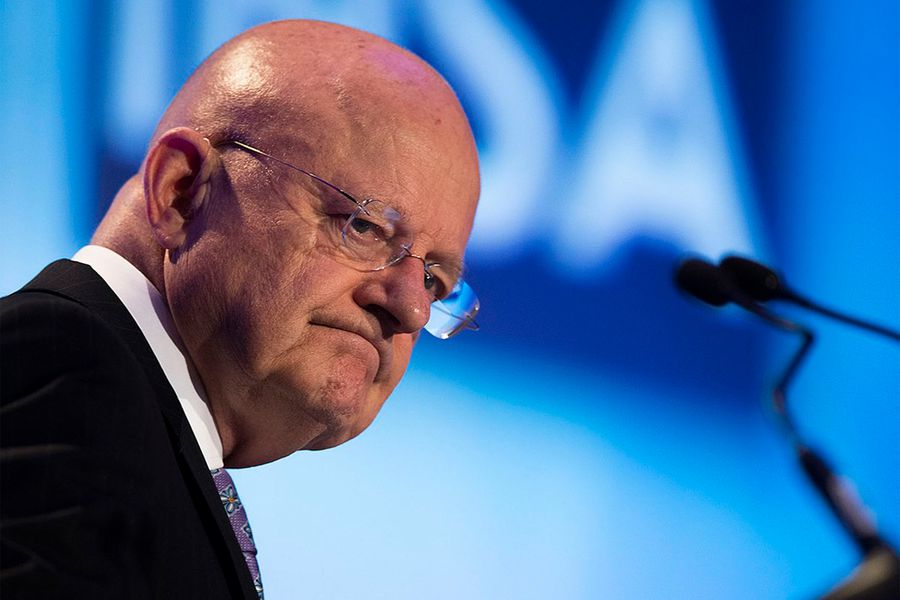
“I often find myself feeling nostalgic for the simplicity of the Cold War,” admits retired General James R. Clapper, at 80 years old, from a retirement that, given his career, is never complete. How does one disconnect from the ‘job’ when that job has been reading the world by identifying threats, enemies, and opportunities in America’s ongoing war? Clapper spent his entire career as an intelligence officer in the Air Force. It was the same specialty followed by his father, which for him literally meant being born and raised in a constant move between military bases and conflict zones around the world. This nostalgia for the seemingly binary world of the Cold War relates to the multiplication of fronts that Clapper had to address in his various missions. In his memoirs, Facts and Fears, Hard Truths from a Life in Intelligence, Clapper reviews a journey that is always connected to what is referred to as “the intelligence community,” which led him to return more than once from his retirement in 1995 to take on responsibilities in government, eventually becoming Deputy Secretary of Defense under the administrations of George W. Bush and Barack Obama. He later served as Director of National Intelligence and, like many, left facing and harshly criticizing President Donald Trump. Today, he is a regular contributor to CNN and, understandably, a highly sought-after speaker. In this last capacity, he will give a talk for Chile, via Zoom, next Thursday, titled “Revisiting the Successes and Failures of Intelligence 20 Years After 9/11.” The event is organized by the Global Center at Columbia University in Santiago and the think tank Athena Lab.
Anticipating the event, Clapper speaks with La Tercera as the chaotic exit of the United States from Afghanistan still resonates in his country. “It was very disturbing, and I couldn’t help but have certain ‘remembrances’ of my own experience in Southeast Asia. I did two combat tours there, and of course, that iconic image of the helicopter evacuating Saigon was inevitable when seeing all the chaos in Kabul. It’s hard not to make that comparison,” Clapper comments. While he is clear in stating that he fully agrees with President Biden’s decision to end the U.S. presence there, he admits that “the exit from Afghanistan, and particularly the way it was executed, will undoubtedly be a shadow over the commemoration of the 20th anniversary of the September 11 attacks.”
In your opinion, did U.S. intelligence fail to warn President Biden about the rapid collapse of the Afghan government?
No, I don’t think so. I don’t say this because I have any specific information about the reports that were made, but I do know that during the six and a half years I served as Director of National Intelligence, the intelligence community in the country was consistently skeptical, year after year, about the viability of the Afghan government and army. I can’t help but believe that this information and conclusion were communicated to President Trump when he decided to make a deal with the Taliban and exclude the Kabul government. It should also be noted that the intelligence community is not clairvoyant, and surely could not predict that the Afghan government would last so few days. But certainly, the intelligence conclusions on the matter were known in Washington. So I don’t think it was an intelligence failure. I think sometimes people forget the difference between secrets and mysteries. Secrets are things that can be known; mysteries are not. And I believe that in this case, the intelligence community is being asked to know both. In the end, there is plenty of blame to go around. Certainly, the president was aware; I know he was when he was vice president, and so was the Secretary of State, the military leaders; they were all very familiar with the situation. I don’t think they needed a paper to tell them that the Afghan government was not very strong or viable.
Considering all of that, was there a ‘right way’ to exit Afghanistan?
Well, that’s a good question. It has been suggested that the special visa process for those who worked or collaborated with the United States over these 20 years should have been expedited, you know, translators and other collaborators, and perhaps Americans should have been more vigorously warned to leave… Over a longer period, a less chaotic exit could have been executed. But that said, I don’t know if there could have been an elegant way to exit Afghanistan without some degree of chaos and confusion.
How decisive is Pakistan’s role in all of this, a country with which the United States has had a difficult relationship?
That’s a big issue, due to the ‘schizophrenic’ relationship we’ve had with them. Pakistan is somewhat of a ‘frenemy,’ and they are, in my opinion, a decisive and unpredictable factor. The question, from an intelligence perspective, is whether they are willing to share information with the United States, and certainly whether they would allow surveillance that could, at the same time, account for their own country’s capabilities. I don’t think the Taliban’s rise to power in Afghanistan necessarily sits well with the Pakistanis. So they will have to decide what measures they will take and how much they are willing to collaborate with us. And that will be crucial regarding our own capabilities in the region.
There has been discussion about the feasibility of U.S. collaboration with the Taliban in the fight against terrorist groups like ISIS-K, for example. How do you see that?
I don’t know. It could be. It would be strange, but it is certainly a possibility that the Taliban might seek help from the United States in their fight against ISIS-K. The fight against them or other opposing groups is a major distraction from the problems they now face. I have used a metaphor a couple of times on CNN about the dog finally catching up to the car it was chasing: now that the euphoria of winning is over, the harsh and cold reality of being a government sets in. Of course, how the Taliban conduct themselves, whether they behave like a normal state, will determine what relationship we and other countries have with the new government. Eighty percent of Afghan funding comes from abroad, and if all that is cut off, Afghanistan will find itself in a complicated situation.
9/11 and the Hunt for Bin Laden
Were the 9/11 attacks the worst failure of U.S. intelligence?
-Well, it was a failure in the sense that we did not predict the exact details of the attacks. Certainly, it had been warned that Al-Qaeda posed a threat to the United States and was determined to attack, and that warning was presented to the White House in August 2001. But no specific actions were suggested because we did not have details of the attack. I often think, however… because we were accused of ‘lack of imagination’ by the 9/11 Commission. But the problem is not a lack of imagination. We can imagine all kinds of terrible scenarios. The challenge is to get someone to believe us and act accordingly on what we ‘imagine.’ Sometimes I speculate, fantasizing a bit, what would have happened if George Tenet, who was the Director of Intelligence, that summer of 2001 had said: ‘We have a problem with Al-Qaeda; they are threatening us.’ And suppose he had had the information to warn that they were going to hijack planes and crash them into buildings. So from that moment on, everyone traveling must arrive at the airport two hours early, take off their shoes, and undergo body scans to ensure they are not carrying weapons. How do you think that would have been received? It would have become a laughingstock. So the problem is getting people to believe the warnings. And we don’t do very well in this country dealing with things that have not yet happened.
You have written that since the attacks, U.S. intelligence has shifted from ‘need to know’ to ‘responsibility to share.’ And that criticism, regarding the fragmented way intelligence was organized, you had been warning about long before. Has it improved since 9/11?
I think so; of course, there have been many changes in intelligence since then. And it is typical for this to happen after major failures: after Pearl Harbor, the National Security Act of 1947 was created. Then came 9/11, a commission was established, and a number of recommendations resulted in laws. Initially, the position I held for six years, that of Director of National Intelligence, was created. And the goal there was to have someone who was not dependent on any particular component of the intelligence community and who would promote integration, coordination, and collaboration among the parts. That is something that does not happen naturally; it is not a natural bureaucratic act. The Department of Homeland Security was established, etc. Many changes were made to the system following 9/11.
Do you believe the mission in Afghanistan should have ended with the killing of Osama bin Laden in 2011?
I think it can certainly be argued that the original purpose of our presence there was to capture those who planned and executed the 9/11 attacks, which was Al-Qaeda. When we accomplished that 10 years later, our mission was over. But well, we stayed for another 10 years.
What were your thoughts that night of May 2, 2011, in the White House, watching the operation to capture Bin Laden live?
Yes, that’s how I felt. We had been in the situation room all day, Sunday, for 12 or 13 hours straight. And when the moment came for President Obama to give the speech to the nation announcing that the mission had been a success, a few of us left the West Wing to go to the East Wing, where the president spoke. And I will never forget the moment we passed through that door. The information had already been made known, and there was a group of people in front of the White House, in Lafayette Park, shouting ‘USA, USA.’ That moved me. It represented a closure for the entire country, but also for us in the intelligence community, who had received many accusations. And certainly a closure for me and for all of us who were there when the attacks happened. And that… that is the indelible memory I have of that day.
Source: La Tercera