HIGHLIGHTED BOOKS 2021
This article was translated automatically and may contain differences from the original. For reference, read the original.
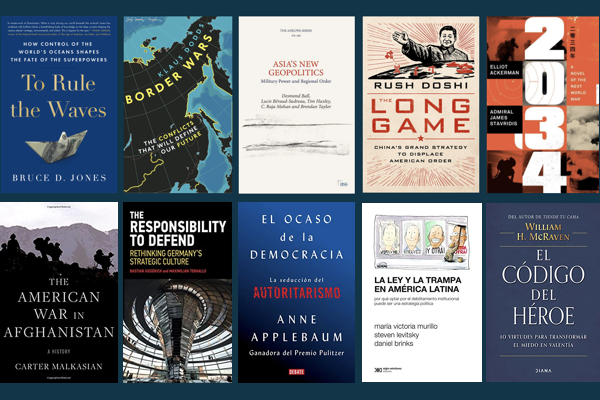
In our annual list of the most notable books of the year, we observe a particular concern regarding the tensions between the United States and China, as well as the pressures facing the oceans and borders around the world, places where globalization materializes. The future of democratic institutions is also a topic of interest.
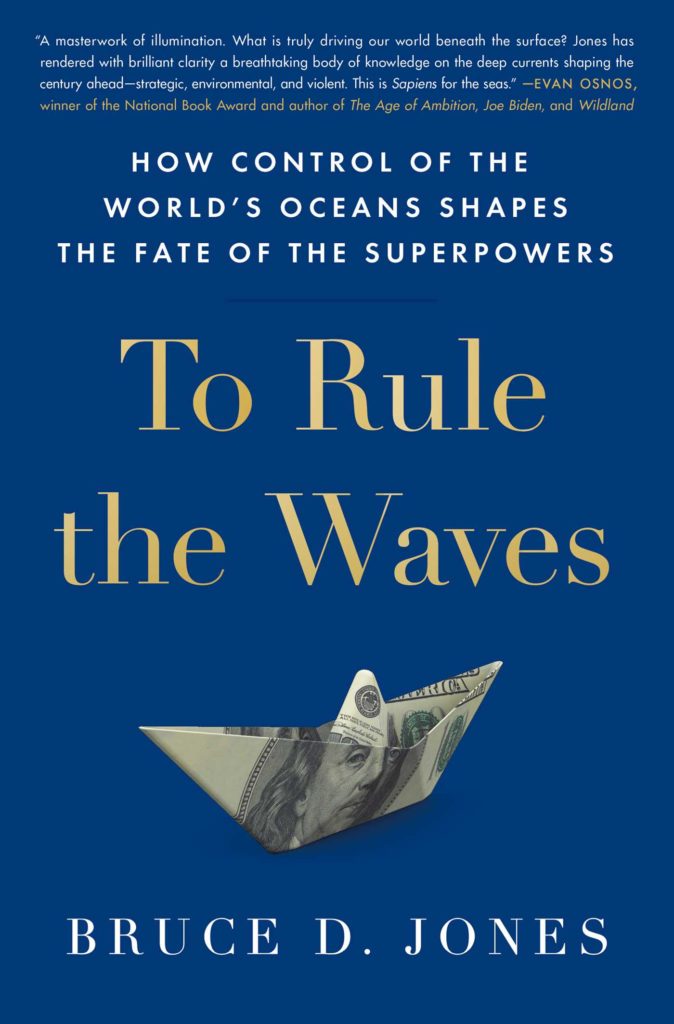
“To Rule the Waves: How Control of the World’s Oceans Shapes the Fate of the Superpowers”
Bruce Jones
In this intellectual and maritime journey, Bruce Jones vividly illustrates how the oceans are currently determining the security and prosperity of the world, as well as its future in environmental matters. The researcher from the Brookings Institution presents a wealth of data amidst a travel narrative that makes for an excellent read.
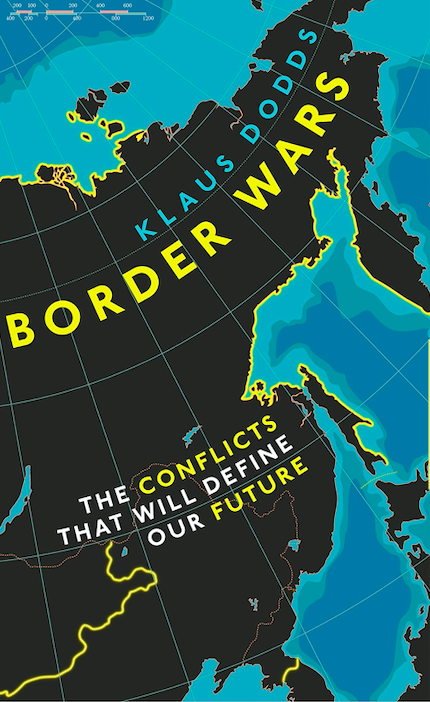
“Border Wars: The Conflicts of Tomorrow”
Klaus Dodds
In “Border Wars,” British geographer Klaus Dodds offers a conceptual framework for understanding the various types of current borders and the dynamics that traverse them. Among the typologies he details are “disputed borders,” “water borders,” “moving borders,” “disappearing borders,” and “no man’s land,” among others. Several of these categories apply to the country.
“Asia’s New Geopolitics: Military Power and Regional Order”
The International Institute for Strategic Studies (IISS)
This new issue of the Adelphi series from the International Institute for Strategic Studies addresses one of the most economically dynamic regions in the world, but also one of the most volatile due to the simultaneous presence of territorial disputes and military modernization programs. Therefore, the authors D. Ball, L. Béraud-Sudreau, T. Huxley, C. R. Mohan, and B. Taylor suggest the urgent need for a security architecture, including arms control mechanisms and confidence-building measures.
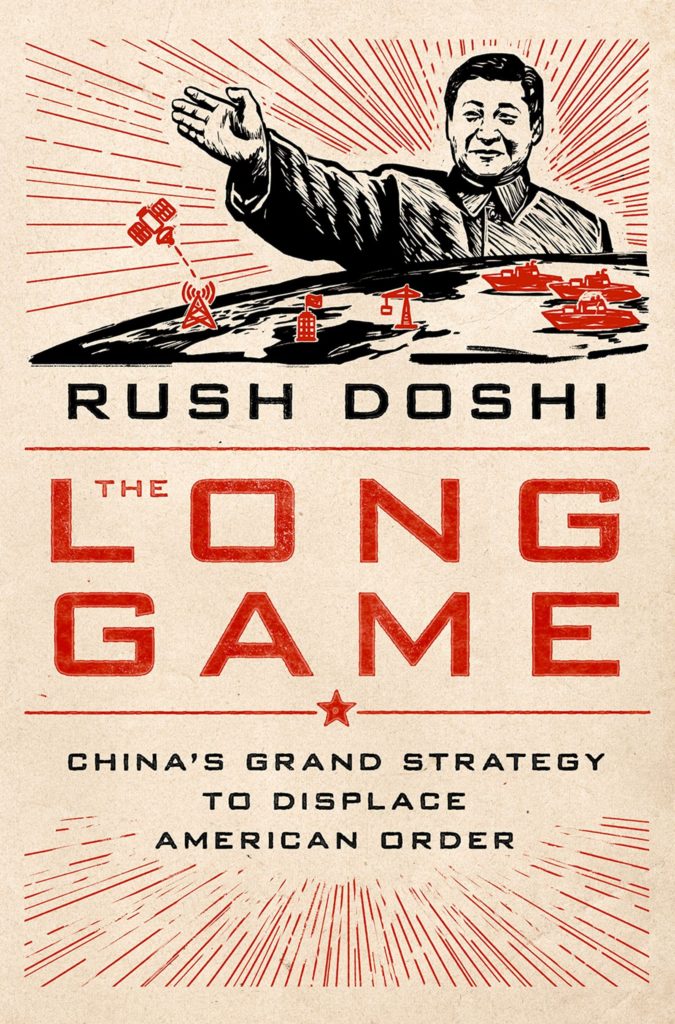
“The Long Game: China’s Grand Strategy to Displace American Order (Bridging the Gap)”
Rush Doshi
Drawing on primary sources such as Communist Party documents, leaked memos, and statements from leaders, Doshi analyzes how China has developed a patient strategy to contest U.S. hegemony, particularly following the 2008 financial crisis. He also demonstrates how the country capitalized on the populist moment experienced under Trump.
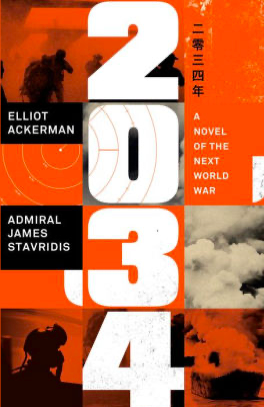
“2034: A Novel of the Next World War”
James Stavridis
Elliot Ackerman
In an era of great power competition, retired U.S. Navy Admiral James Stavridis teamed up with former Marine Elliot Ackerman to deliver a geopolitical thriller exploring what a potential war between their country and China might look like in just 13 years.

“The American War in Afghanistan: A History”
Carter Malkasian
Carter Malkasian, who served as special assistant for strategy to the Chairman of the Joint Chiefs of Staff of the U.S., provides a comprehensive account of the conflict from the onset of the war in 2001 to the peace talks of 2020. His narrative addresses not only the tactical, operational, and strategic aspects of the conflict but also covers the decision-making processes of the main actors: the U.S., the Afghan government, and the Taliban. Additionally, he enriches the narrative with cultural and political aspects that add greater value to the book. The question he seeks to answer is: Why did the U.S. fail in this war or conflict? In the same year as the final withdrawal.
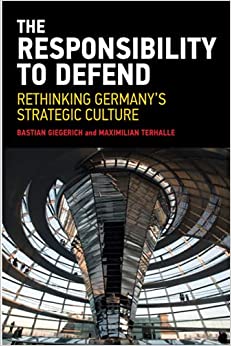
“The Responsibility to Defend: Rethinking Germany’s Strategic Culture”
B. Giegerich and M. Terhalle
While there is a well-known historical explanation, contemporary Germany is an anomaly. A major economic actor without equivalent military power, which leaves it poorly positioned to contribute to the defense of the rules-based international order, that of Europe (including its values), and its own defense against revisionist powers like Russia and China. Therefore, Bastian Giegerich and Maximilian Terhalle urge their country to rethink strategically, to enhance its armed forces to make a substantial contribution to NATO, and to stop treating the military as public servants in uniform. A more insecure world is just around the corner.

“The Twilight of Democracy: The Seduction of Authoritarianism”
Anne Applebaum
Chosen as one of the best books of 2020 by Financial Times and The Washington Post, the latest work by the author of “Iron Curtain: The Crushing of Eastern Europe 1944-1956” and “Red Famine: Stalin’s War on Ukraine” arrived this year in Spanish at an opportune moment, as democracy in Latin America is under threat from leaders with authoritarian convictions seeking to undermine institutions, press freedom, and property rights, something they can achieve if they manage to seduce the discontented masses irritated by the pandemic. “The Twilight of Democracy: The Seduction of Authoritarianism” by Anne Applebaum serves both as a warning and a call to join forces that value freedom. Debate 2021, 195 pages. Available in bookstores.

“The Law and the Trap in Latin America”
Murillo, Levitsky, and Brinks
As Chile writes a new constitution, it is particularly relevant to read “The Law and the Trap in Latin America” by María Victoria Murillo, Steven Levitsky, and Daniel Brinks, a brief book that analyzes the chronic institutional weakness of Latin America, but from a political strategy perspective. It offers a sharp look at the gap between the institutions created to promote a myriad of rights, which will ultimately be unable to enforce them. Available in bookstores.
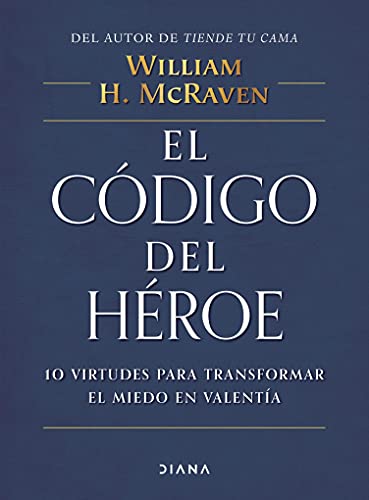
“The Hero Code”
William H. McRaven
A simple and inspiring book that seeks to find heroism in everyday life, authored by William H. McRaven, the former head of U.S. Special Operations, who previously encouraged us to “make our beds” every day. With anecdotes drawn from his experiences in Iraq, Afghanistan, and the Pentagon, Admiral McRaven outlines 12 virtues that define a hero, from courage and humility to good humor.